
Welcome to OSV Field Notes, a weekly, high-signal curation of things worth your time.
This week: a World Series photo that looks too good to be real, a producer who thought Bond wasn’t even television material, a website for people who like a good argument, how Cleopatra got past the guards to see Caesar, and Norm Macdonald seen through the stories he left behind.
1. The Shot from the Catwalk
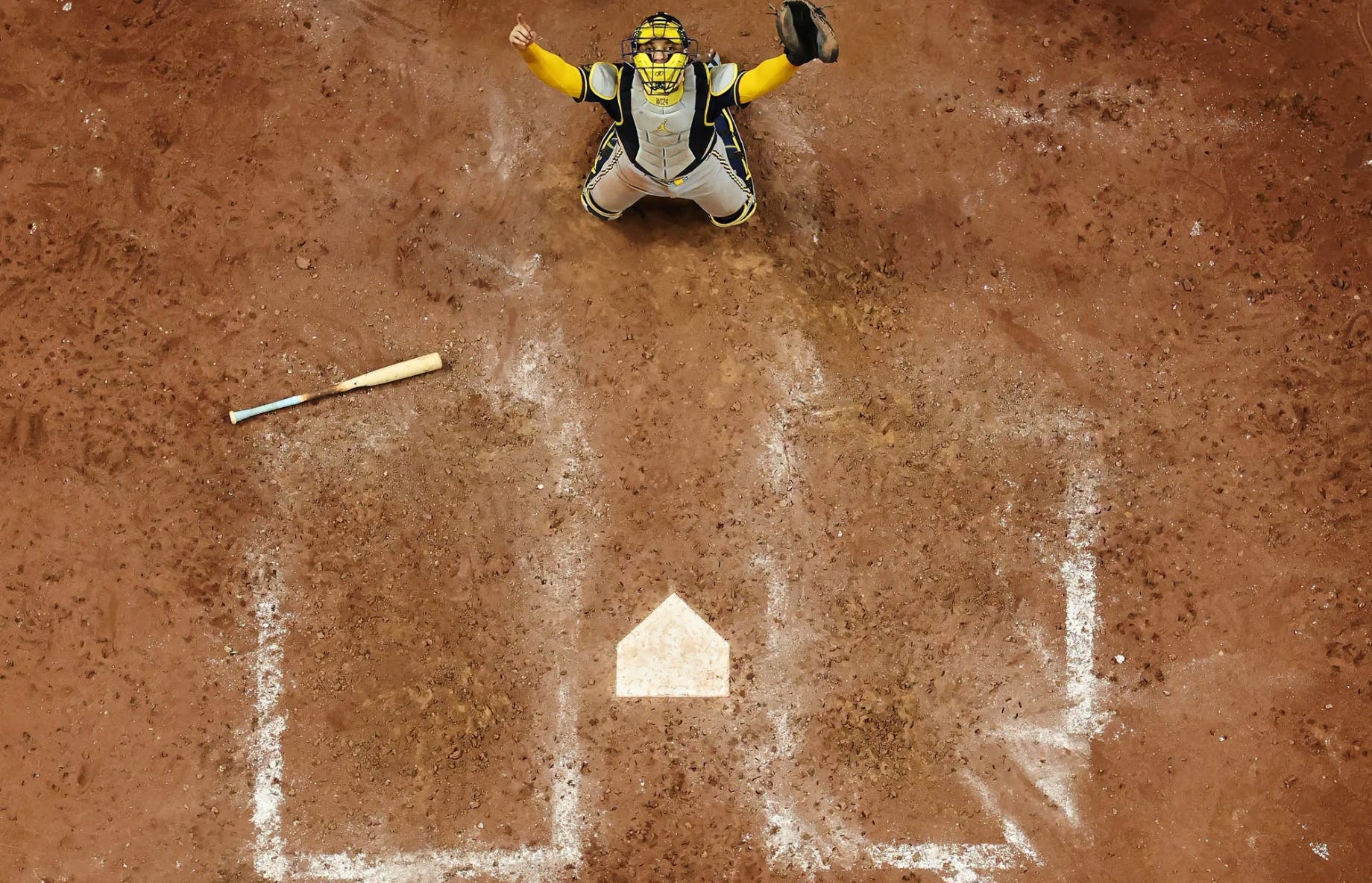
The Brewers had just won their first World Series. William Contreras on his knees behind home plate, arms raised, eyes turned skyward — a catcher alone at the center of a diamond. The overhead angle makes it look like a Renaissance painting dropped into a baseball stadium. Some viewers guessed it was a drone shot. Others guessed AI.
Getty Images photographer Carmen Mandato captured the shot using a remote camera rigged to the catwalk system above the field at Tropicana Field. The same catwalks famous for swallowing live baseballs mid-game. Freelance photographer Mike Carlson set up his own remote camera on the same catwalks for Game 5, firing it wirelessly from field level while shooting with a second camera in his hands. No drones. No generative fill. Just a camera bolted to a ceiling, a wireless trigger, and the bet that the final out would happen at home plate.
What makes the image isn’t just the angle — it’s the subject. Contreras has the word Dios tattooed on his neck, Spanish for “God,” and writes it in the dirt before he bats. After the final outs of both the NLCS and the World Series, he dropped to his knees and pointed skyward. “This was a very blessed year,” he told reporters. “We have to give God a lot of thanks.” The man prays the same way every time. Mandato was ready for it.
Carlson’s version of the shot now lives on a Topps trading card. Mandato’s is on a $40 t-shirt officially licensed by MLB. The image that half the internet called fake was one of the most innovative photographs taken in recent baseball memory. [Taylor]
2. The Deal That Put James Bond on Screen
Two main pop-culture items dominate this week: the launch of GTA VI, and Robert Pattinson’s reveal as the new Bond.
While I waited eagerly for GTA VI to drop on Thursday, I spent the early part of the week going deep in Bond lore, especially now that Bond is entering a new era.
My guide on this journey was Some Kind of Hero, written by ‘Bond scholars’ Matthew Field and Ajay Chowdhury, and the first three chapters are a great case study in how IP gets bought and sold.
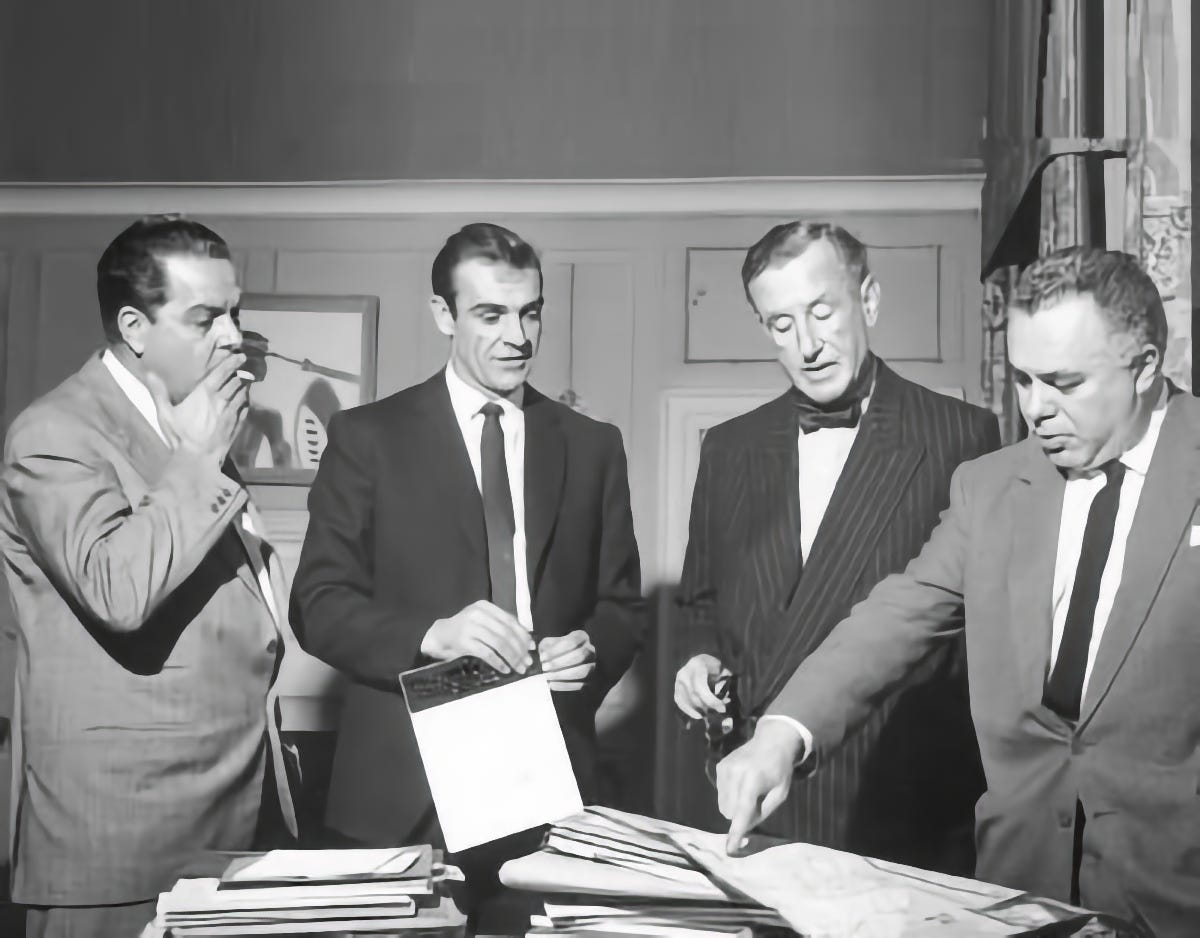
In the summer of 1958, at Les Ambassadeurs in Mayfair, Ian Fleming and his agent offered producer Irving Allen an option on Bond novels for $50,000. Allen balked at the price, and told Fleming, “These books aren’t even television material,” before storming out. His partner stayed behind to apologise and pay the bill. That partner was Cubby Broccoli.
Two years later, Fleming eventually signed with Harry Saltzman, a Canadian ex-circus scout turned film producer. Saltzman paid the same $50,000, for six months.
Then in March 1961, Life printed President Kennedy’s favourite books, and From Russia With Love was number nine. Bond was becoming a hot property, and yet Saltzman still couldn’t find a studio to make his movie.
With only weeks left on the option, the screenwriter Wolf Mankowitz introduced Saltzman to Broccoli. Broccoli wanted to buy the option. Saltzman held out for a partnership, and they went 50/50 on the rights. They put the rights in a Swiss company named after their wives, Dana and Jacqueline: Danjaq.
In 1975, buried in debt, Saltzman sold his half of Danjaq to United Artists. By 1986, the Broccolis owned all of Danjaq, while MGM held the distribution rights. Amazon inherited those rights when it bought MGM in 2022. A 2025 deal gave Amazon MGM creative control over future Bond films. Pattinson is the first Bond cast under that deal.
After signing with Broccoli and Saltzman, Fleming quipped to a journalist, “Two films? Three? That should be about it surely. Then the joke will be over.” Eon Productions has now made twenty-five. [Rohan]
📘 Some Kind of Hero: The Remarkable Story of the James Bond Films (2015) by Matthew Field and Ajay Chowdhury
3. A Civil Debating Club
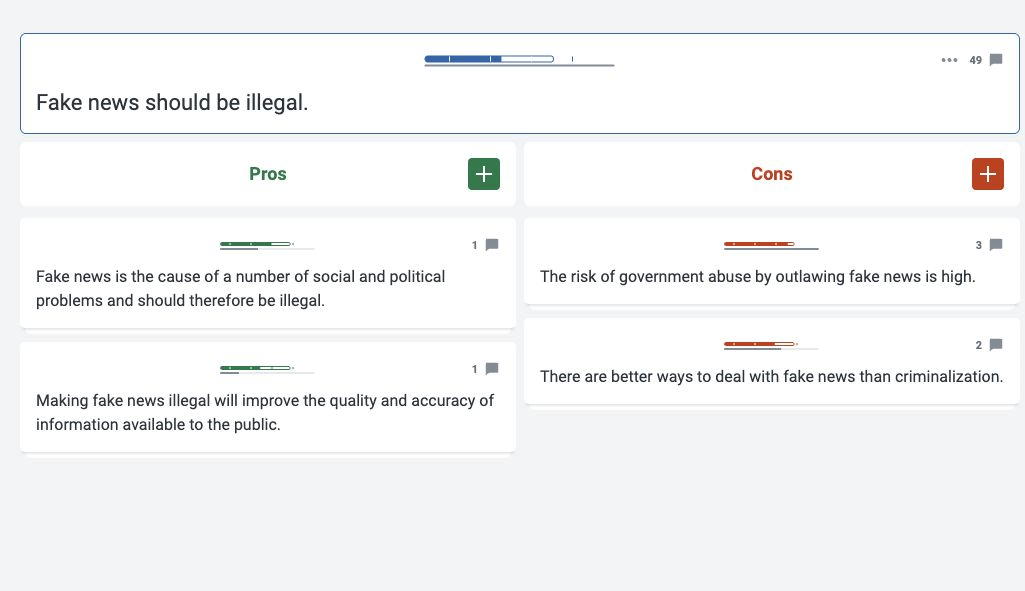
Bengalis are (arguably) known for arguing. We argue for sport, at the dinner table, over tea, on walks … and rarely agree on anything by the end. So I sent a Kialo link to my family WhatsApp group. Kialo is Esperanto for ‘reason.’ It’s a free debate platform where a discussion begins with a claim and people add their pros and cons under it, with more pros and cons beneath those, and so on.
The rules are strict. Every claim must be under 500 characters. And comments can’t be trolling for no good reason. Editors can flag a claim that doesn’t make an argument. The fascinating thing is contributors write the counterpoint to their own claims (a part of me suspects students do this to prep for their school debates). So refreshingly un-internet.
There’s no scoreboard or verdict, but there is a truth rating and every pro and con has an impact rating. The strongest arguments are shown at the top and that’s as close to a win as you can get. Reminded me of model UN at school. Of course, it isn’t perfect because the boxes seem to simplify the arguments too much and many branches end up in oblivion. But at least people aren’t fighting over points no one made in the first place.
I mean, if you have a debate or a heated family dinner coming up, maybe try your hand at a bit of critical reasoning and then see how you ace the arguing game. As for my family group, someone started arguing about the link itself and we never made it to the website, but I hope you have better luck. [Aashisha]
💬 Kialo
4. Cleopatra in the War Room
The best authors I know take the highest dives. That’s how I think about Stacy Schiff, and specifically her book Cleopatra: A Life. Schiff took on a difficult subject: two millennia of Cleopatra mythology to cut through, and scant, sometimes unfriendly material to work with. She had to sort truth from legend, assemble a personality from the shards, and produce something coherent in one volume.
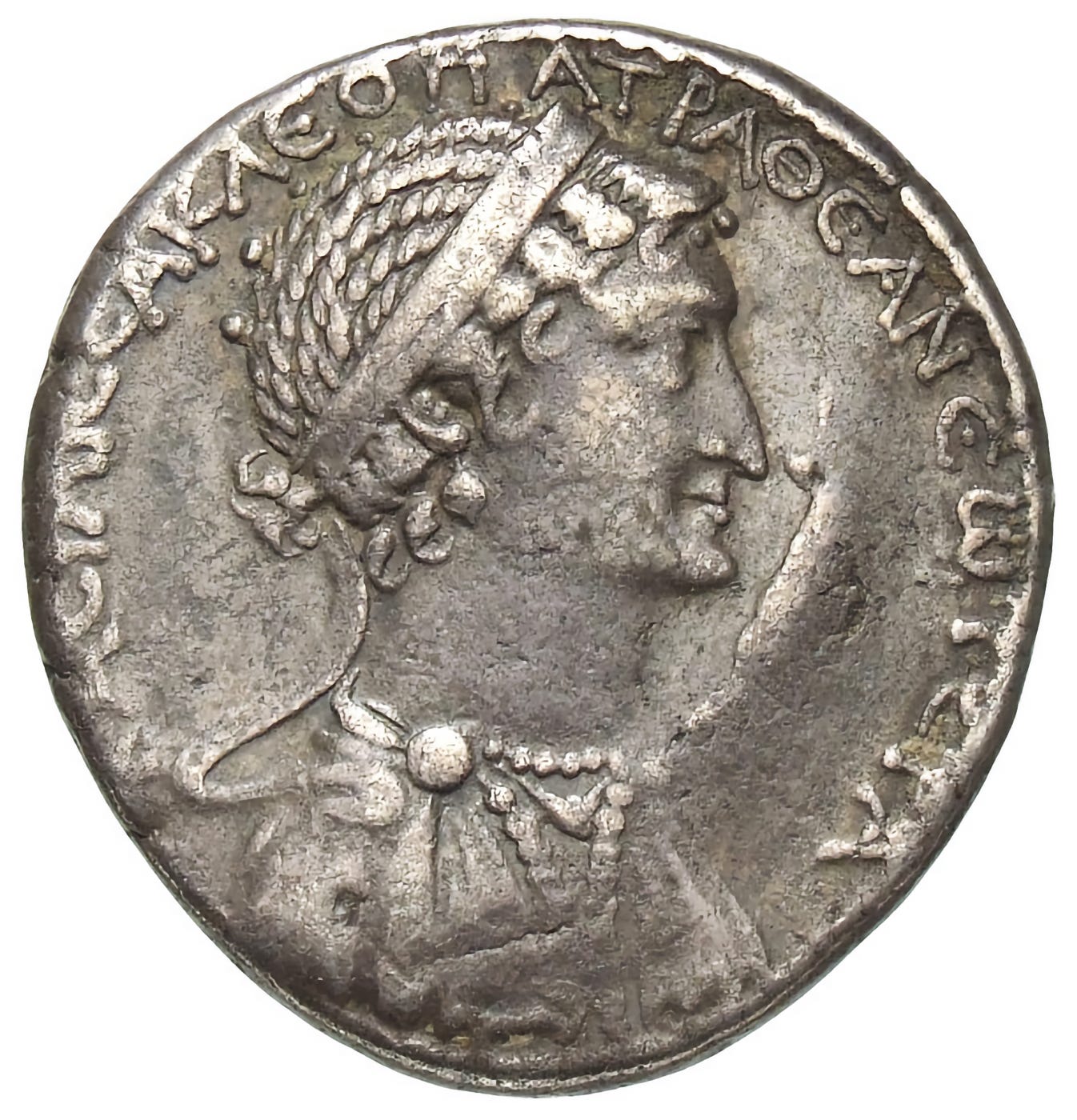
Schiff tackles the challenge head on, starting with the sources. Almost all that survives about Cleopatra was written after her death, by men hostile to her, and our principal ancient source, Plutarch, lived a century after her. So Schiff mines coins and other archaeological finds for clues; the strong nose and determined jawline on her coins, for instance, suggest a woman far from the Hollywood beauty she’s made out to be. That matters, because a lot of the narrative around Cleopatra is tied to her seductive powers. Schiff debunks that, with Plutarch’s help: he noted that her looks weren’t particularly striking but that her wit and conversation were irresistible.
In place of the seductress, Schiff gives you a canny political operator. Take the famous entrance: Cleopatra smuggled herself into Caesar’s good graces rolled up in a sack, a romantic gesture in most accounts. But for Schiff, this was a logistical challenge: how would she get past his body guards? And it’s deftly solved by a twenty-one-year-old recently exiled from her own capital and desperate to get past her brother’s guards. Over twenty-one years, her deftness helped her cope with famine, reform the currency, and outfox all comers in strategy and nerve. Were Cleopatra alive today, Schiff argues, she’d be a force in any government’s war room.
As with all my recommendations, part of the appeal is Schiff’s prose. She is otherworldly gifted at a turn of phrase or a vivid description. Every page of my copy has underlines, and in reviewing them I’m still impressed and more than a little envious. It’s also a good one to pair with Rubicon. Holland gives you the Republic in convulsion. Schiff gives you the vantage point of a single life inside it, and beyond that, a complicated, misunderstood, often mischaracterized single life, which is the hardest kind to write well. [Jimmy]
📘 Cleopatra: A Life by Stacy Schiff
5. Norm Macdonald: A Life Told by Its Least Reliable Witness
Norm Macdonald made up his own life story to amuse himself. He lied about his age and education and most other things. He wrote a “memoir” that was mostly a novel. When Larry King asked if the book was autobiography or fiction, Norm said it wasn’t facts, it was truth.
That’s a tough subject for a documentary. You could spend the whole thing trying to fact-check him. But would that be any fun?
Judd Apatow goes in the opposite direction in Norm: The Tale of Norm Macdonald. No new sit-down interviews. Norm narrates much of it himself, through his audiobook. It’s two hours of stand-up, talk-show clips, podcasts, tweets, and home videos, stitched together so it’s mostly Norm who tells his own story.
Part of the fun is the gap between his aw-shucks persona and who he actually was. He skipped two grades and reportedly graduated from Gloucester High School in Ottawa at 14, then studied math at Carleton and journalism and broadcasting at Algonquin (though, like much of Norm’s biography, accounts of the exact timeline differ). While he was doing fake news on SNL’s “Weekend Update,” his older brother Neil was a prominent CBC News correspondent (Apatow calls him “Dan Rather in Canada”).
A turning point in his life is being fired from SNL. NBC executive Don Ohlmeyer, a close friend of O.J. Simpson’s, told him to stop doing O.J. jokes, and Norm kept going.
Norm hid a leukemia diagnosis for nine years until he died in 2021. Almost nobody knew. Knowing that changes how his later stand-up lands, like his bit about how when someone dies of cancer, the cancer dies too, so calling it a defeat is unfair. It’s a draw.
If you’ve already spent dozens of hours down the Norm YouTube rabbit hole, you’ll recognize a lot of the clips. But it’s a great two-hour doorway into why Letterman, Conan, and so many other comics thought he was the funniest comic. In many ways, he remains an enigma at the end of the film, but that’s how he would have wanted it. [Liberty]
🎬 Norm: The Tale of Norm Macdonald (2026, directed by Judd Apatow)
⭐ Explore the OSV Field Notes Archive ⭐
Enjoyed OSV Field Notes? 💌 Forward it to a friend!
