
Welcome to OSV Field Notes, a weekly, high-signal curation of things worth your time.
This week: the families who lived with a shipwreck long after the headlines faded, a kids’ fantasy whose villains make an uncomfortable amount of sense, Tom Holland’s Rome when it could barely conquer the next town, Orson Welles trying to win back Hollywood’s trust, and a long crawl toward a prison fence.
1. The Legend Lives On
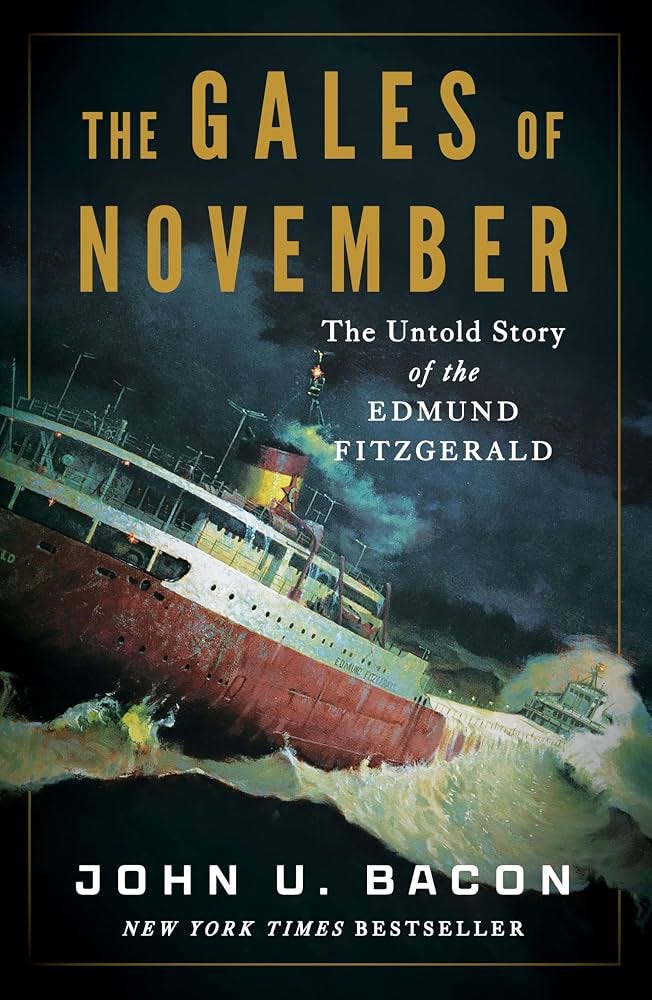
Fifty-one years ago this week, the Edmund Fitzgerald was lost in a torrential storm on Lake Superior while hauling 26,116 long tons of taconite pellets from Superior, Wisconsin, to the steel mills of Detroit. All 29 souls aboard were lost. Most people know the story from Gordon Lightfoot’s ballad — six haunting minutes, no chorus, a song that topped the charts in two countries. But Lightfoot wrote from headlines. John U. Bacon wrote from kitchen tables of families who have been living with this story for five decades.
The Gales of November: The Untold Story of the Edmund Fitzgerald (Liveright, 2025) delves into what previous accounts haven’t — the human lives behind the 29. Bacon profiles crew members like 22-year-old deckhand Bruce Hudson, who had just learned his girlfriend was pregnant, and Captain Ernest McSorley, 63, who told a friend the final run’s bonus would cover his wife’s medical bills. He traces the offshore lives of Great Lakes sailors who spent large stretches of the year away from home and steps inside the waterfront bars like the President Bar in Superior, Wisconsin, where crew members spent their last night ashore before the Fitzgerald loaded its cargo at the Allouez ore docks and set sail on November 9, 1975.
The book also unpacks the staggering economics and logistics of Great Lakes shipping. Much of industrial America was built from the hulls and horsepower of these freshwater giants. The Fitzgerald was 729 feet of that system — and it vanished 17 miles from safety without a distress call. Every November, a bell tolls at Split Rock Lighthouse in Minnesota as each of the 29 names is read aloud. Lightfoot gave the Fitzgerald its legend. Bacon gives it back its crew. [Taylor]
📘 The Gales of November: The Untold Story of the Edmund Fitzgerald by John U. Bacon
2. The Dragon Prince : When the Villains Have a Point
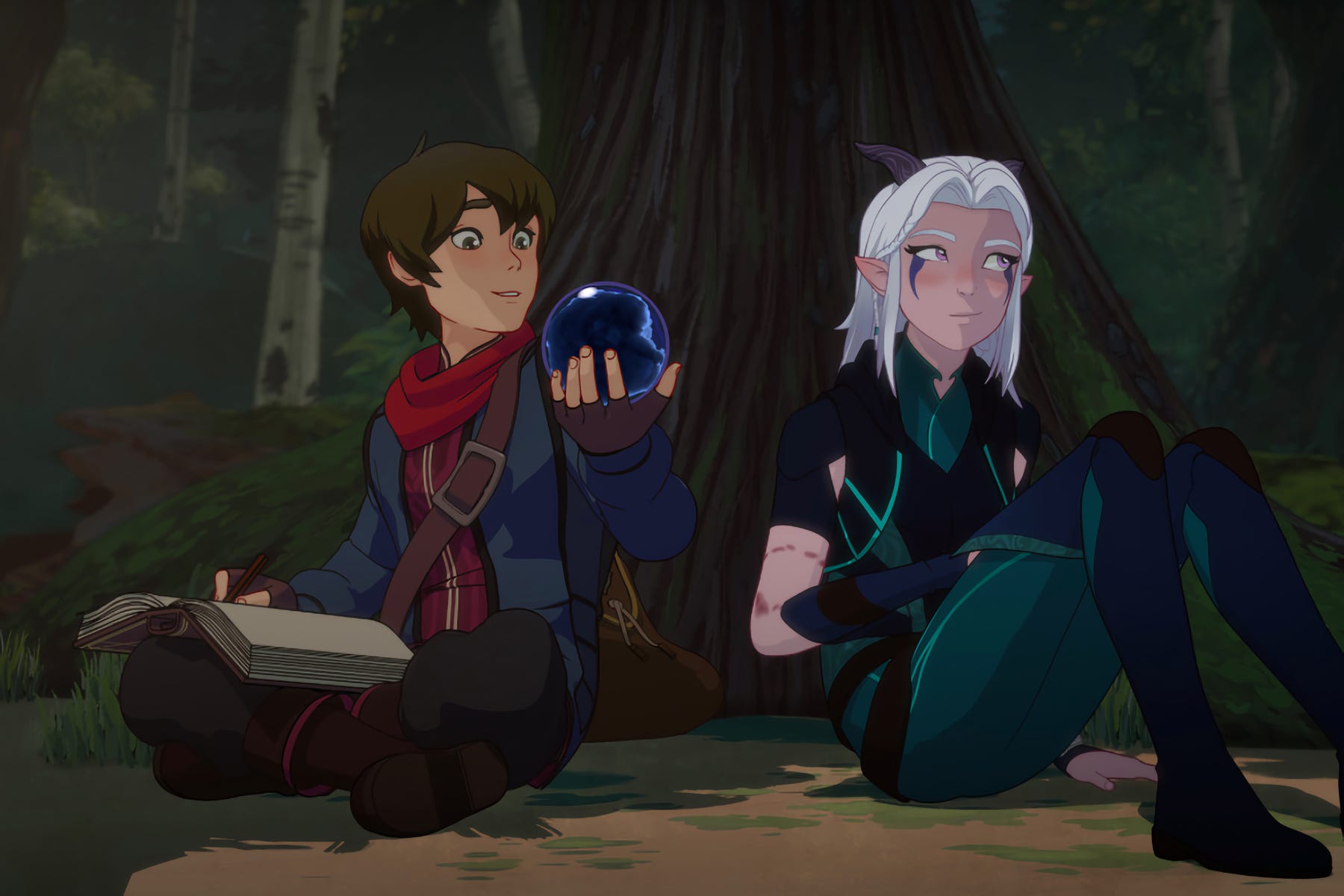
I never expected to like this show as much as I did. In fact, I didn’t even expect to watch it. A little while ago, my kids started watching The Dragon Prince. I got curious and joined them… and then I just kept going.
It’s an animated fantasy about two human princes and an elf assassin trying to get a dragon egg back to its mother before a war breaks out. There’s plenty of sword fighting, and there’s a girl named Claudia who uses dark magic to make her pancakes fluffier.
What surprised me was the nuance. Yes, nuance, not always the most exciting word, but here it works. Take Claudia’s father, Viren, the king’s mage. When a neighbouring kingdom faces famine, the king promises to share what little food he has. Viren knows a spell that could feed both kingdoms. All he needs is the heart of a giant made of rock and magma. The king sees a way to save a hundred thousand people by killing one monster.
The queen asks, “Does it have a family?”
The bad guys can be as funny as the heroes, and you spend enough time with them to see who they care about and why they think they’re right. Sometimes they change their minds or even change sides, something you almost never see in fiction. That makes things a lot harder to predict. And you often can understand why someone would go along with Viren or feel for Claudia.
I thought the writing and animation got worse after season three, and that’s when I stopped. But the first three seasons form one complete adventure and can stand on their own. [Liberty]
📺 The Dragon Prince (seasons 1–3)
3. Rubicon : How Tom Holland Makes Rome Move
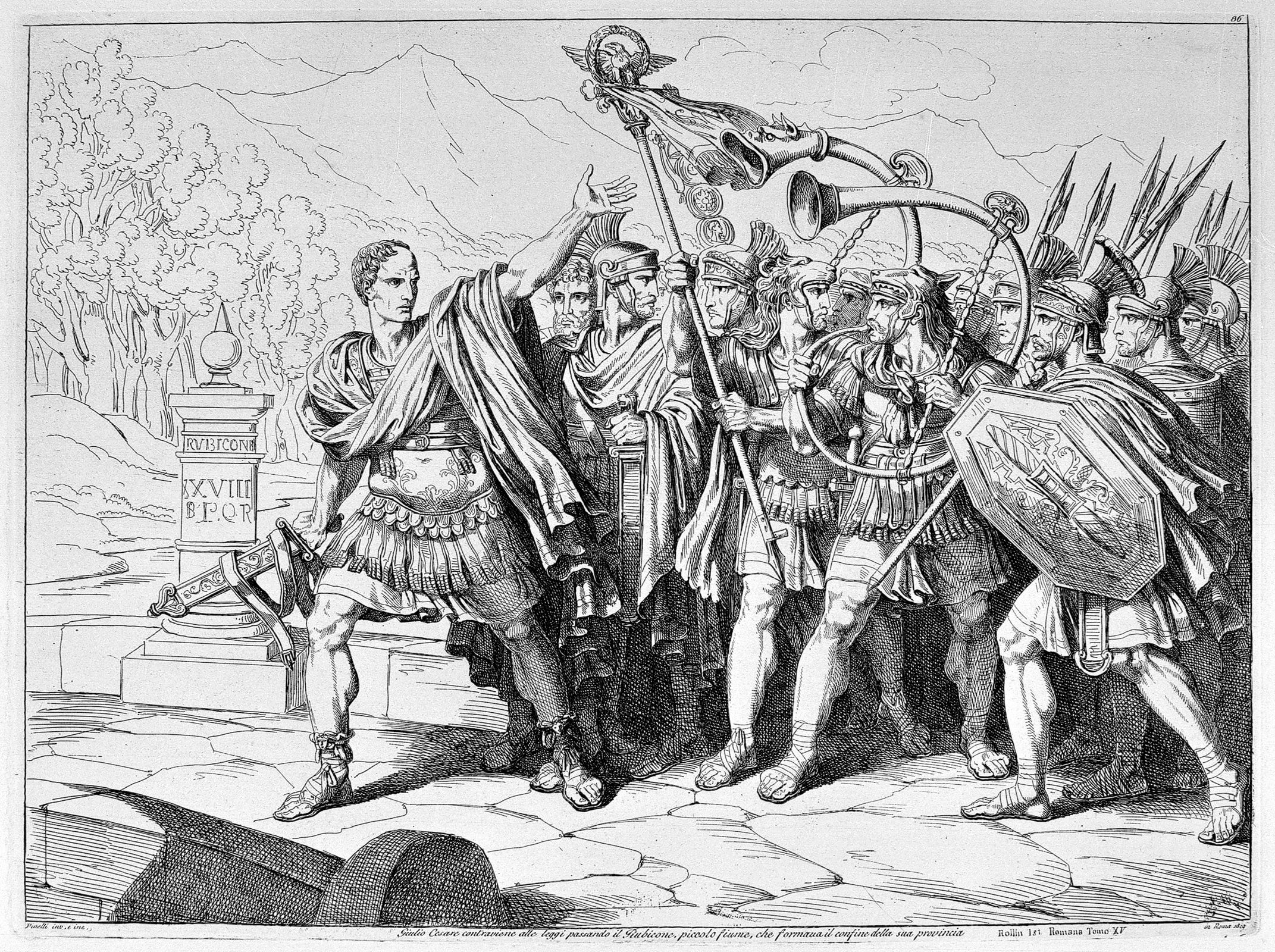
When I was in my early twenties, I stopped at a book bin in a shop in Ireland and picked up Tom Holland’s Rubicon, his marvelous narrative history of the fall of the Roman Republic. I was on a bit of a Rome kick at the time, and the book gripped me from page one to the finish. It also led me down the rabbit hole of Cato the Younger, which led, eventually, to my first book, Rome’s Last Citizen, which I co-wrote with Rob Goodman.
Holland does a remarkable thing in compressing the late Republic into a single volume. That means a crowded cast, Caesar and Cicero and Cato, Cleopatra and Pompey, and he brings each of them to life in vivid character sketches. He writes with a novelist’s precision, and he doesn’t train his eye only on the great and the noble. You get a feel for everyday Roman life, and for how the decisions of a few men at the top reshaped the lives of real people far below them.
But what makes the book stand out is the quality and pacing of the prose itself. Here’s a small selection from the opening: “For the first century of the Republic’s existence the Romans found it a struggle to establish their supremacy over cities barely ten miles from their own gates. Yet even the deadliest carnivore must have its infancy, and the Romans, as they raided cattle and skirmished with petty hill tribes, were developing the instincts required to dominate and kill. By the 360s bc they had established their city as the mistress of central Italy. In the following decades they marched north and south, crushing opposition wherever they met it. By the 260s, with startling speed, they had mastered the entire peninsula. Honor, of course, had demanded nothing less. To states that humbly acknowledged their superiority, the Romans would grant such favors as a patron condescends to grant his clients, but to those who defied them, only ceaseless combat. No Roman could tolerate the prospect of his city losing face. Rather than endure it, he would put up with any amount of suffering, go to any lengths.”
ChatGPT, this is not. Holland’s a master stylist, and I can remember losing myself in hours of Rubicon without realizing how much time had passed. Holland’s Rubicon drops you into a Republic of political convulsions, public scandals, and armies on the march, and when you finally surface, you’ll find that Rome has followed you home. [Jimmy]
Editor’s note: Jimmy first recommended Rubicon in Field Notes #23. He likes the book so much that he’s back with a passage that shows why he found it so hard to put down.
📘 Rubicon by Tom Holland
4. The Stranger (1946): A Genius on His Best Behaviour

Four years after Citizen Kane (heard of it?), Orson Welles, still only thirty, was at an odd juncture when he made The Stranger. He was seen as a genius, but a troublesome one: capricious, untrustworthy, and, worst of all, unable to stick to the budgets and schedules of the mighty studio system. To his horror, his previous film, The Magnificent Ambersons, had been taken from him by RKO and recut beyond recognition. Only two films into his career, he had the whiff of a star that had already burned out.
The Stranger, a routine studio thriller based off a script by Anthony Veiller, was his bid for acceptance by the Adults in the Room. As a result, it is still seen as a lesser work in his filmography (I mean, when you’ve made Citizen Kane and Touch of Evil, what can you expect?). Welles himself called it his worst film. But it’s brilliant!
Edward G. Robinson plays Wilson, a Nazi-hunter for the Allied War Crimes Commission. He’s hunting Franz Kindler (played by Welles, having a blast), a senior Nazi so skilled at avoiding detection that no photo of him exists. Wilson tracks him to a leafy Connecticut town, where Kindler has gone American. He’s now a respected prep-school teacher, and has even managed to secure the hand of a Supreme Court justice’s daughter. Cat and mouse hijinks ensue.
This is an early example of one of my favourite things in movies: a supremely talented auteur doing genre work. Inevitably these films get dismissed by contemporary critics as wastes of talent, before being reclaimed a few years later (Martin Scorsese has a number of these under his belt).
In this case, Welles reaches into his bag of tricks to elevate a serviceable script into something really quite thrilling. There’s beautiful deep focus cinematography, some pretty astonishing uses of shadow, and all kinds of funky angles and camera moves. Add a twisty-turny plot and a not-too-subtle splodge of political subtext (look how easily fascism can change its mask for a new audience), and you’ve got yourself a cracking way to spend 90 minutes. [Ed]
🎬 The Stranger (1946)
5. Ghost Soldiers: Knowing the Ending Doesn’t Help

I read Hampton Sides’s Ghost Soldiers a few years ago and loved it. It tells the story of the 1945 rescue of 516 Allied prisoners from the (horrific) Japanese camp at Cabanatuan in the Philippines. I knew the end result but I was still nervous.
American Rangers and Filipino guerrillas have to reach the camp before its prisoners are killed. Japanese troops had already massacred prisoners at a camp on Palawan. Some of the men awaiting rescue have survived the Bataan Death March and years of captivity. Sides explains that they called themselves “ghosts,” worn down by the brutal conditions and feeling forgotten by their country.
The author keeps switching between the prisoners and the men coming to get them. The more you learn about life in the camp, the more you want the Rangers to hurry up. Sides originally planned to tell the story chronologically, but the raid kept expanding as he wrote it. What he thought would be a couple of concluding chapters grew into roughly half the book.
So much had to go right. The Rangers must crawl across exposed ground while an American P-61 Black Widow night fighter distracts the guards overhead. Getting into the camp won’t solve the problem of getting hundreds of sick, starving men back through enemy territory. Filipino villagers will have to help carry them on water-buffalo carts.
I knew the result, but I was still nervous. For the men crawling toward that fence, this was still a plan that might fail, and the author was really good at putting me in their shoes. [Liberty]
📘 Ghost Soldiers by Hampton Sides
⭐ Explore the OSV Field Notes Archive ⭐
Enjoyed OSV Field Notes? 💌 Forward it to a friend!
