
Welcome to OSV Field Notes, a weekly, high-signal curation of things worth your time.
This week: taking one thing and turning it into another. Rocket countdowns and mission-control chatter reassembled into music, the Roman Republic's collapse written like this morning's news, a piano tuner whose perfect ear makes him a master safe-cracker, seventy-one volumes of Russian brought into English by a woman who didn't speak it until she was 29, and a small-market baseball team that films its season like A24 cinema.
1. Turning the Cold War Space Race Into Music

I rewatched Apollo 13 with the kids recently. First time for them, and they loved it. It reminded me of an album I hadn’t played in years.
The Race for Space is a 2015 concept album by Public Service Broadcasting, a British group whose whole conceit is making music out of archival audio (public information films, newsreels, radio chatter).
Here, the source material is the U.S.–Soviet space race from Sputnik (1957) to Apollo 17 (1972), built from samples in the NASA Audio Collection and the BFI National Archive. Nine tracks, 43 minutes. JFK’s famous speech, countdowns, callouts, telemetry, the radio chatter, then the suspenseful silence as Apollo 8 swings around the far side of the moon. Like a documentary you can groove to.
Don't judge it by the first track. The album shifts moods aggressively: electronic, disco, funereal, post-rock, anthemic.
A few favorites. Gagarin turns the first man in space into a brass-and-disco strut. Fire in the Cockpit is the somber Apollo 1 interlude (a cabin fire killed three astronauts). Valentina, about Valentina Tereshkova, the first woman in space, features female vocals from Smoke Fairies (the archival material from that era is almost entirely male voices). But the album’s peak to me is Go!, set to mission control's 'Go/No Go' roll call before Apollo 11's descent to the moon’s surface (The Eagle has landed).
It doesn't compress the space race into a USA-wins story. Sputnik gets a track. Gagarin gets the funkiest one. Tereshkova gets the most beautiful one. The Soviets are co-protagonists, reminding us that for the first decade, they were winning.
The album ends with Tomorrow. The title comes from Gene Cernan's farewell as the last man on the moon, December 1972: America's challenge of today has forged man's destiny of tomorrow. Fifty-three years later, no one has been back, though at least the Artemis II crew flew by in April. [Liberty]
🎧 Listen to The Race for Space on Spotify
🎧 Listen to The Race for Space on Apple Music
🎧 Listen to The Race for Space on YouTube Music
2. Rubicon : The Fall of Rome, Written Like a Thriller

There is a particular kind of envy that writers sometimes feel. You are reading along, admiring a book, and somewhere around page fifty the admiration curdles into something sharper: a wish that you had written it yourself. Tom Holland’s Rubicon did that to me. It is the rare history that reads like a thriller and holds up like scholarship, and I have never quite forgiven him for it.
Rubicon tells the story of the fall of the Roman Republic, the long unraveling that ran from Sulla’s dictatorship to the reign of Augustus. The cast is the greatest in political history: Marius and Sulla, Pompey and Crassus, Cicero at the podium, Caesar at the head of his legions, and Cato the Younger, the unbending Stoic who would rather die than watch the Republic become a monarchy. Holland moves through a century of assassinations, civil wars, and back-room deals without ever losing the thread or the momentum. When Caesar finally brings his army to the banks of the Rubicon in January of 49 BC, you feel the weight of the decision even though the outcome is already known.
I owe this book a debt. Reading it was what sent me to Cato, and Cato became Rome’s Last Citizen, the biography I cowrote about the man who stood against Caesar to the end. So I am biased, and grateful, and still a little envious. Read Rubicon. Then read everything else Holland has written. He makes the ancient world feel like this morning’s news. [Jimmy]
📕 Rubicon by Tom Holland
3. Tuner : A Throwback Heist Thriller Worth Your Time
Around halfway through Tuner, Daniel Roher’s new throwback thriller, our piano-tuning protagonist reveals that those in the trade never use the ‘P’ word (Perfect):
“Tuning a piano is about creating harmony out of chaos, and to do that you’ve gotta be okay with imperfection.”
As it happens, that’s a pretty spot-on way of describing the movie. There are imperfections throughout, not least a sequence of eyebrow-raising plot contrivances and awkward tonal shifts, but out of these imperfections emerges a harmonious piece of cinema.
The White Lotus’s Leo Woodall plays Niki, a taciturn piano tuner who is “allergic to loud noises.” His hyper-sensitive hearing (he always wears earplugs) makes him an exceptionally good tuner. It also, he discovers early in the movie, makes him an exceptionally good safe-cracker. When his beloved mentor Harry (Dustin Hoffman, who is having a blast) becomes ill, Niki is forced to put this skill to use. You can guess how it goes from there.
Roher and co-writer Robert Ramsey’s screenplay is carefully designed to hit familiar genre beats, but it’s a testament to the strength of the characters and direction that the film feels fresh and lively, even if the contours of the story are well-trodden. Take the film’s romance, between Niki and Havana Rose Liu’s Ruthie, herself a talented musician and composer. What could have felt formulaic and underbaked is given real weight here, with the film as interested in developing their relationship as in safe-cracking shenanigans. It helps that they have genuine chemistry, charged with just the right amount of unspoken competition (Niki was once a prodigy himself).
Back in issue #5, I recommended last year’s Relay as a throwback thriller worth your time. Tuner is this year’s equivalent. Well-constructed, original, crowd-pleasing thrillers like this are exactly the kind of movie that people claim don’t get made any more. So do your duty and go see it! [Ed]
🎬 Tuner (premiered in 2025, but wider release in 2026)
4. Seventy-One Books, One Translator: How Russia Reached English Readers
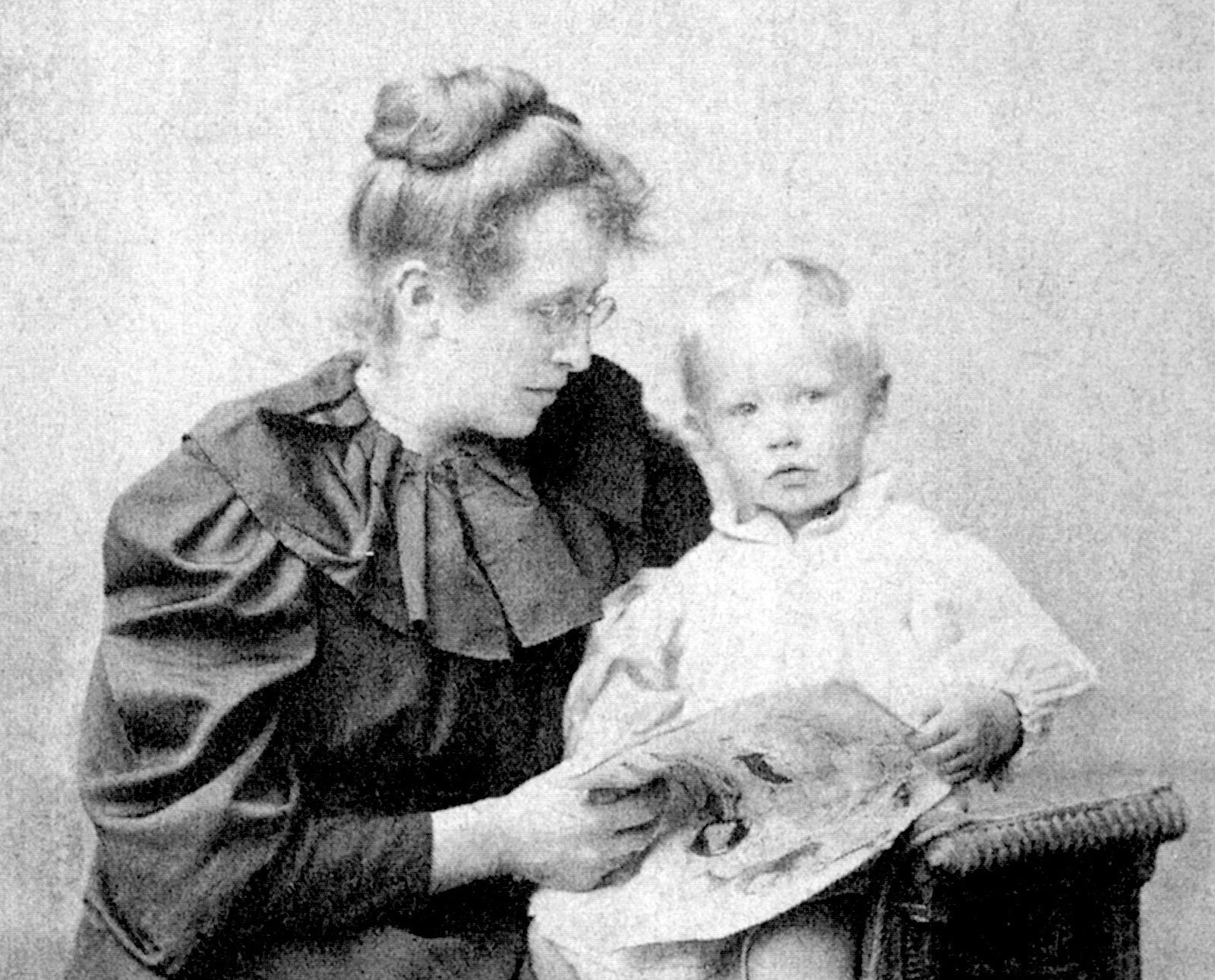
I remember my first tryst with Dostoyevsky and Tolstoy. It was high school and I had begun with Raskolnikov’s unraveling in Crime and Punishment which later took me to other works of Dostoyevsky’s, to Tolstoy’s War and Peace, Chekhov’s short stories, and eventually, Gogol. I didn’t think about who had translated these works. For me at that age, the books just existed in English.
Obviously, they didn’t. Most of these English translations were by Constance Garnett, who introduced prominent Russian authors to the English language: Turgenev, Chekhov, Dostoevsky, Tolstoy, Goncharov, Gogol among others. The strangest part: she didn’t speak a word of Russian until she was 29. Confined by a difficult pregnancy, she learned the language from Feliks Volkhovsky, a Russian exile her husband had befriended. In the winter of 1894, she traveled alone to Russia for three months to visit Tolstoy. It ignited her life’s work. She would go on to translate 71 volumes of Russian literature (two per year, on average).
Nothing stopped her. By the late 1920s, she was “frail and half-blind” but kept translating by dictation.
D.H. Lawrence described her as sitting in the garden, accumulating a “tottering pillar of sheets” on the grass beside her. Joseph Conrad said her translations were to the Russian originals what “a great musician is to a great composer—with something more, something greater. It is as if the interpreter had looked into the very mind of the Master and had a share in his inspiration.” Her typescript of The Cherry Orchard sat in a drawer for years because no publisher believed English readers would care about Chekhov.
Not everyone agreed. Critics like Nabokov called her translations “dry and flat, and always unbearably demure.” Remnick said she edited or skipped the parts that she couldn’t understand (especially the humorous ones). And yet, Hemingway said he wouldn’t have gotten through War and Peace if he hadn’t found her version. She is one of the most important and most criticized translators in literary history.
Would you rather read the real Dostoevsky and risk not falling in love with him, or fall in love with a translated version that wasn’t completely his? [Aashisha]
5. Arthouse Baseball: How a Small Team Out-Edits the Yankees
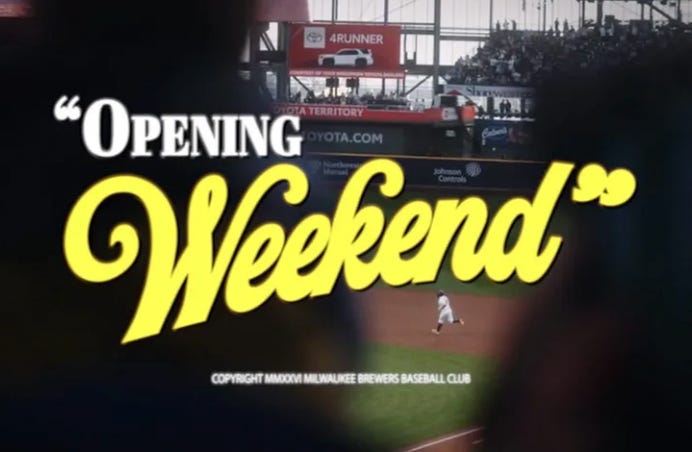
I grew up watching the Brewers. That’s something that naturally happens when you’re born and raised in Wisconsin. We went to the World Series when I was two (I don’t remember it, thankfully) and haven’t been back since.
Milwaukee is the definition of a small-market team: always trading away talent for assets, always losing to clubs with bigger payrolls. But the front office has turned constraint into identity: a pitching lab that drafts raw arms and rebuilds castoffs into dominant starters, a metrics-driven operation that consistently punches above its weight. What I didn’t expect was for the social media team to be running the same playbook.
Ezra Siegel, the Brewers’ senior manager of digital content, calls what his team does “arthouse baseball” — showcasing the sport in experimental, unconventional ways that baseball fans haven’t seen before.
The season-opening video this year looked less like a hype reel and more like an old Hollywood film; the title card was inspired by the 1953 Audrey Hepburn movie Roman Holiday. Their GTA-style parody starring outfielder Sal Frelick went viral this spring (1.7M views, shot in a single day). Senior videographer Carter Green has pulled references from Kubrick’s 2001: A Space Odyssey, Coppola’s Apocalypse Now, and A24 trailer aesthetics. At Dodger Stadium, he recreated The Brutalist‘s upside-down Statue of Liberty shot. In 2018, the team produced a shot-for-shot remake of the “Beast” scene from The Sandlot.
According to Zoomph, the Brewers had the best social performance relative to audience size in all of baseball last season. They do it with about a dozen people — three on social, seven in video, three in graphics — covering 162 games a year.
The lesson is the same one the Brewers have been teaching on the field for a decade: constraints don’t limit creativity, they sharpen it. [Taylor]
📄 Upend audience expectations by Rachel Karten
🌐 MLB teams invest in internal creative studios to boost fandom in Sports Business Journal
PSB’s “Go” is a great track. Such an inventive group.