
Welcome to OSV Field Notes, a weekly, high-signal curation of things worth your time.
1. Kobe Before Kobe

Mike Sielski’s The Rise: Kobe Bryant and the Pursuit of Immortality is one of the best sports books I’ve read in years, and one of the best books, period. Part of what makes it work is Sielski’s decision to narrow his frame. This is not a biography of Kobe’s entire career. It ends in 1997, after his first NBA season, when he’s still a teenager with everything ahead of him. The heart of the book is his time at Lower Merion High School in the Philadelphia suburbs, where he led a team with just one star player to a state championship in 1996. By focusing on this narrow window, Sielski turns what could have been a familiar legend into a genuine coming-of-age story, and the effect is revelatory.
The reporting is top notch. Sielski conducted more than 100 interviews with coaches, teammates, teachers, and others who crossed paths with Kobe during those years. He also had access to a trove of never-before-released interviews that a former assistant coach recorded with Kobe during his senior season and early days in the NBA. These tapes preserved the thoughts and dreams of a teenager who believed, with total conviction, that he would one day perform on the same stage as Michael Jordan. You hear Kobe’s voice before fame calcified it, before the persona of the Black Mamba was fully constructed.
The writing is masterful. Sielski captures game action with the precision of someone who understands that sports writing, at its best, is about rhythm and detail. But he also brings the same care to the quieter moments: Kobe watching VHS tapes of Jordan in his room, getting nervous every time the team bus crossed a bridge, navigating the strange social terrain of being a kid who had spent his formative years in Italy and returned to America as something of an outsider. You see the influences that shaped him - his father Joe’s basketball career and the coaches who recognized his obsessive drive - without the narrative ever jumping ahead to spoil what’s coming. Sielski trusts the present moment to carry its own weight.
Great books leave you wanting to return to certain passages, to sit with a particular sentence or scene, and The Rise is full of those. The kid Kobe was explains the man he became, and Sielski lets you see the connection without ever making it feel overdetermined. It’s a book about basketball, yes, but it’s also a book about ambition, family, and the strange alchemy of becoming who you’re going to be. [Jimmy]
📘 The Rise: Kobe Bryant and the Pursuit of Immortality by Mike Sielski
2. A Man on the Moon : The Rest of the Apollo Story

Everyone knows about Neil Armstrong and Buzz Aldrin. Apollo 11 gets almost all of the mindshare in our culture (followed by Apollo 13 — thank you, Ron Howard!). A great adventure has been culturally compressed into one iconic image, but the full story was longer, stranger, more dangerous, and more human than most people know.
Apollo 1 was supposed to be the first crewed flight, but a cabin fire killed Gus Grissom, Ed White, and Roger B. Chaffee before the program ever got off the ground, delaying crewed flights until Apollo 7.
While Apollo 11 astronauts were the first on the moon, they only spent two and a half hours walking on the surface, venturing about 200 feet from the lunar module. Meanwhile, Apollo 17’s crew spent roughly 75 hours on the surface, more than 22 hours outside the lander, and ranged as far as 4.7 miles from the module.
These men were the biggest celebrities in America — astronauts on cereal boxes, their families photographed for Life magazine. Most were test pilots who had spent careers professionally flying experimental jets that killed their colleagues routinely (Tom Wolfe documented this extensively in The Right Stuff, another book I loved). By the time they reached NASA, they had already normalized levels of risk that would be unthinkable for almost anyone else.
Chaikin spent about a decade researching the book. He did personal interviews with 23 of the 24 Apollo astronauts who flew to the Moon (Jack Swigert, who was on Apollo 13, had died of cancer in 1982), as well as mission personnel at NASA. Reading it made me feel like I was inside the Apollo program, living through those historic moments in real time.
Apollo 11 is the chapter everyone knows. Chaikin gives you the rest of the story. [Liberty]
📘👨🚀 A Man on the Moon: The Voyages of the Apollo Astronauts by Andrew Chaikin
3. Encrusting the Tortoise : Taste as the Antidote to Slop
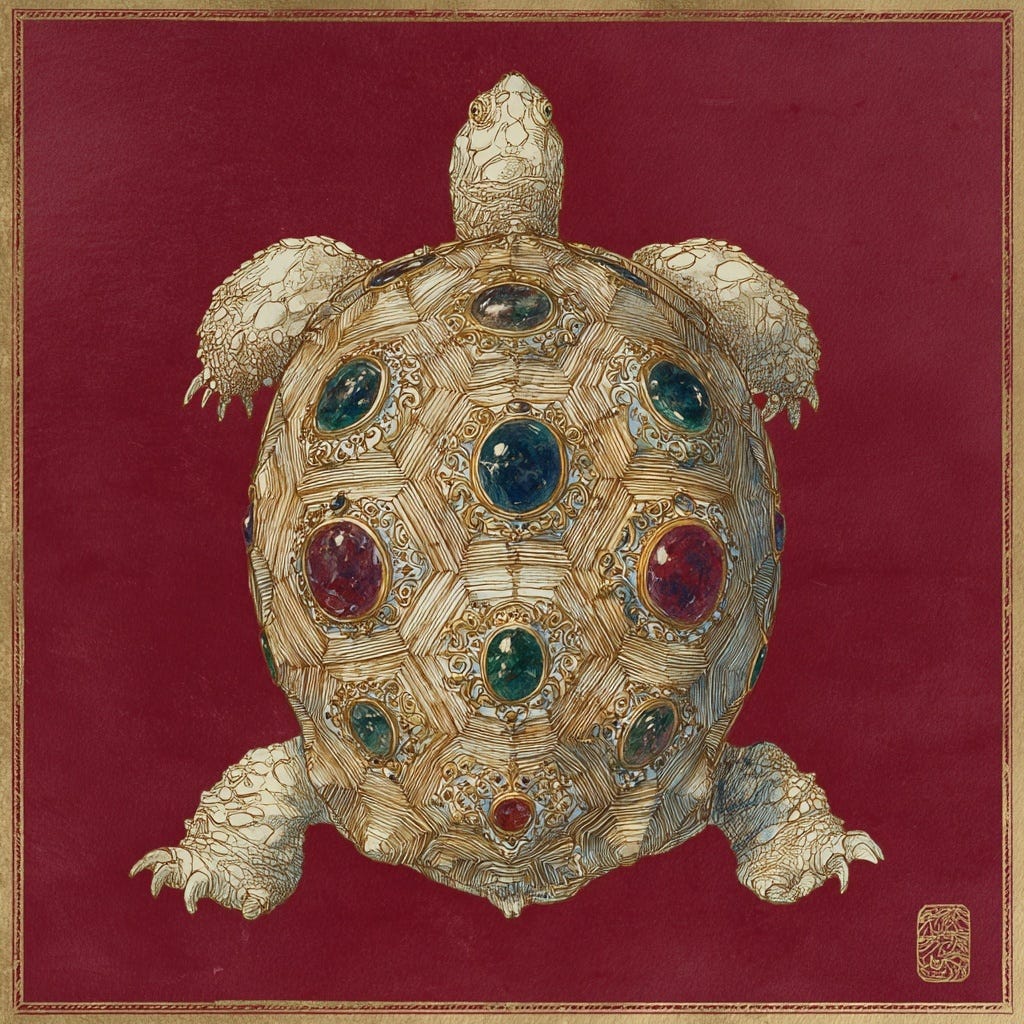
“Taste” has become Silicon Valley’s favorite word. Founders drop it in pitch decks. VCs whisper it over Philz. Everyone has read Rick Rubin’s book. But Douglas Brundage, writing in his Substack newsletter Enfant Terrible, argues that most of the people talking about taste have mistaken it for something else entirely and that AI has made the problem impossible to ignore.
Brundage opens with an 1884 French novel about a reclusive aristocrat who encrusts a live tortoise with jewels until it dies under the weight of its own decoration. It’s a strange and perfect metaphor. He traces a line from that doomed reptile to the flood of AI-generated sameness that blankets the internet. His central claim is sharp: we handed the world a generative engine and most people produce slop with it, then blame the engine. That’s like cursing a Steinway because someone played “Chopsticks.”
What makes the piece land isn’t the takedown, but the standard it restores. Brundage’s argument is that taste is not style, and certainly not curation. It’s the uncomfortable process of discovering what you actually like, often before you can defend it, and then pushing on reality hard enough to make something from that impulse. The moment taste hardens into a system (the right typeface, the correct palette, a Ferrari interior that looks like a giant Apple Watch), it stops being taste and becomes fashion. That gap — between having references and having a point of view — is the one thing no model will close for you.
For those of us who are optimistic about what these tools can unlock, this essay is the sharpest articulation I’ve read of why optimism is warranted, and what it asks of us. [Taylor]
📄 Taste Test: Encrusting the Tortoise by Douglas Brundage
4. The End of the Tour : Spend Five Days with David Foster Wallace

Even if you’ve never read David Foster Wallace, even if you’re not ready for Infinite Jest, I think you should listen to his This is Water commencement speech.
If you like that, I think this lesser-known A24 film may also be for you.
The End of the Tour is delightfully small-scale and intimate. In 1996, Rolling Stone reporter David Lipsky spent five days with David Foster Wallace during the ‘Infinite Jest’ book tour. The film is a largely word-for-word reconstruction of that extended-interview/road trip/hanging out with DFW based on Lipsky’s recordings and notes (he also wrote a memoir of the experience). There’s none of the usual prestige-biopic machinery. It’s mostly two dudes hanging out in messy living rooms, having interesting conversations.
Of course, DFW’s suicide in 2008 colors everything retroactively, but the film is really about the difficulty of genuine human connection, the weirdness of fame finding someone who distrusts fame, and the fact that brilliance offers no immunity from loneliness, despair, or self-destruction.
Jason Segel doesn’t play Wallace as a marble bust or a bundle of tics. He keeps him human while conveying the painful hyper-awareness that makes him feel more alive and more fragile at the same time. Wallace talks openly about performing for Lipsky even as he's trying not to. The film is full of that recursive self-awareness.
The film isn’t just about Wallace. There’s a lot of Lipsky, too. He’s ambitious, curious, needy, and competitive. The movie understands that interviews are not one-way extractions, they’re social duels.
To me, this film feels like spending an afternoon with someone you'll miss. [Liberty]
🎬 ‘The End of the Tour’ (2015)
5. Field Dispatch from Borges’s Buenos Aires
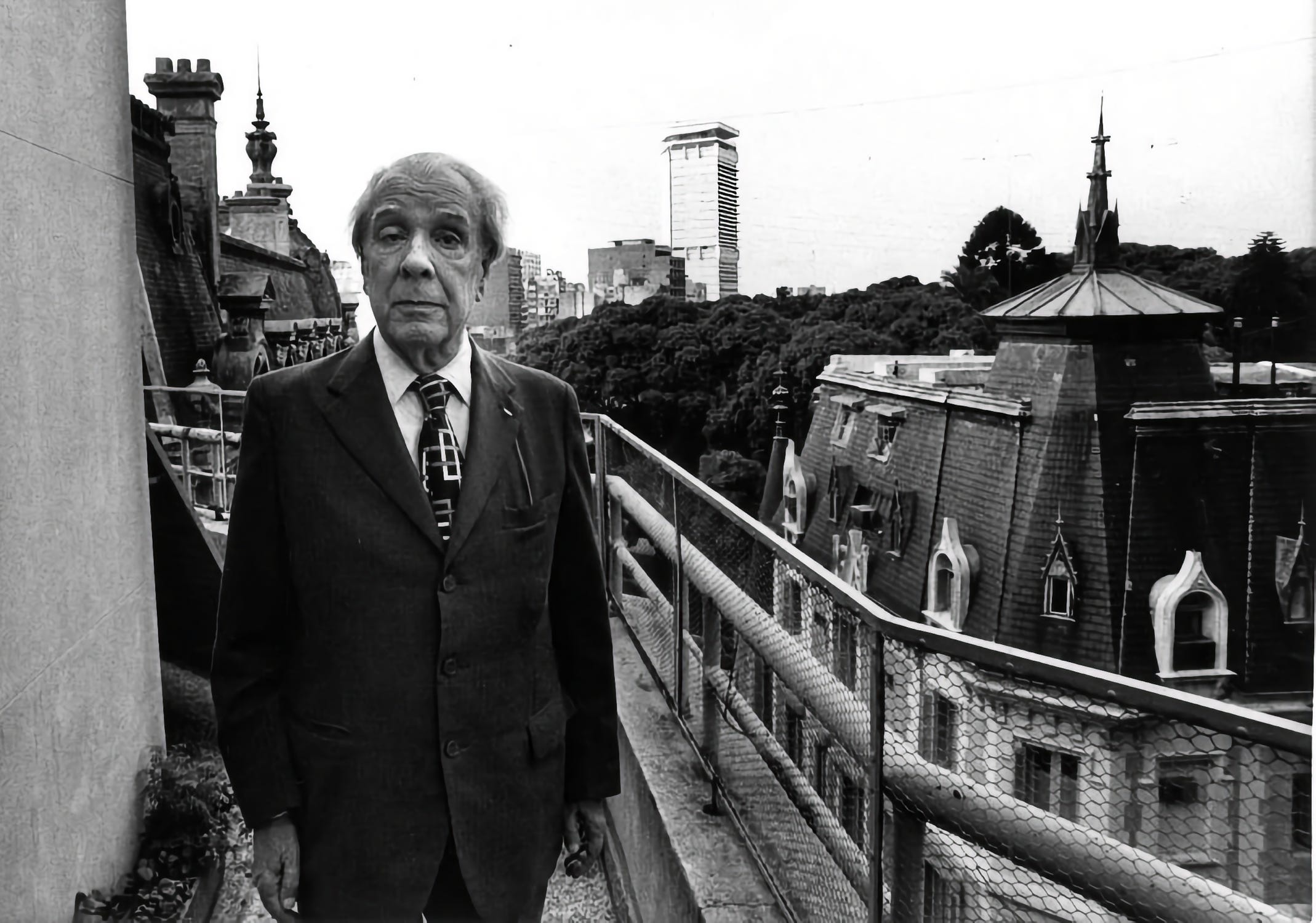
It is 12:29 a.m. and I am wandering the streets of Buenos Aires in search of a lighter. The kiosks are still open. There’s a slight drizzle. A few policemen patrol the streets, chatting with the locals. For some Argentines, the night has just begun, and many continue to drink coffee at hours that would scandalize most North Americans.
I am in the city of Jorge Luis Borges, and two blocks from my hotel is the street that bears his name.
It’s no secret that we at OSV are huge fans of Borges. We’ve mentioned his literary works before in the first two editions of Field Notes. Since I’m in his native city, I want to revisit his work and view this city through the eyes of its defining writer. My journey begins with Borges’s first poetry collection: Fervor de Buenos Aires (1923). Here’s an extract from The Streets:
The streets of Buenos Aires
are already the innards of my soul.
Not the energetic streets
bothered by hurry and bustle,
but the sweet neighborhood street
made tender by trees and sunsets.
And here is another, from Houses like Angels, published in his second poetry collection, Luna de enfrente (1925):
Where San Juan and Chacabuco intersect
I saw the blue houses,
the houses that wear colors of adventure.
Now it’s almost 3 a.m., and I’ve lost myself wandering the night streets in search of these blue houses. There’s a cool breeze, and at a bus stop I hear a ragged man play the guitar. Borges spoke of his love for this boundless city: “Buenos Aires is deep, and never have I, disillusioned or suffering, given myself over to its streets without receiving some unexpected consolation, whether from feeling unreality, from guitars at the back of a patio, or from contact with other lives.”
Borges’s poetry has given me words to express my appreciation of this city. Now my morning walks write themselves the way a Borges poem might; I think I’m choosing the route, but the city knows better. [Rohan]