
Welcome to OSV Field Notes, a weekly, high‑signal curation of things worth your time.
1. House of Games (film, 1987)
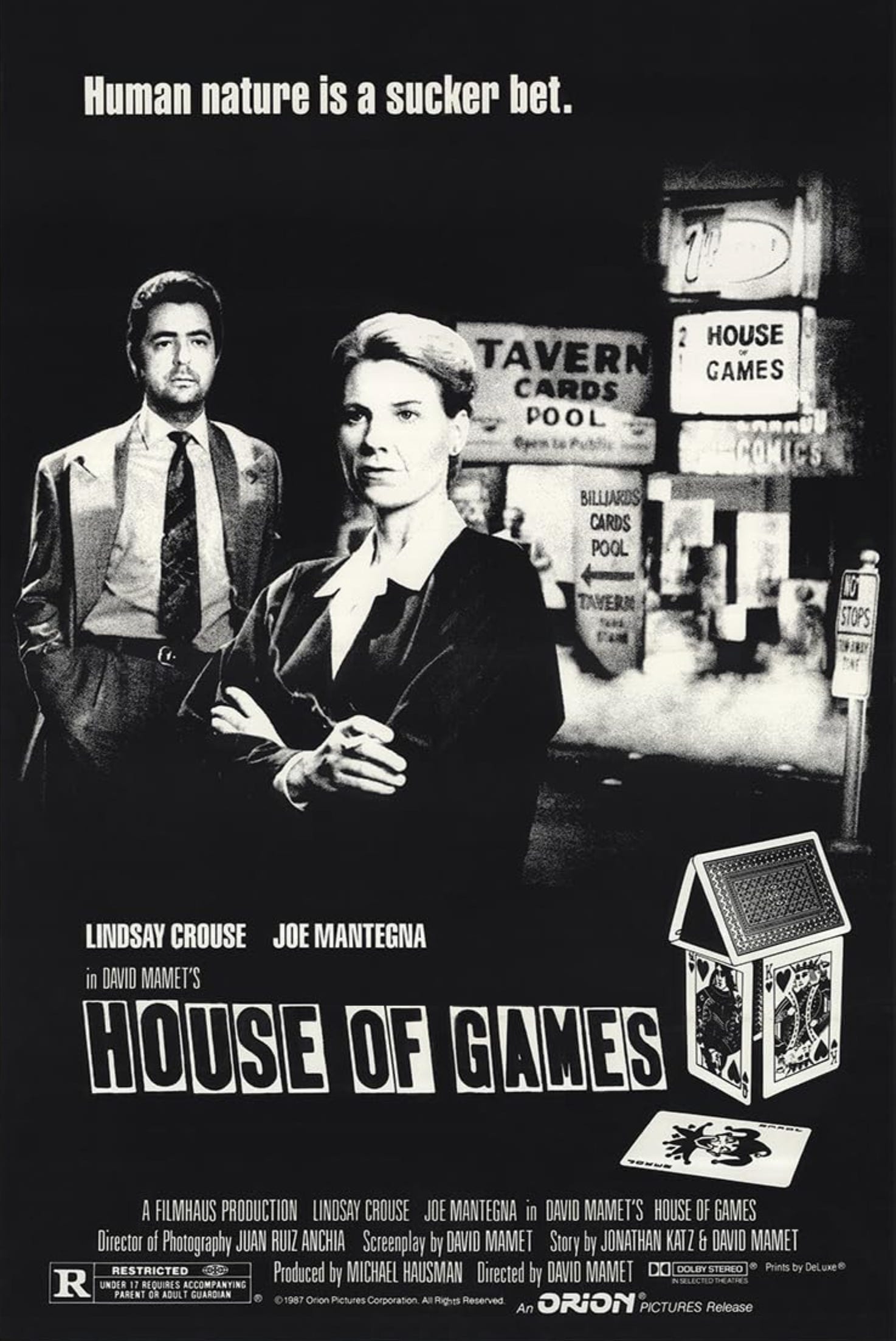
A faintly ridiculous, head-spinningly twisty David Mamet con-man thriller from 1987. Psychiatrist Margaret Ford is successful, wealthy, and racked with ennui. When one of her patients, deep in debt to a vicious criminal, begs for her help, she’s pulled (a little too willingly) into a dangerously seductive world of high-stakes confidence games. To say any more would be a spoiler: this is a film of double crosses, triple bluffs, and elaborate misdirection. And yes, we’re the mark.
House of Games was David Mamet’s directorial debut, and in Mike (played by Joe Mantegna, who would later become Fat Tony on The Simpsons), he finds an ideal outlet for his sharp, machine-gun dialogue.
Poker aficionados, be warned: there is an early set piece that rivals Casino Royale in its game-breaking logic. Still rocks though. [Ed]
🎬 House of Games (1987, David Mamet)
2. Every Curve Has a Reason: The Origins of Iconic Electric Guitar Shapes
If you’re a musician, you probably know all these names — Stratocaster, Les Paul, Jazzmaster, Telecaster, SG, etc — but even if you aren’t, you’ve almost certainly seen these iconic instruments hundreds if not thousands of times in photos, videos, and onstage. Your brain knows these shapes.
Where did they come from? Who designed these iconic instruments starting in the 1950s, and what makes one different from the other? If they’re tools, what are the jobs that each was purpose-built for, and why are some of them still around six or seven decades after some craftsman first created the prototype? [Liberty]
3. The Last 200,000 Years of Human History in One Hour
Time is a strange beast. It’s very hard for our minds to truly grasp. In the same way that the physical scale of things outside everyday life is difficult to imagine (both the very small — microorganisms, atoms — and the very large — stars, galaxies, the distances between them), deep time is equally hard to have a “feel” for.
Our planet is about 4.54 billion years old, but even the tiny slice where we’ve been around, about 200,000 years, is too much for our brains. This video attempts to show the history of humanity at a pace of 50 years per second. Note how little changes for millennia until we discover certain IDEAS that create the modern world in the final stretch (never underestimate the power of ideas!). [Liberty]
4. The Science of Hating Chocolate

This piece by OSV Grantee Chandhana is a masterclass in intellectual curiosity applied to everyday life. She took an everyday observation about herself, “I don’t like chocolate”, something most would dismiss as a quirky food preference, and turned it into a legitimate scientific investigation complete with hypotheses, genetic Punnett squares, and a three-continent experimental protocol.
The payoff is genuinely surprising, I never saw it coming: she found that pre-treating her tongue with salt makes chocolate tolerable for the first time in a decade, supporting the theory that bitter receptor suppression can chemically override what seemed like an immutable preference. It’s equal parts memoir, food science deep-dive, and a reminder that the most mundane mysteries, when investigated with rigor and creativity, can reveal how much of our sensory reality is constructed by forces we never consciously perceive. [Liberty]
5. A Cool Breeze Through the Skull: The Borges Starter Pack
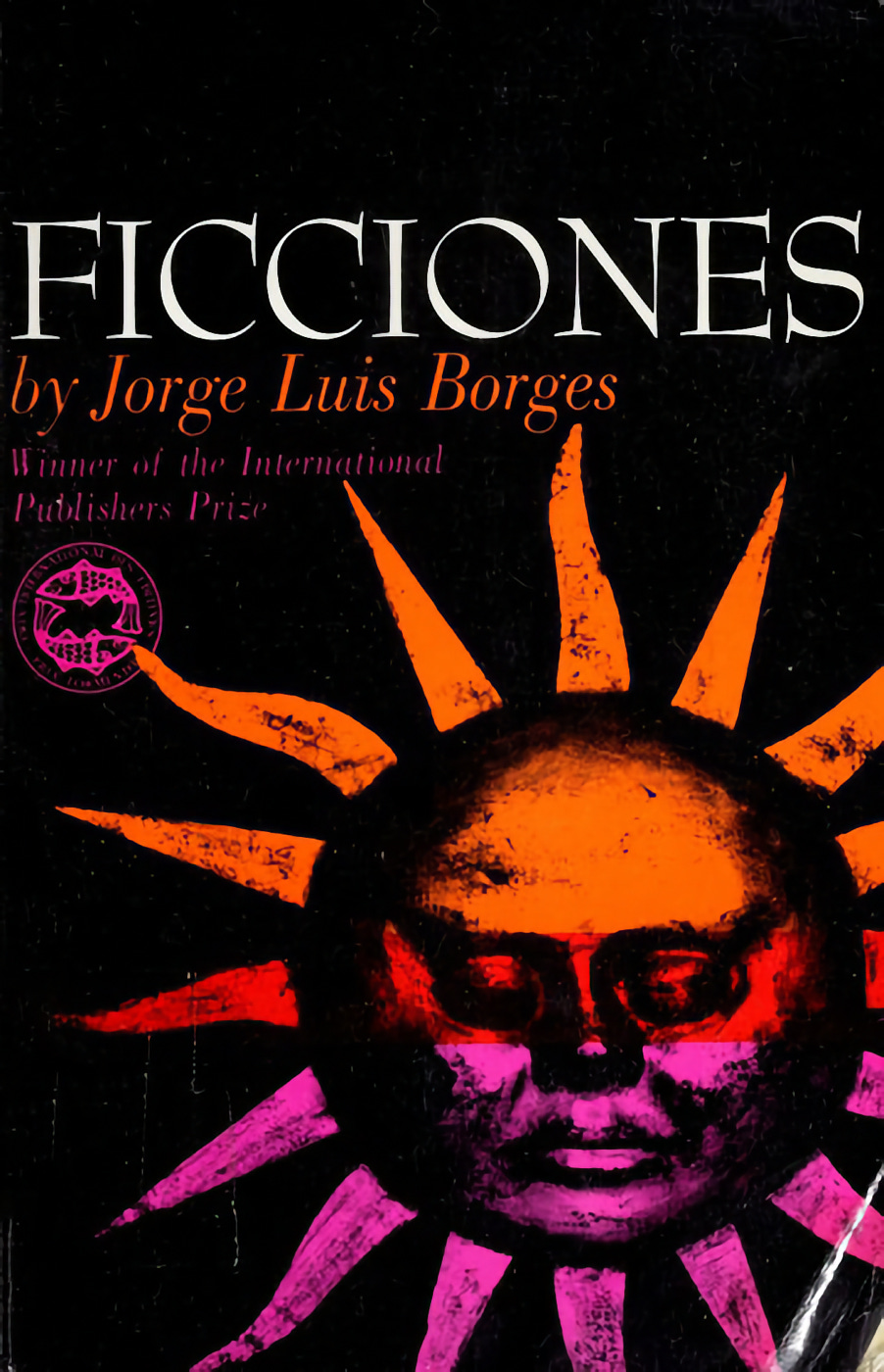
Borges was mentioned in last week’s edition, so I thought I’d bring you right to the source. Ficciones is a collection of short stories written between 1936 and 1956. Many of the stories had already been published in different collections, but there was something about this particular arrangement of fourteen stories (seventeen in the expanded edition) that caught fire—cementing Borges as a household name.
If I could only save four stories from an Alexandrian fire, they would be “The Garden of Forking Paths,” “The Library of Babel,” “The Lottery in Babylon,” and “Tlön, Uqbar, Orbis Tertius” (particularly mind-melting).
I once heard someone say that reading Borges feels like someone unscrewing the top of your head and letting a cool breeze run over it, and I couldn't put it any better. [Dylan]
📘 Jorge Luis Borges’ Ficciones (1944)
🔥