
Shooting Up: A Memoir of Love, Loss, and Addiction is out now, published by Infinite Books in the US and Little, Brown in the UK.
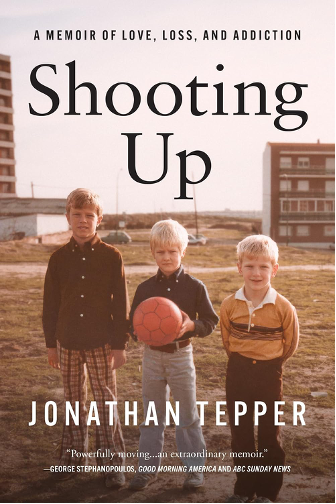
When people find out that I’ve written a memoir, the reaction is usually the same: surprise, followed by confusion. What’s a fund manager doing writing about growing up among heroin addicts in 1980s Madrid?
It’s a fair question. My professional life has been spent analyzing markets and companies, founding Variant Perception, a research firm for asset managers, and now serving as Chief Investment Officer at Prevatt Capital. My published works include The Myth of Capitalism and other books about markets. A coming-of-age story about missionaries, drug rehabs, and the AIDS epidemic doesn’t exactly fit the pattern.
But here’s what I’ve learned: we don’t choose the stories that shape us. We only get to decide whether we tell them.
We’re giving away free spots to a live Q&A with Jonathan, hosted by our Senior Editor Dylan O’Sullivan, on Wednesday, March 18 at 5 PM ET. Enter the lucky draw below — submissions close Sunday, March 8.
An Unlikely Beginning
I started writing Shooting Up in 2005, when I was a junior analyst at SAC Capital, an intense, demanding hedge fund. My days were consumed by financial models and earnings calls.
One day, I was browsing a bookstore on Manhattan’s Upper West Side when I stumbled upon Flying Over 96th Street: Memoir of an East Harlem White Boy by Thomas L. Webber. Dr Webber wrote eloquently about growing up as an outsider in East Harlem because of the Christian calling of his parents. His coming-of-age story is elegiac, moving and deeply empathetic.
I realized then that my story — the story of my friends and family — needed to be told. For the next three years, I wrote in stolen moments during the evenings and weekends. By 2008, I had a complete manuscript. Then I did what many writers do — I put it in a drawer and moved on with my life after a few rejections.
(The usual rejection from publishers was, “It’s beautiful and moving, but I’m not sure there is an audience for it.” Also, who wants to read a literary memoir from a finance bro? I took comfort in the fact that editors repeatedly rejected Elie Wiesel’s Night, JK Rowling’s Harry Potter, and countless other books that eventually found their audience.)
A Long Pause
I put the manuscript aside because life got in the way. I helped found Demotix, a citizen journalism platform that we eventually sold to Corbis (then owned by Bill Gates). I built Variant Perception from scratch with dear friends. I wrote a few economics books. I started Prevatt Capital. The urgent always seemed to crowd out the important.
Then, a few years ago, a mentor who is a successful fund manager told me, “You should get this published before your father dies.” I went back to editing evenings and weekends and got a book contract soon after.
What You’ll Find in These Pages
Shooting Up is the story of my childhood in San Blas, a working-class neighborhood in Madrid that became Europe’s largest open-air drug market in the 1980s. My parents, Elliott and Mary Tepper, were American missionaries who felt called to work with heroin addicts. Our family of six — my parents and four blond, blue-eyed boys — stuck out in the barrio.
Our apartment became “Hotel Tepper,” a revolving door of recovering addicts. We opened our lives to men like Raúl, who had been an armed robber and a desperate junkie. Like Jambri, who had robbed banks as a getaway driver and spent five years in Madrid’s largest prison. They became my older brothers, my teachers, my friends.
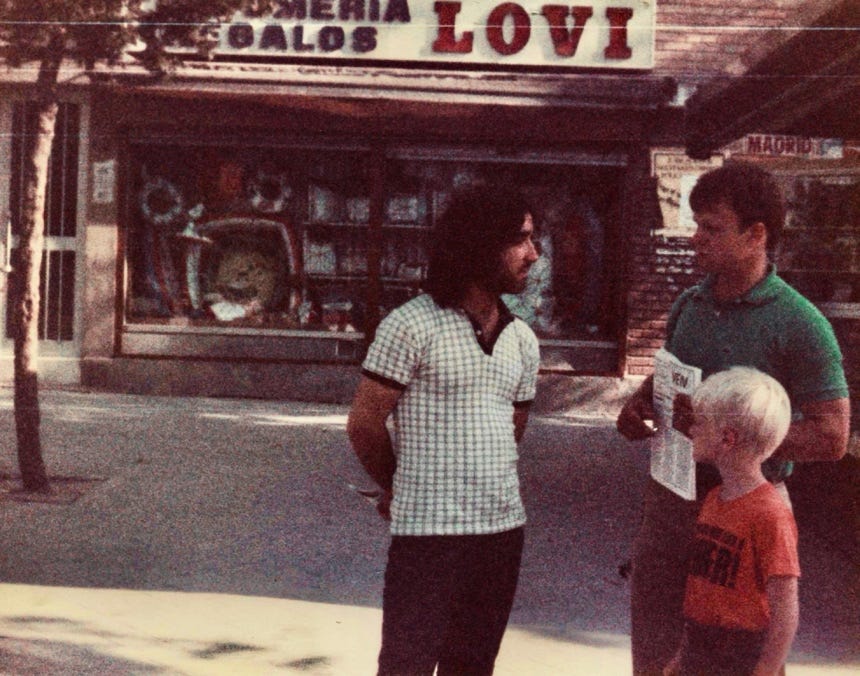
The book follows the explosive growth of Betel, the drug rehabilitation center my parents founded with Lindsay McKenzie (an Australian missionary) in our living room. From a single addict detoxing in Lindsay’s apartment, it grew to house hundreds, then thousands of recovering addicts worldwide.
But this isn’t really a book about drug rehabilitation. It’s about love in the most unlikely places. It’s about my parents’ unflinching commitment to people society had written off. It’s about men and women society deemed worthless discovering their own dignity and purpose.
The Shadow of AIDS
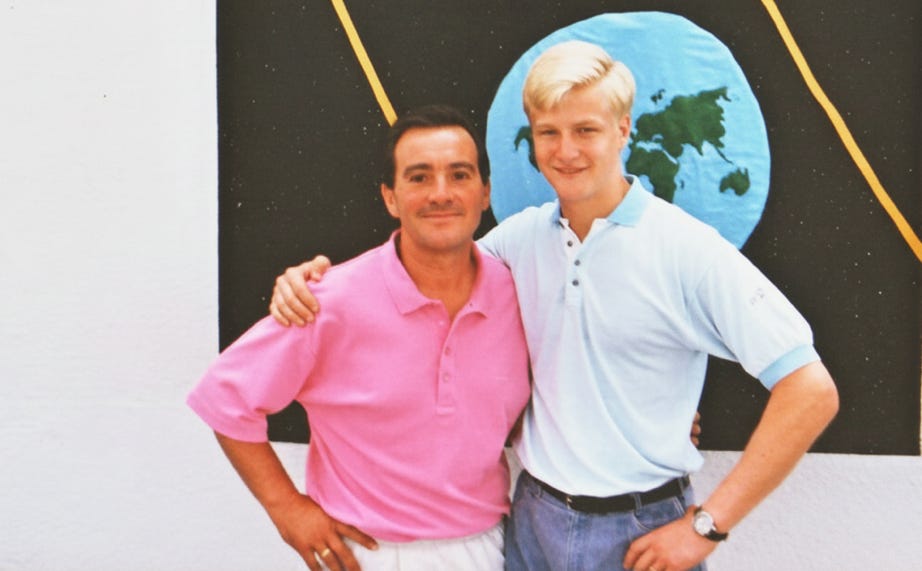
The book is also a chronicle of the AIDS epidemic as it devastated Spain in the late 1980s and early 1990s. Spain had the highest rate of HIV infection in Europe, and the virus spread primarily through shared heroin needles. My neighborhood was ground zero.
Almost all my older brothers and sisters in the rehab were HIV+. In high school, I spent evenings and weekends at the infectious diseases ward of Ramón y Cajal Hospital. I learned the progression of the disease — the fevers, the pneumonias, and countless infections — through watching friends waste away.
An Improbable Education
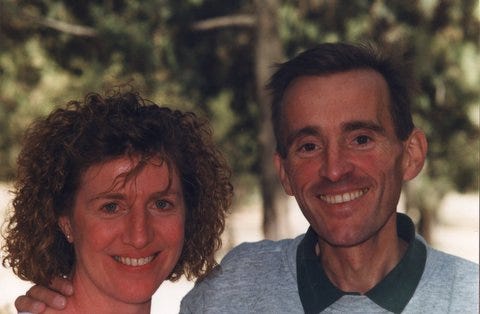
Despite growing up in what most would consider poor and disadvantaged circumstances, my brothers and I thrived academically. When exchange rates made our missionary school unaffordable, my mother homeschooled us. Without formal textbooks, we taught ourselves everything.
My older brother David sent me his university books, and I worked through college-level economics, chemistry, history, and many other subjects in high school. Jambri sent Italian novels and a small black Bible that became my primer for learning the language. I memorized passages from Dante’s Divine Comedy, not for school but because the words offered solace and beauty in a world full of suffering.
My inspiration to learn was Santiago Ramón y Cajal, the first Spaniard to win a Nobel Prize in sciences. Whenever I visited my friends in the infectious diseases ward at Ramón y Cajal Hospital, I saw his quote in the entrance, “Every man can become the sculptor of his own mind if he sets himself the task.”
Why This Book Matters Now
You might wonder why a memoir about 1980s Madrid matters today. While the story of growing up among heroin addicts during the AIDS epidemic is unique, Shooting Up is a universal story of love and loss. None of us can outrun sickness, death or suffering. I hope the book is timeless and provides comfort to those who suffer, reminding them that they have dignity and are not alone.
This is also a book about how we treat the most vulnerable among us. About whether society’s outcasts deserve love, dignity, and second chances. About the difference that a few committed individuals can make when they refuse to look away from suffering.
It’s also about the consolations of learning and literature. In a world that increasingly measures education by economic returns and career outcomes, Shooting Up is a reminder that books and learning can be lifelines, sources of beauty and meaning, tools for sculpting our own minds and transcending our circumstances. I hope it is a reminder that we read to know we’re not alone.
The Act of Remembering
Finally, this book is an act of remembering. My friends from San Blas — Raúl, Jambri, Manolo, Ángel, Trini, and so many others — died largely anonymous deaths in the height of the AIDS crisis.
One day in 1996 I read an article that said forty thousand Spaniards had died of AIDS. I took my address book and counted friends from Betel who had died. I stopped at twenty-five and wasn’t halfway through. I was ashamed. These were not statistics; they were my friends, and I loved them.
They were remarkable people who showed extraordinary courage in the face of a disease that terrified the world. They created a community of love and mutual support that has now helped hundreds of thousands of addicts worldwide.
Raúl, the first addict in Betel, once said that the most beautiful story anyone can tell is the story of his own life. I do not know if my story is beautiful, but it is the only one I have. Some writers make a fetish of their suffering and wear it like a medal. Others treat memoirs like letters in a bottle, hoping to send the pain out to sea, never to be seen again. I wrote this book because words keep time from bleaching the colors out of memories, the fading snapshots of the past.
I wrote Shooting Up because I wanted to tell my friends’ stories. I hope the memory of my friends might be a blessing to others.
PRAISE FOR SHOOTING UP
Shooting Up is an extraordinary memoir of a unique childhood among heroin addicts during the AIDS epidemic, but it is a universal story of love and loss that is powerfully moving. At a time when society is so deeply divided—and faith is a wedge that is often used—it is refreshing to read a missionary kid’s true story of compassion and empathy for the outcasts. The book is also a tale filled with grace and humor in life’s darkest moments.
— George Stephanopoulos, political commentator and Good Morning America and ABC Sunday News anchor
Shooting Up is an astonishing work that opens your eyes—and your heart—to a whole new world, one that is as beautiful and inspiring as it is gritty and harrowing. Jonathan Tepper is an extraordinarily gifted writer who has somehow managed to write a memoir that is at once heartbreaking, gut-wrenching, and joyous.
— Amy Chua, Yale Law professor and author of Battle Hymn of the Tiger Mother and The Golden Gate
In stark, often heart-rending prose, Jonathan tells the story of growing up with his three brothers and missionary parents in San Blas, a drug-overrun neighborhood of Madrid. It is a tale of tragedy and triumph in the midst of loss and death. Ultimately, Shooting Up is a powerful testament to the redemptive power of faith, friendship, and love. I couldn’t recommend it more highly. I cried, I laughed, I was changed.
— Tom Webber, author of Flying Over 96th Street: Memoir of an East Harlem White Boy
Shooting Up recounts a young man’s coming of age in the unlikeliest of places and finds joy, wisdom, and humor in the darkest of moments. Reading this book made me think anew about grace, gratitude, and the hard roads that take us there.
— Daniel Swift, author of Bomber County
Jonathan Tepper’s story is remarkable. From his father’s dramatic conversion to the years pioneering Betel, this is the story of no ordinary family. I am so glad that Jonathan is sharing his extraordinary experience through this account.
— Nicky Gumbel, pioneer of the Alpha course and former vicar of Holy Trinity Brompton (HTB) in London
I, too, grew up as a home-schooled “missionary kid,” so I “get” Jonathan Tepper’s brilliant memoir Shooting Up. Tepper’s story about addiction, AIDS and his parents’ work with addicts in Spain in the 1990s is an insanely entertaining and wild account. In fact, it’s the most riveting memoir I’ve ever read. Who else recalls his childhood with lines like these? “As a graduation gift, my father took me to see drug rehabs. It was what we did as a family.”
Frank Schaeffer, author of Crazy for God
It has been one of the privileges of my life to know the Tepper family and witness first-hand the marvel that is Betel, where countless people have found hope, healing, community, and new beginnings. Here, in his memoir Shooting Up, Jonathan Tepper, with great skill, eloquence, humor, and provocation, tells us the extraordinary story of Betel. This is not just another read—it’s an event.
— Simon Ponsonby, priest, author, and teacher at St. Aldate’s, Oxford
Jonathan Tepper’s gut-wrenching, inspiring memoir Shooting Up immerses you so deeply in its characters that you feel as if you’re living—and suffering—alongside them. Set amid the ravages of the AIDS epidemic in Madrid, this gorgeously crafted coming-of-age story is both luminous and profoundly humane. An unforgettable read that’s impossible to put down.
— Joseph Luzzi, author of My Two Italies and In a Dark Wood: What Dante Taught Me About Grief, Healing, and the Mysteries of Love
This is a fascinating story, brilliantly told. It recounts the work of two little-known but remarkable American missionaries in the drug-saturated streets of San Blas, Madrid, in an age of AIDS and addiction, told through the eyes of one of their sons. It is gripping, harrowing and tragic - yet somehow also a story of faith, courage and hope.
— The Rt Revd Dr Graham Tomlin; Director of the Centre for Cultural Witness
A remarkable, true-life story about an American family offering salvation in Spain’s slums… an unadorned coming-of-age memoir rooted in faith and humble acts of service. Our Verdict: GET IT
— Kirkus
Riveting memoir exploring missionary work, addiction, and human kindness…
— Booklife
Shooting Up: A Memoir of Love, Loss, and Addiction is published by Little, Brown in the UK and Infinite Books in the US.
