
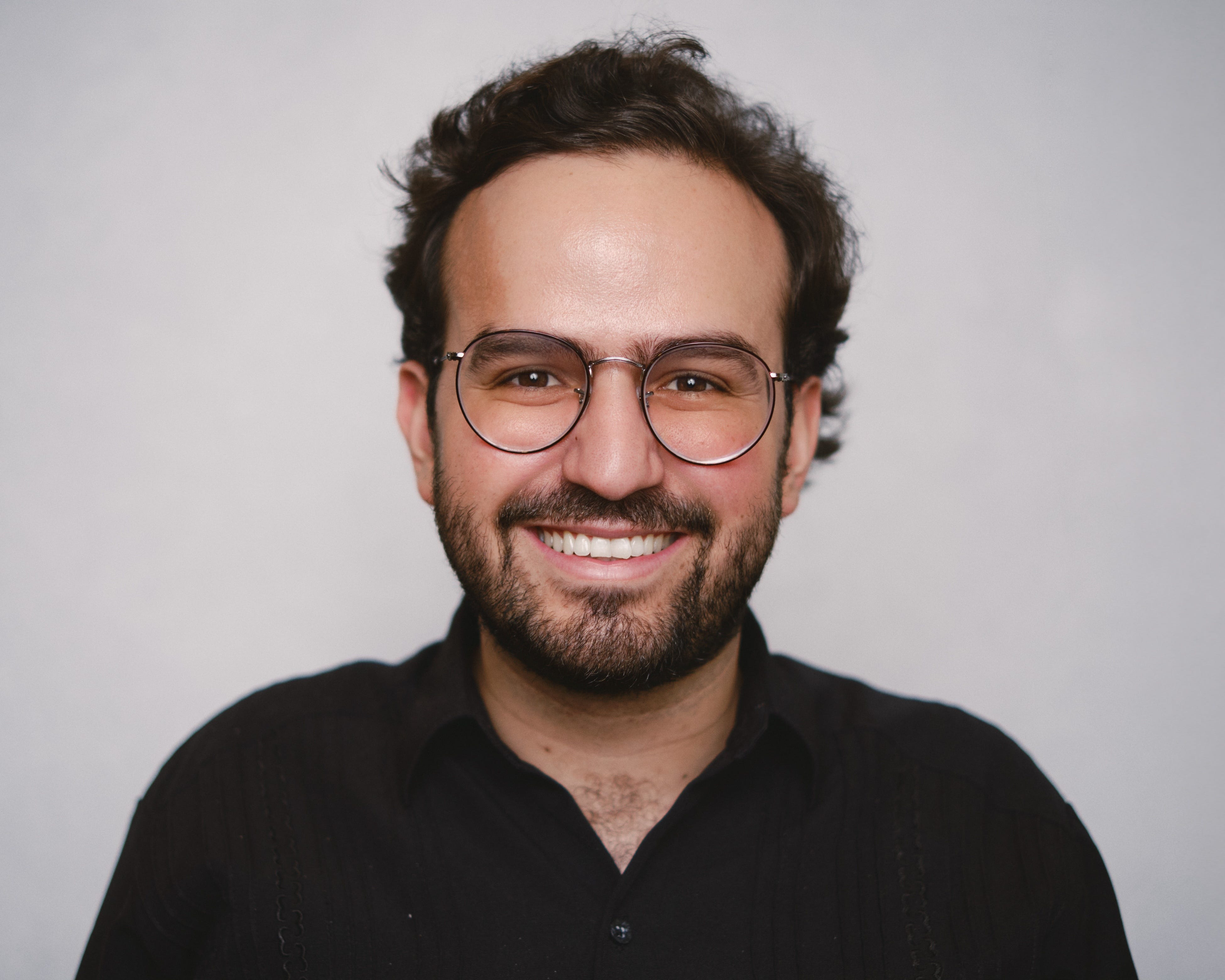
José Luis Sabau grew up on Cozumel, a small island off Mexico’s Caribbean coast. Most people knew it only as a cruise ship stop. The local library was a single room in a museum, stocked mostly with books on tourism. By 15, he’d started a news outlet that became the most followed in his state. By 21, he was part of a Pulitzer Prize-winning team of journalists. Now he’s building Perpetuo, a magazine he describes as “the New Yorker for the Spanish-speaking world,” publishing dozens of new writers every month to tens of thousands of readers.
We spoke with José about growing up hungry for knowledge in a place that offered almost none, and why he believes the Spanish language is overdue for its next golden age.
José is a 2026 O'Shaughnessy Fellowship recipient. The O'Shaughnessy Fellowships are still accepting applications for 2026 - offering up to $100,000 in equity-free funding for builders, researchers, and creatives working on transformative projects. Applications close April 30, 2026. Apply here.
You grew up on Cozumel, which isn’t exactly known for intellectual life. What was that like?
It was non-existent in the traditional sense. The only library was a room in the Cozumel Museum, probably smaller than the one I’m sitting in, mostly tourism books. The University of Quintana Roo isn’t a very established institution. There wasn’t a large academic life.
But here’s the asterisk. When I say these things, it sounds like I had no access to intellectual capital. That’s wrong. I wasn’t born at the beginning of the 20th century. I was born at the dawn of the technological age. I had a computer early on. My dad would give me a random name and I would have to go read every article I could find about that person. Former Mexican presidents, Nobel Prize winners. I grew an early obsession with Wikipedia.
And then I started weaponizing the few things I had. Every day after school I’d go to the local McDonald’s. You wouldn’t expect it to be a place for learning. But it was where the American tourists went. As a kid learning English on a small island where most people don’t master it, you’d see an American tourist trying to order a Big Mac and a cashier who speaks rudimentary English. Perfect ground for exploration. I’d talk to the Americans, ask them their thoughts. I remember the 2008 presidential election. Reading about Obama online, then going to ask my local Americans at the McDonald’s about it.
How did you end up at Stanford? You were the first person from your entire state to go there as an undergrad.
My parents never told me no to anything. But we were on a small island, so they never told me how to do things. You just had to figure it out.
To me, Stanford was the place that Hannah Montana went to college. That was my reference. Or Gabriella Montez from High School Musical. In Mexico, after the free trade agreement, you grew up watching American TV, Disney Channel, Nickelodeon, and Stanford carried weight, same as Harvard or Yale.
I had no idea how to get there. So I went to the internet, found some summer programs. Got a full-ride scholarship to MIT Launch. That was the first time I met Americans my age. Most of the Americans I’d talked to at McDonald’s were older people from cruise ships. And I learned things you can’t figure out online. Like what the SAT acronym actually means. In Spanish, SAT is the acronym for the IRS, the institution that charges your taxes.
I had to figure out everything on my own, down to how to apply to these schools without being able to pay the application fees.
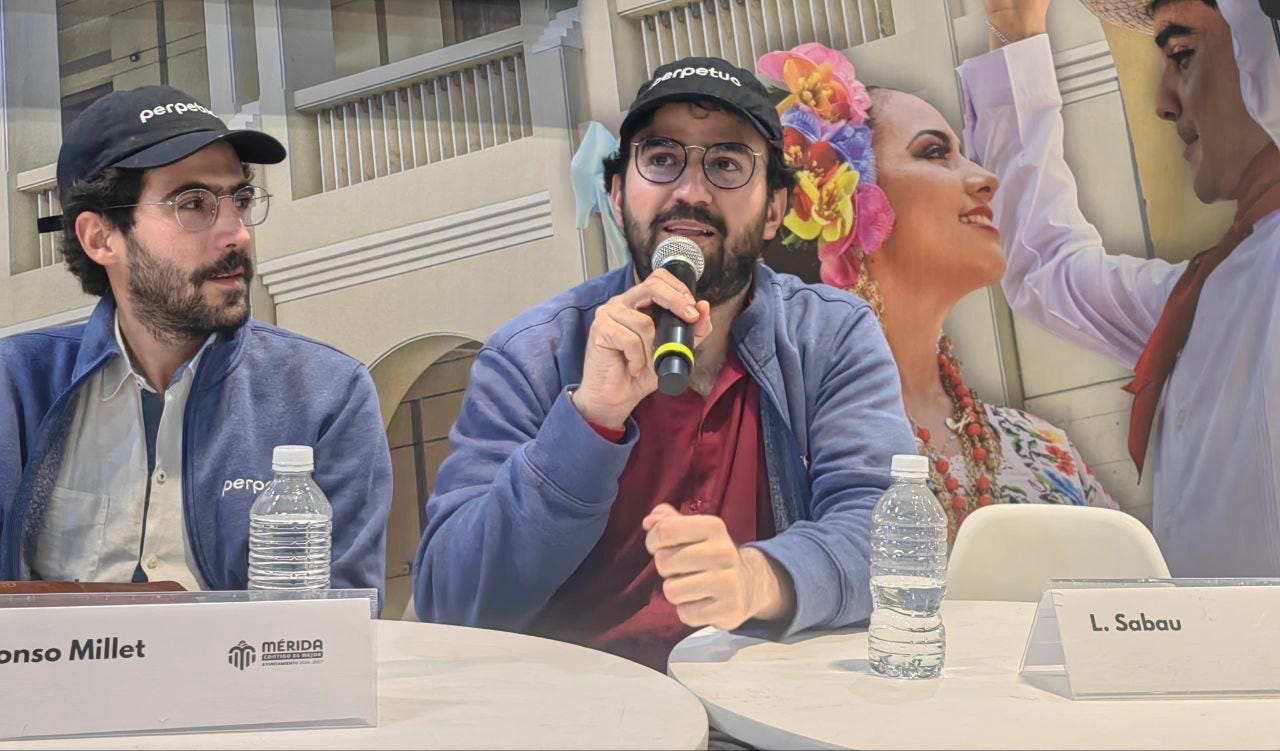
At 15 you started Odin Noticias, which became the most-followed news outlet in your state with over 200,000 followers. What makes a teenager on a Caribbean island think “I’m going to start a news company”?
Feels like a fever dream now. There were two elements. In 2014, 43 students in the rural town of Ayotzinapa in the state of Guerrero disappeared. Overnight. It became a national outcry for justice. I remember watching the news with my dad that morning, hearing about these students and feeling powerless. I’m just learning about this small town in rural Guerrero. What are people learning about Cozumel?
The second thing was the internet. Small online news programs were popping up. I admired one called El Pulso de la República, a late-night-show kind of vibe with a lot of comedy. I tried that format and discovered something very painful at a young age: I’m not that funny. Which is a funny thing to say on its own.
So I started recording myself just saying the news straight. I became popular among my dad’s friends first. The jokes died out early. And then it grew. Fast. We got interviews with Nobel Prize winners. I edited everything on my phone, taught myself Final Cut Pro, and bought a “green screen” that was actually a roll of green paper from the local paper store in Cozumel. It went on for about four years. The website still exists. You can see me as a young boy without a beard interviewing people. It’s all Facebook native. That’s how old it is.
It slid through the cracks when I went to Stanford. Managing local news from another continent proved too hard.
You were then part of the Miami Herald team that won the 2021 Pulitzer Prize for breaking news. What did that experience teach you?
I was working with El Nuevo Herald, the Spanish division. The entire breaking news team won the Pulitzer for reporting on the Surfside building collapse. A building in Surfside, one of the regions of Miami, collapsed overnight, killing nearly a hundred people.
It was a masterclass in how telling good stories supersedes personal egos. The Herald split into two staffs: people who went to Surfside, interviewed survivors, and sent dispatches back, and people in the newsroom, including me in the Spanish division, who took those dispatches and wrote articles combining multiple perspectives.
In journalism, you’re often chasing the byline. You want to be the person everybody knows told the story. But great news organizations use every single reporter to tell incredible stories, not just star reporters doing solo work. That’s why we won.
You’ve said you’re a proponent of using AI in newsrooms. That’s a controversial position for a journalist.
It is, and I’m sure I’ll get some hate for it. But think about what humans do that AI can’t. Go out. Talk to people. Find those unique perspectives. An AI is limited to a computer. Even if it has email access, the interaction is robotic. But AI is great at taking three dispatches and putting them together.
What if the Herald had put 99 percent of its staff outside and just one person overseeing the AI doing the compiling? That shifts the bottleneck. It’s no longer about how fast you can write the article. It’s about how fast you can get the right information from the right people.
I spent hours writing articles about things an AI could have written. Like every time somebody won the Florida State Lotto. Same article, over and over. People loved reading who won the lottery. But what if I’d spent that time going out to find the human story behind the winner instead of rewriting the official announcement? That’s what matters more.
Your Stanford thesis was on the cooperation between drug cartels and local politicians. Growing up in Mexico, those dynamics aren’t abstract for you.
Not at all. Mexico is the second or third most dangerous country for journalists in the world. You grow up hearing these stories. It changes perspective. When you live through the war on drug trafficking as a reality, not something that happens abroad, it changes how you understand power and which stories need telling.
A Mexican academic once told me something I’ve never forgotten: if you’re born in Mexico and you’re upper-middle class and you do everything right, you’ll go to Stanford or Harvard. If you’re born in the lower class and you try to figure out what you’re going to do with your life, odds are you’ll join a cartel. Those realities matter. Telling those stories matters.
We have an article coming out about huachicol, illegal gasoline extraction. The media portrays it as something controlled by drug lords. And there is a degree of that. But we got a writer who comes from one of the towns where this happens. He told us about it as a group endeavor. Extremely poor towns where someone sends a message in a WhatsApp group saying there’s a hole in a gas pipe, and everyone shows up with buckets. An AI cannot embody the spirit of a place. You need someone who’s there, who knows the local context, to tell the right story.
You describe Perpetuo as “the New Yorker for the Spanish-speaking world.” That’s a massive claim. What’s the gap you’re filling?
Over the last hundred years, Spanish went from a language where great stories were told, novels, short stories, newspaper columns, to a language where most of those stories are absent. Think of the Spanish writers you might know. García Márquez, Borges, Neruda. They’ve been dead for decades. Their epochs of glory were the sixties, seventies, eighties. García Márquez started as a columnist at a local newspaper in Colombia, and the papers were so permissive that he could write these crazy stories that grew to national prominence. That world is now gone.
Today, entry-level opportunities are rare. Magazines are optimized for search engines, not human readers. Go to any major magazine website in the Spanish-speaking world. What you’ll find is an outdated dot-com-era site where you don’t even know if you’re putting in your credit card to pay for a subscription or to be extorted by some random cartel.
These papers haven’t entered the digital age. And when bold writers come with new ideas, they’re rejected. Told to go publish somewhere else. Most end up creating a Substack, publishing a few things, getting frustrated by the lack of growth and feedback, and quitting.
I created Perpetuo because I went to an event with one of these big magazines, met an editor, and asked point-blank what I’d need to publish with them. They said they wanted writers with decades of experience, and people who had already published in their magazine. A perfect Catch-22.
Octavio Paz, the Nobel laureate, was also the editor of two great magazines. He had this phrase I’m literally going to engrave one day: “Magazines must dare to be hated.” We’re not doing that. We’re pushing young writers to self-publish without a positive feedback loop. And it’s a pity that in a world with hundreds of millions of Spanish readers, we can’t get the language back to where it was.
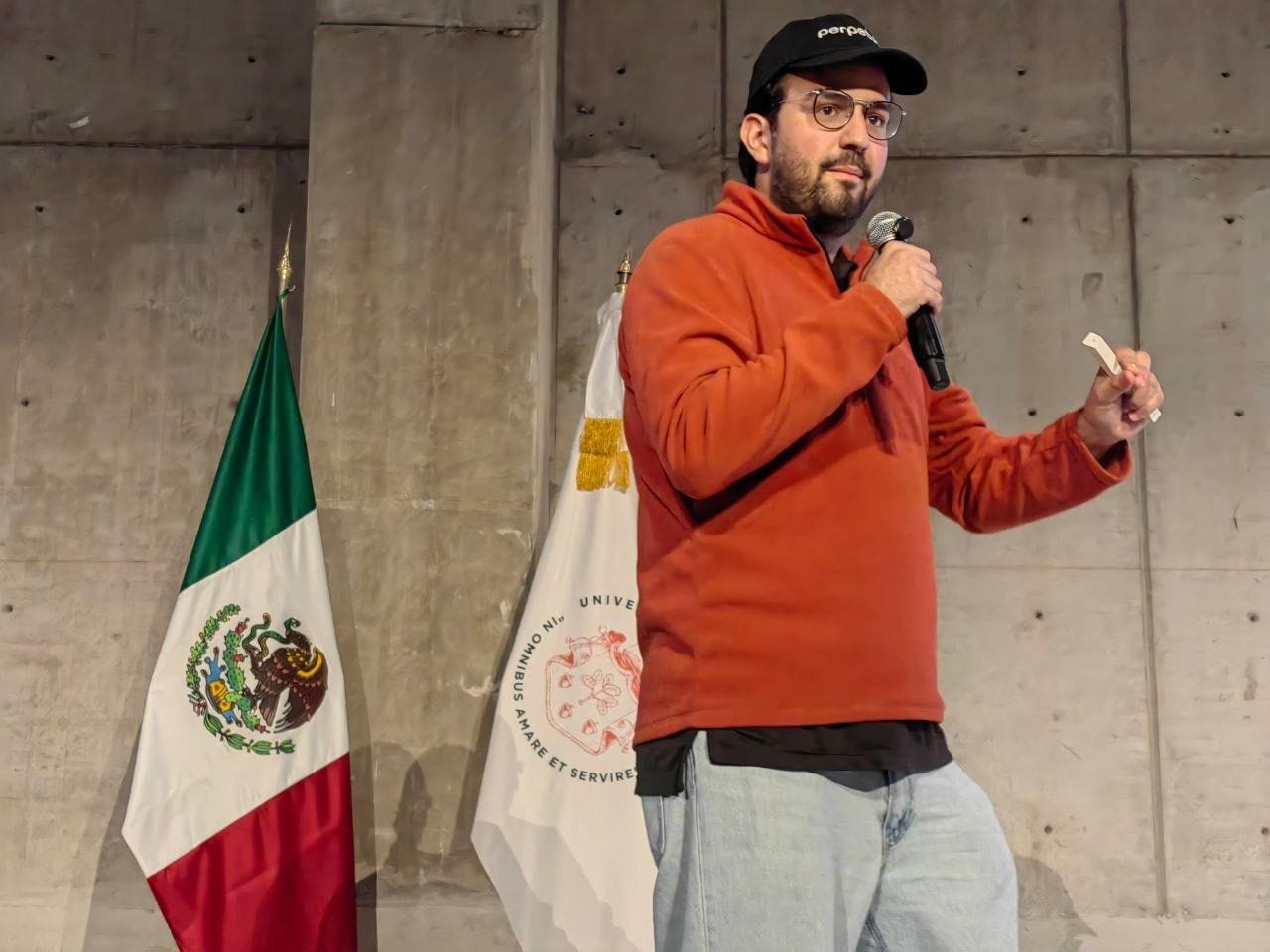
You’ve grown to over 40,000 monthly readers and receive around 400 applications from writers every month. How did that happen from scratch?
When I started Perpetuo, I had two things I wanted to prove beyond willingness to pay: willingness to write and willingness to read. If my thesis is that Spanish is a language people care about, I needed to show that people want to create culture and consume it.
We get about a hundred applications a week without doing anything besides publishing on LinkedIn, Instagram, and our Substack. And we have 40,000 monthly readers, a hundred times more people reading than applying. That ratio tells me something.
But what impresses me most is where those 40,000 are. We have readers from every single Spanish-speaking country, every month. Paraguay, Dominican Republic, Equatorial Guinea, Spain. And within those countries, the strangest geographies. My favorite story: there’s a university in Venezuela, not even in Caracas, in Maracaibo, where apparently we’re required reading. Students have submitted poems to us. Yesterday I had a call with a writer from Jujuy, a northern region of Argentina. We keep reaching the oddest corners where the Spanish language is spoken, without doing any publicity.
A lot of it is word of mouth. We currently publish 36 new writers every month. Each writer shares their work with their own network. We run contests for poetry, short stories, and essays. Prize money goes directly to the writers. The ethos at Perpetuo is that magazines should serve writers, not writers serve magazines.
Legacy Spanish magazines publish the same writers month after month. You’re doing the opposite. What went wrong with those institutions?
There’s this concept in Spanish: the cacique, a warlord. There’s always a cacique who controls the cultural sphere. Borges was one for Argentine letters. Octavio Paz for Mexican letters. After these great figures disappeared, smaller players tried to control the magazines. For a few years they did fine. But they missed the next generation.
They were magazines born in paper, in an era where everything is consumed on the phone. The publishing model in paper is a huge bet: you print something, distribute it, and if people don’t like it, it’s awful. So they became risk-averse. They’re making the safe bet with a business model that gets slimmer every year. I once heard that something like 60 percent of printed magazines are returned to the printers. Unless you’re the New Yorker, it’s very hard to sell physical magazines today.
They might have a stable business, but they’re prioritizing safety over ideas. And that’s not going to win anyone a Nobel Prize.
How do you keep Perpetuo from falling into the same trap?
A constant bias toward the youth. Now that we’ve grown, we get pitches from very established writers, and we consider them. But on the same day I might talk to a Booker Prize finalist and a 17-year-old college student in the Canary Islands. That range is essential.
And we’re deliberately creating competition. We haven’t announced this publicly yet, but we’re launching a small fund that gives grants to other magazines, on Perpetuo’s dime, to do projects. I don’t want to become arrogant like those other magazines and think Perpetuo is the end-all. Those legacy players aren’t challenging us. So we have to create competition elsewhere. What’s a New Yorker without The Atlantic? You need people fighting.
Your essay “Tragedia Mexicana” chronicles violence against women in your hometown. Nearly 40 percent of women in Mexico report being victims of violence. How did you approach such a sensitive story?
You have to be very careful with the victims. That particular story is heartbreaking: it’s about a grandmother, a mother, and a daughter, all victims of sexual abuse. The grandmother actually prostituted her daughter. I spoke with the mother and the daughter to try to understand the dynamics.
I write about the “arithmetic of pain.” When we talk about tragedies in Mexico, we use the aggregate numbers. Forty percent of women report being victims of some form of violence: verbal, sexual, physical. You can add up the awfulness of that number, but you can’t feel it until you hear one story.
My mother has worked her entire life helping victims of sexual violence in Quintana Roo. I grew up hearing these stories. And I was always struck by people reading the annual statistics in the newspapers and going on with their lives without changing anything. My idea was: if you hear just one of these stories and pair it with that awful number, 30 million women, one god-awful story multiplied 30 million times, that’s far more powerful than a statistic alone.
I kept Cozumel as the setting because of trouble in paradise. Even in the most beautiful places in the world, awful things happen.
Your essay about losing your WhatsApp messages argues that stickers and emoji are “part of my alphabet as much as vowels.” That’s a bold claim from a serious essayist.
Absolutely. We set up an AI agent for Perpetuo on WhatsApp, and in the process I accidentally deleted all of my messages. I felt deeply sad. But what surprised me most was that every single person I told responded the same way: “Oh my god, that’s awful.”
Think of losing all your iMessage history or all your Instagram DMs. A part of you is lost. The stickers, the emoji. We’ve created a new form of communication that is us. This is one of Perpetuo’s most successful essays. People connected with it.
And this is the kind of thing the senior editors of legacy Spanish magazines would never publish. They’d call it a millennial crying about something dumb. But we’re living in the digital age. People think about these things. The essays that work at Perpetuo take a single moment from the 21st century and examine it.
We had another essay about Gorbachev and Jim Morrison, about how rebellion stopped being what it was. The utmost act of rebellion became Gorbachev doing a Pizza Hut commercial after the fall of the Soviet Union. How do we go from Jim Morrison on a motorcycle to Gorbachev in a Pizza Hut? These oddities of the 21st century, examined carefully. That’s what resonates.
You’re publishing two books this year, one on constitutional law, one literary. That’s an unusual range. What connects them?
It’s my fight against the notion of the public intellectual, this idea that only lawyers can write about law and only experts can write about expert material. That’s a late-20th-century phenomenon. Aristotle wrote about natural biology and philosophy and ethics. People used to be bolder.
Only 26 percent of Mexico’s Congress studied law, actually down from 28 percent when the Constitution was drafted in 1917. I studied political science, not law, which most lawyers bring up when I mention the book. But I think we need to think about objects, whether it’s literary criticism, philosophy, or the law, more deeply.
Neruda could take shoelaces and write a beautiful poem about them. That’s what I want to achieve with essays.
You’ve said the ultimate success for Perpetuo would be making García Márquez feel like “a non-entity.” What do you mean by that?
García Márquez is my favorite writer of all time. He’s the reason I want to write. But I want him to feel like one more in a bunch of great Spanish writers, not the towering exception.
This isn’t about creating one great writer. García Márquez was part of the Boom, a whole community of writers who knew each other and pushed each other. That’s why I emphasize publishing 36 new writers every month. We have a WhatsApp group with every one of our writers. We organize small Zoom events with literary agents, editors, publishers. We’re building a community.
My goal is ten Nobel Prize winners. If we get one, I’m happy. But you aim higher because you need a community of writers working together. That’s how something bigger happens. You see it again and again: the Paris circle, the Bloomsbury group around Virginia Woolf. It’s great minds coming together.
And I refuse to believe it can’t happen again. Old ladies in Mexico used to go to the grocery store to buy One Hundred Years of Solitude. In an era when Spanish speakers were far less educated and universities were rare. Now you’re telling me that in the 21st century, where a kid in Cozumel can learn anything on Wikipedia, we can’t get a magazine to survive? That is absolute and categorical BS.
José Luis Sabau is the founder of Perpetuo. He can be reached at jl@perpetuo.lat