
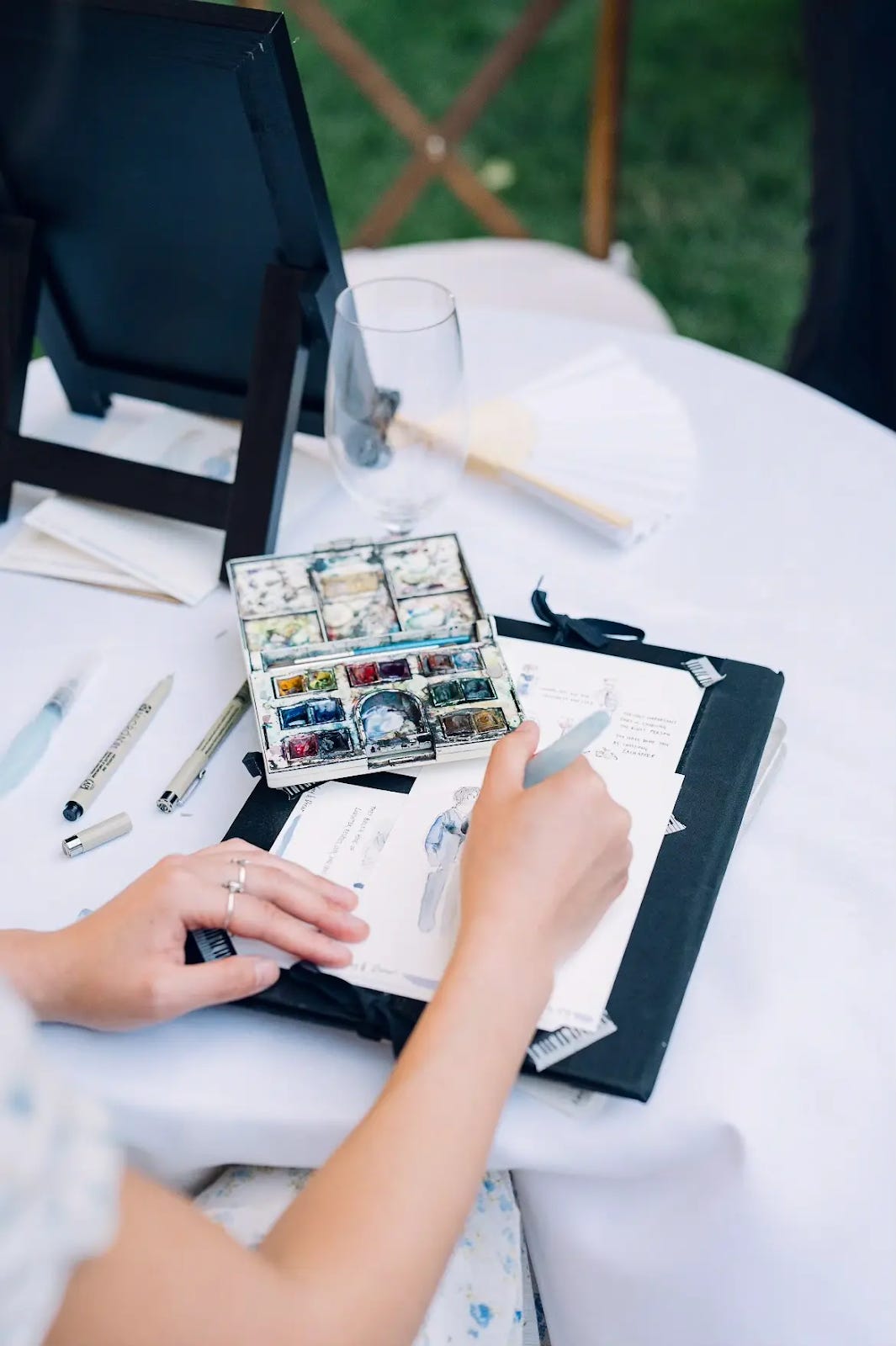
Shani Zhang is a writer and illustrator based in San Francisco. Over the past three years, she has built an unlikely career as a live event painter, capturing weddings, Eid celebrations, and Kamayan dinners in watercolor. Her work has appeared in The New York Times and The Philadelphia Inquirer.
This year, she turned down graduate school to pursue something different: a year-long public art journal documenting the stories of San Francisco - from the man serving soup beside an art gallery to the mail carrier climbing the city’s tallest hill.
We spoke with Shani about observation as a practice, the unexpected path to becoming an professional artist, and why AI will never replace drawing.
Shani Zhang is a 2025 O'Shaughnessy Grant recipient. The O'Shaughnessy Fellowships & Grants are now accepting applications for 2026 - offering up to $100,000 in equity-free funding for builders, researchers, and creatives working on transformative projects. Applications close April 30, 2026. Apply here.
You lived in six cities over four years. How did that shape your art practice?
Because I was constantly going to new places - South Korea, India, Berlin, Buenos Aires, I started keeping sketchbooks. I would draw things I saw and write down whatever was on my mind. Sometimes snippets from conversations I’d overhear. It became something I did just for myself, and I was known for it in college. I was always doodling at student concerts, on the bus, at dinners. I’d always carry a sketchbook around.
You never thought of art as a career. How did that change?
It was completely unplanned. After college, I was living in San Francisco, going to tech happy hours, and doing what I always do: doodling. One organizer approached me and said, “This is cool. If you come back next week and do this again, we’ll pay you as long as we keep the painting.” I thought that was a great deal. I enjoyed doing it anyway.
From there, someone asked me to paint their wedding. They offered a few hundred dollars, and I’d never really done a wedding before, so I said yes. I realized weddings were way more fun than tech events.
Your viral Substack post, “21 Observations About People Watching,” came from this work. What did you learn from painting so many strangers?
The short answer is I didn’t expect it to go viral. I wrote it in one sitting at a cafe. It was actually a journal entry where I was reflecting on my job and all the interesting things I’d noticed painting events.

One thing I’ve learned: there is happy, and then there is polite. They look very different. Polite has a mechanical quality, you’re carrying out all the right movements like replacing batteries in a remote. True openness is when you allow another person to surprise you.
My attention goes to places where attention usually doesn’t go, very close observation of people. Most people hold back from that because it feels impolite or intrusive, or they’re too busy living to be that observant.
How would you describe your drawing style?
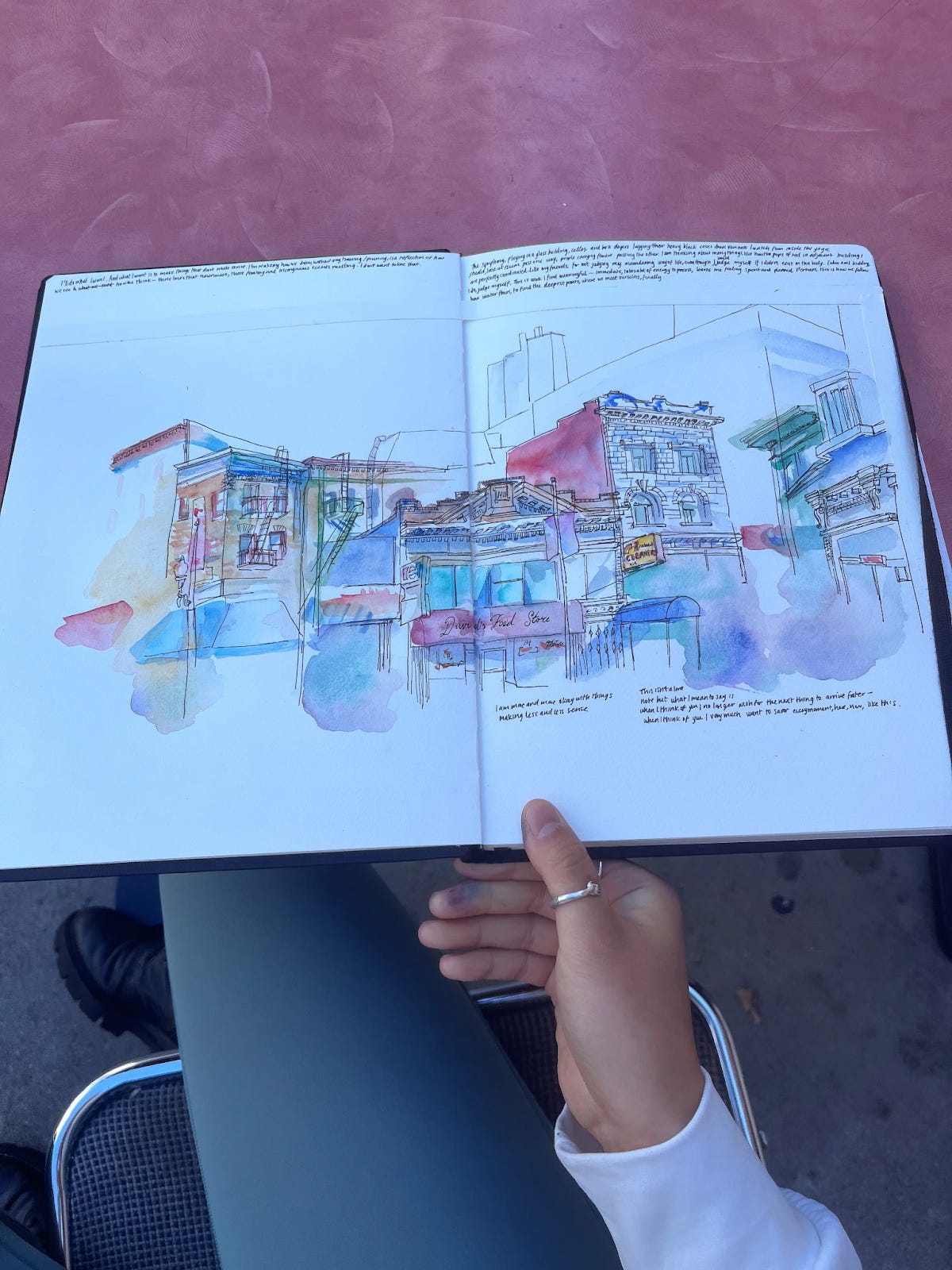
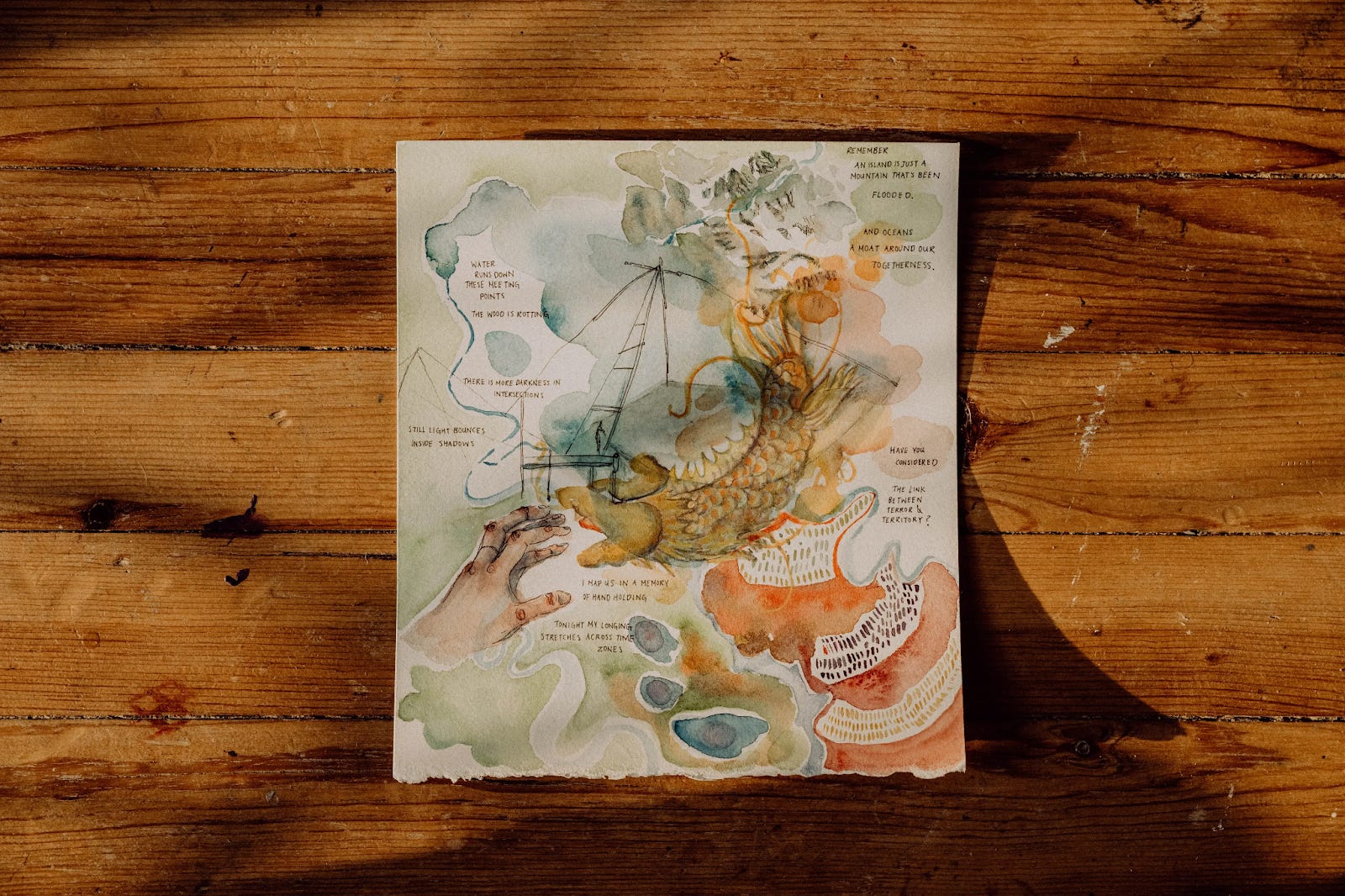
My art teacher used to say my lines never meet each other. I don’t have a lot of corners. Things are loose, dreamlike - little watercolor vignettes. That wasn’t something I chose on purpose. It’s just the way I see things.
I think the way someone draws reflects how they see the world. How heavy their pen marks are, how confident they are. I didn’t have four years of art school, so I didn’t learn best practices. My art reflects both the imperfections and the quirks in my perspective.
This year, you started the San Francisco Sketchbook project instead of going to graduate school. Why?
I was at a crossroads - weighing grad school offers, wondering if I should work full-time or go all in on wedding painting. But the biggest clue I had about what I wanted to do were these sketchbooks. Before I ever made money from art, this is what I was already doing.
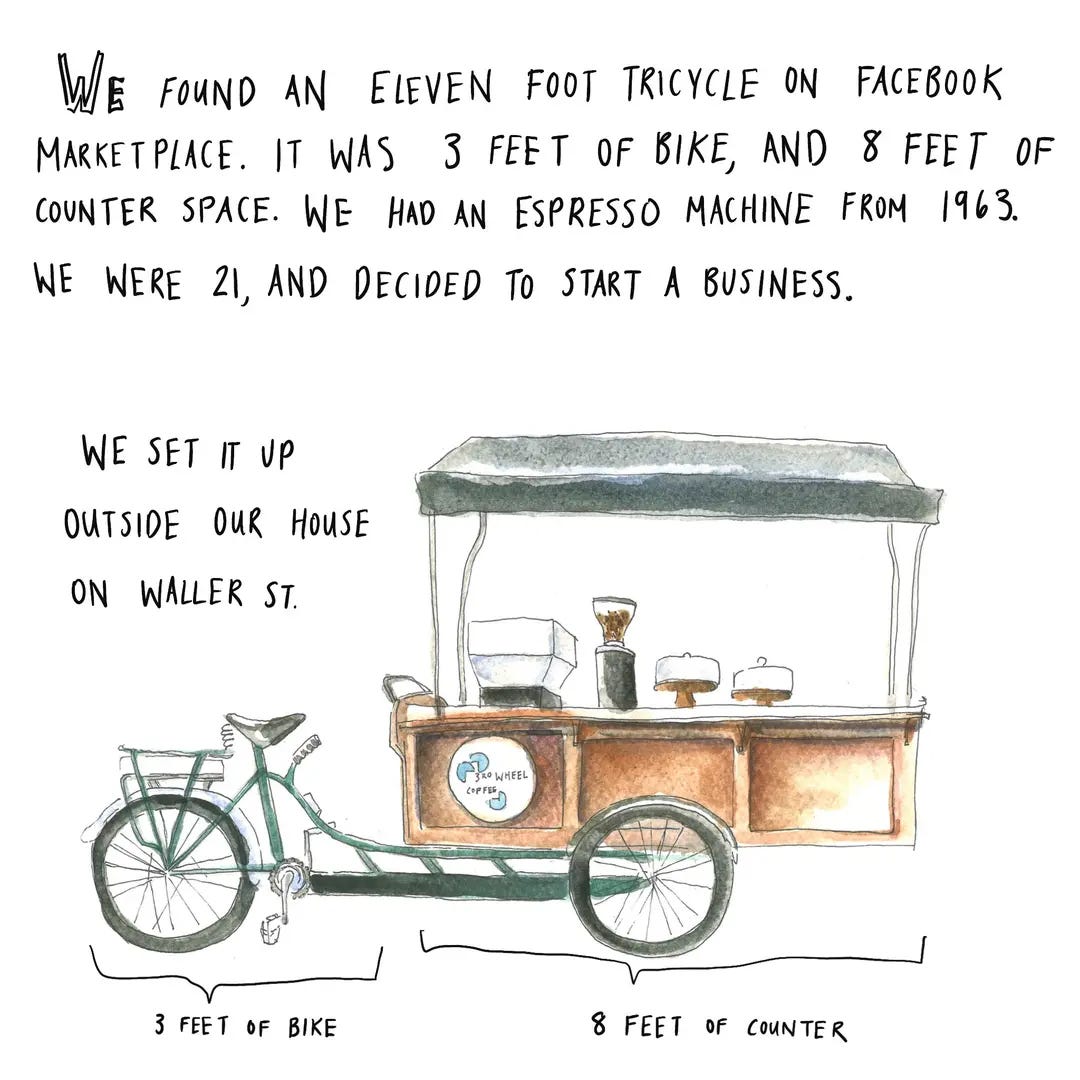
So I decided to start talking to people in my city. I began with local businesses I already knew. The first people I talked to were Tom and Vida. They have a coffee cart near one of the parks. They met working at a coffee shop, fell in love, found a giant tricycle on Facebook Marketplace, installed a coffee counter, and started selling coffee in their neighborhood.
After talking to them, I became fascinated with storefronts - how small business owners spend ten hours on their feet grinding coffee beans or kneading dough for empanadas. They seemed fulfilled by this work, even though the margins were slim. They had a strong sense of purpose. So I just kept on going - talking to more and more businesses, illustrating them, and giving these paintings away for free. I didn’t want to stop!
What drives you as an artist now?
I’ve realized that the two things I want to spend my life getting better at are interviewing people and illustrating them. I want to become a better question asker and listener - to capture someone in a way that feels sincere and compassionate.
You’ve also started interviewing older adults in San Francisco. What draws you to that?
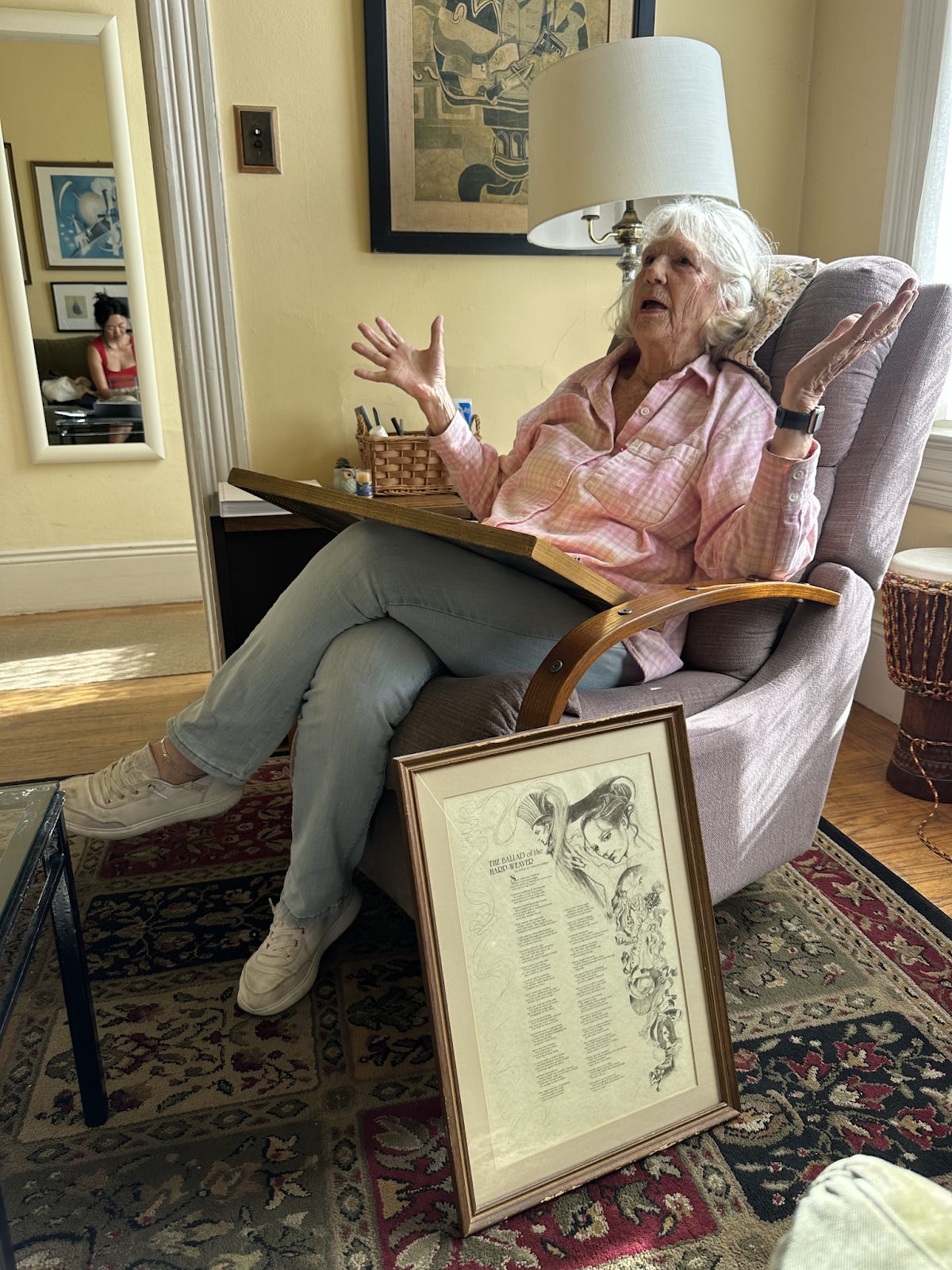
I center those conversations around objects that are important to them. Sometimes things they had as kids, or something they saved up for months to buy that they still cherish. Through doing this, I feel like I get to know my city on a deeper level.
AI can now generate art. Does that affect how you think about your work?
It doesn’t really, because art for me has never been about making a living, even though that’s a nice bonus. Drawing is something I want to do for the rest of my life, even if it makes me no money. For me, it’s about training my attention, focusing on something, and studying it. That doesn’t happen if I ask ChatGPT to transform my picture of a pear into a painting. I need to actually study that pear, look at the light on it, the shape of it, and capture it myself. By moving through those actions, we get changed by the art we make. That’s very different from uploading a picture to an AI platform.
After painting hundreds of weddings, what has stayed with you?
Painting so many weddings has made me idealistic about love. I’m seeing couples on one of the happiest days of their lives, full of grand proclamations, surrounded by loved ones. Even though the couples are all quite different, the feeling at each wedding is similar: a hopeful buoyancy.
I enjoy being in that environment, being idealistic with the couples as they plan their future together.
Shani Zhang writes and illustrates at Skin Contact. You can find more of her work at shanizhang.com and follow her on X and LinkedIn.