
Welcome to OSV Field Notes, a weekly, high‑signal curation of things worth your time.
1. Yesterday : A Stress Test for the Greatest Songbook Ever Written
I recently read Ian Leslie’s John and Paul: A Love Story in Songs. It’s a detailed exploration of the Lennon-McCartney partnership through the songs themselves, not the myth, not the mop-tops, but the craft first. I loved it. And it made me want to rewatch Yesterday.
The premise is simple: What if The Beatles were suddenly erased from history... except for a struggling musician who remembers. In sci-fi speak, the songs become “found technology” and he starts performing them as his own.
But here’s what the film is really asking: if you ripped these songs out of their context—no 1960s, no Beatlemania, no cultural mythology—would they still land?
It’s also a lovely Richard Curtis rom-com (Love Actually, About Time), directed by Danny Boyle with his usual visual energy. There are many good laughs (that L.A. agent steals every scene she’s in). Himesh Patel performs all the songs himself, and he sells it. He’s not doing Beatles karaoke, he’s building on the essence of the songs. And Lily James is charming enough that you genuinely root for her too.
I watched it with my kids a few days ago. They loved it. I think I’m raising Beatles fans now. Mission accomplished. [Liberty]
🎬 Yesterday (2019)
📘 John and Paul: A Love Story in Songs by Ian Leslie
2. Walter Lord Interviewed 63 Titanic Survivors. The Result is a Masterpiece.

Walter Lord’s A Night to Remember might seem like an odd recommendation. The Titanic story has been told so many times, in so many ways, that it can feel like cultural furniture, something you already know without ever having studied it. The spoiler is common knowledge. The ship sinks.
But Lord, writing in 1955, found a way to make the familiar feel urgent. He interviewed 63 survivors, tracked down letters and diaries, and assembled a narrative that moves with the pace and precision of a thriller. The book runs barely 200 pages, yet it contains more lived detail than films ten times its length. Lord understood that the power of the Titanic story lies in its particulars: the specific conversations, the small decisions, the moments when ordinary people discovered what they were made of. (Readers of my book The Founders will know I’m a sucker for anyone willing to do the unglamorous work of interviewing as many living witnesses as possible, and Lord was obsessive about it.)
You feel the disaster from the inside: the confusion, the strange calm, the bravery and cowardice existing side by side, all rendered without sentimentality. Lord grasped something essential about historical writing: a story everyone thinks they know can still yield new truths if you ask different questions and do the hard work of finding people who were actually there. The reporting makes the prose possible. It remains a model for how to write about the past, and one of my all-time favorite reads. [Jimmy]
📘🚢 A Night to Remember by Walter Lord (1955)
3. Lunch Break Literature (Big Ideas, Small Packages)

2025 was the year I fell in love with short stories, ranging from 10-minute reads to a couple of hours. That format hits the spot for packaging thought-provoking premises into very digestible portions.
One of my favorite volumes of all time is Stories of Your Life, by Ted Chiang. It’s best known for the titular Story of Your Life, which was turned into the movie Arrival by Denis Villeneuve, but my personal favorite (as long as you’re game for a bleak tale) is Hell is the Absence of God, which conjured up visuals I have not been able to forget since (The premise: angels appear on Earth regularly, performing miracles and causing destruction with equal indifference. Heaven is real and visible — and not everyone gets in.).
Many great novelists have collections of short stories: Hemingway, Twain, and Bradbury, for example. You'll finish one on a lunch break and think about it for weeks. [Jameson]
📘 Stories of Your Life and Others by Ted Chiang
4. Dealt : The World's Greatest Card Mechanic Is Blind
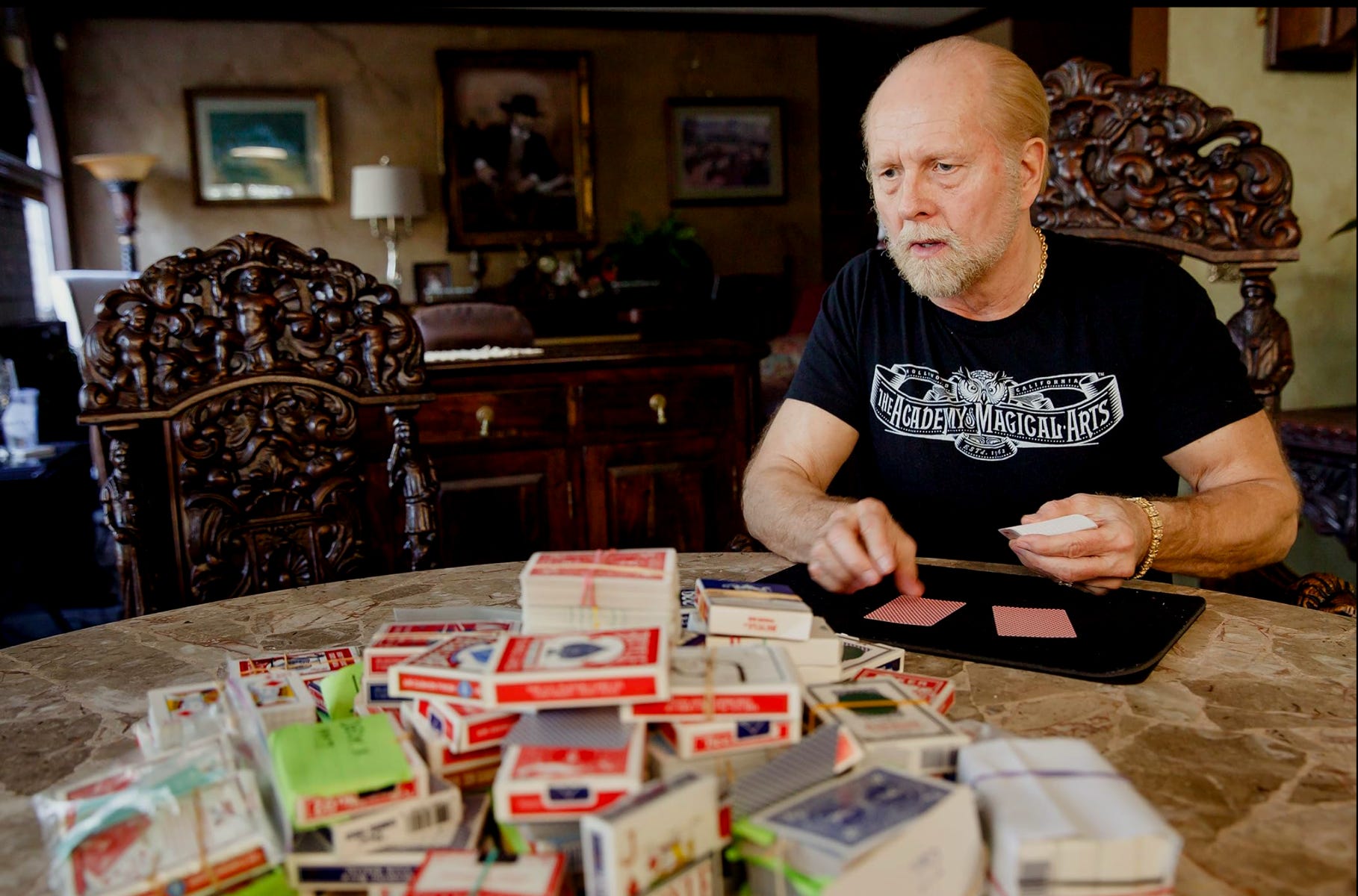
What does it take to become the best in the world at something? In Richard Turner’s case: 14-16 hours of practice a day, for decades. He shuffles cards while eating, while sleeping, while doing other things I won’t mention here (according to his wife Kim). He named his son Asa Spades (get it?). He’s done one particular card move somewhere between 50 and 60 million times.
Oh, and he’s completely blind 👀
Dealt is a documentary about Turner, widely considered the greatest card mechanic alive. “Card mechanic” is the technical term for someone who can manipulate a deck with perfect control. It’s the vocabulary of cheaters, though Turner uses it for performance. The film takes you inside a subculture most people don’t know exists: a world of “touch analysts,” obsessive practitioners, and sleight-of-hand purists who can tell the difference between 43 and 44 cards by weight alone.
But what makes the documentary genuinely moving isn’t the tricks, it’s Turner himself. He refuses to be “the blind magician.” For years, he refused to use traditional aids like braille, a cane, or guide dog. He doesn’t want to be the best for a blind guy. He just wants to be the best. The tension between that pride and the reality of his condition gives the film an emotional core that elevates it beyond a simple profile.
Teller, of Penn & Teller, said it best: “Dealt knocked me dead.” Same. [Liberty]
♥️♠️♣️♦️ Dealt (2017)
5. Four Hundred Meters on Mars: AI Takes the Wheel
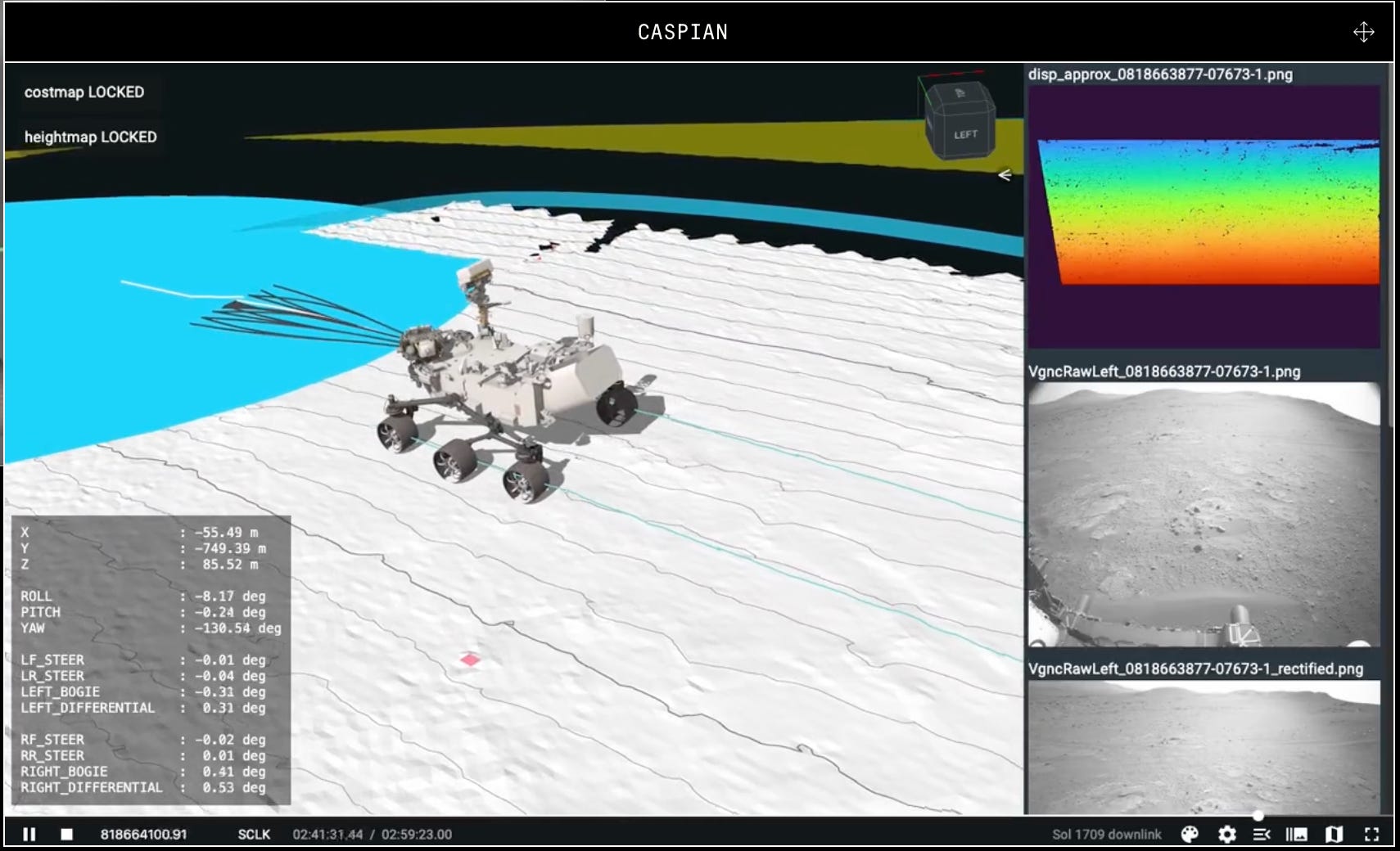
On December 8 and 10, 2025, something quietly incredible happened: the commands sent to NASA’s Perseverance Rover were written by an AI. Specifically, by Anthropic’s Claude.
JPL engineers fed it years of accumulated rover-driving wisdom, and it plotted a four-hundred-meter path through a field of Martian rocks, writing commands in Rover Markup Language (yes, that’s a real thing). The AI analyzed overhead imagery, strung together ten-meter segments, and even critiqued its own work before submitting.
When engineers ran the plan through simulations, modeling over 500,000 variables, they found only minor tweaks were needed. The rover drove the path successfully.
Four hundred meters isn't far, but it's a start. What strikes me most isn't that Claude can do this, but what it enables next.
JPL estimates the AI cuts route-planning time in half. Less tedious manual work means more drives, more scientific data, more discoveries. And this is just a test run. Autonomous AI could eventually help probes explore Europa or Titan, destinations where signal delays stretch to hours and harsh environments cut robotic lifespans short. This was a warm-up lap. The real race is just starting. [Liberty]