
Welcome to OSV Field Notes, a weekly, high-signal curation of things worth your time.
This week: For Thanksgiving, we’re bringing back five favorites. A John Candy documentary to watch after ‘Planes, Trains and Automobiles’, a Southern food show hiding on a sports channel, the milkman who wrote a children’s classic, a book that ended years of chronic pain, and an Oscar-winning director who is still a student.
1. John Candy : I Like Me — Portrait of the Gentle Giant of Comedy
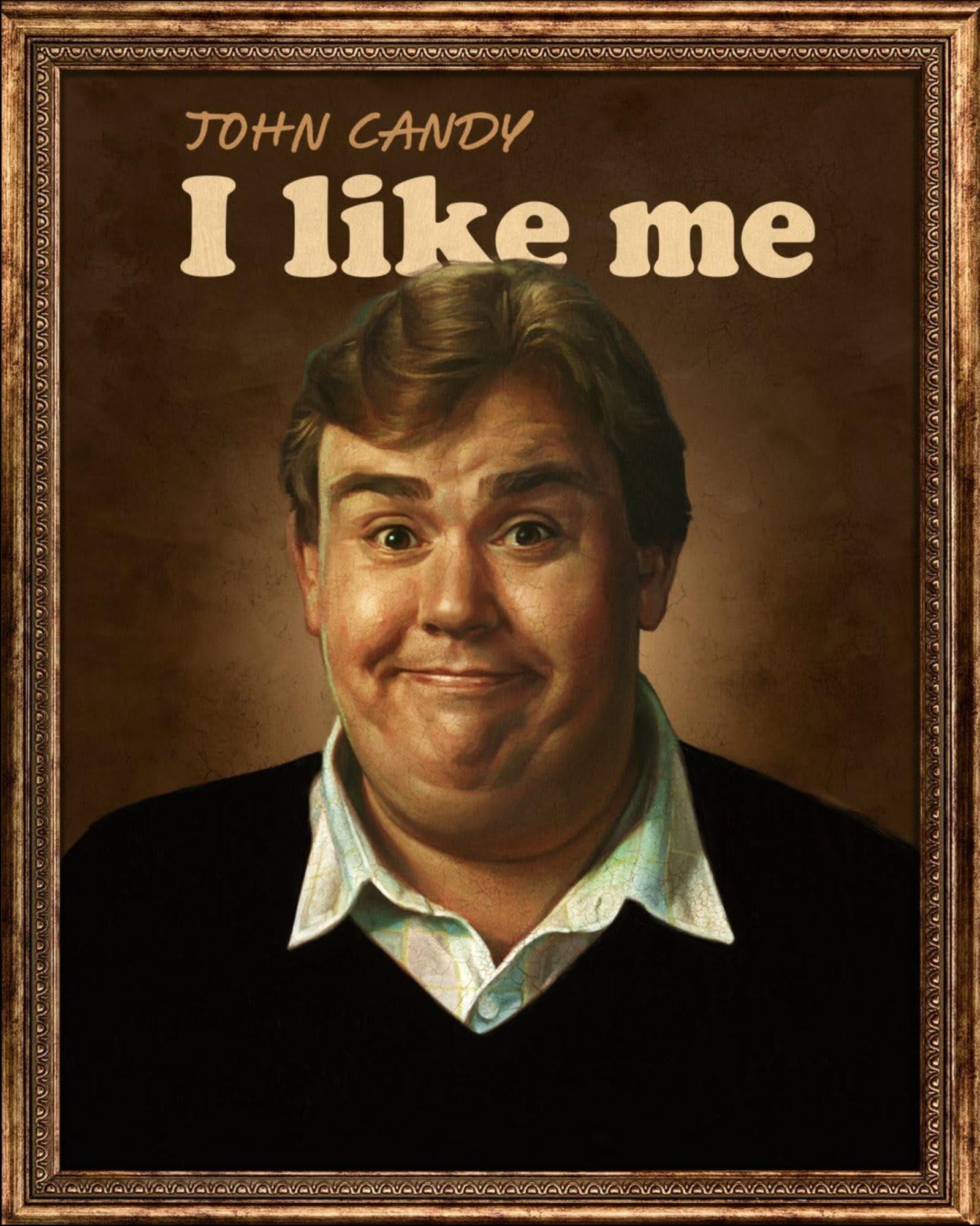
I finally got around to watching the John Candy documentary, and I’m glad I did. If you grew up in the ’80s and ’90s, Candy was everywhere — Uncle Buck, Planes, Trains and Automobiles, Stripes, Home Alone — but I realized I knew almost nothing about the man behind those roles, other than that I liked him.
What struck me most was the contrast between Candy’s enormous on-screen presence and confidence and his self-doubting inner life. The guy who could command a scene with a single raised eyebrow spent a lot of time wondering if he was good enough. There’s a throughline about his struggles with weight and health that adds a bittersweet layer to everything. What if he had another 20–30 years? The interviews with his former collaborators (including some SCTV footage I’d never seen) paint a picture of someone who was genuinely beloved, not just talented. Bill Murray and Dan Aykroyd share great anecdotes and heartfelt memories.
If you have any affection for Candy’s work, I’d recommend this one. It’s well-paced, doesn’t overstay its welcome, and manages to be celebratory without glossing over the harder stuff. It made me look back at his filmography differently and with more appreciation. [Liberty]
🎬 John Candy: I Like Me (2025)
2. TrueSouth : The Best Show Hiding on a Sports Channel

There is an Emmy-winning television show that explores the American South through food, music, literature, and the voices of people who actually live there… and almost nobody outside of college football circles knows it exists. TrueSouth is buried on the SEC Network, which means it premieres in and around college football season, sandwiched between game highlights, and I have the feeling many of you have never found it. That’s a shame, because it’s one of the best travel shows on television.
Each episode drops host John T. Edge — a four-time James Beard Award–winning food writer — into a new destination, and tells stories about food that open into something larger: the history of a town, the economics of who stayed and who left, the culture that took root in between. The show is executive produced by Wright Thompson, one of the most brilliant writers at ESPN (oh, and he’s also a bestselling author worth checking out), and is clearly made by people who care about getting the details right.
In one episode, Edge follows fiction writer George Singleton, one of the best short story writers in the South, through the Upstate of South Carolina, eating chili-slaw dogs at joints that haven’t changed since the 1950s and wandering the aisles of the Pickens County Flea Market. It’s where Singleton says he gets a million ideas for his stories because flea markets are full of things that are “funny and sad.” In another classic episode, Edge finds himself at Lucky Palace, a Chinese restaurant tucked between a casino and a dingy roadside motel in Bossier City, Louisiana. What unfolds is a portrait of its owner, Kuan Lim, whose generosity made the restaurant a community gathering spot, complete with a wine list that earned multiple James Beard semifinalist nods.
Music is baked into every episode — local bands perform on screen, and the full soundtrack lives on a TrueSouth Spotify playlist that’s become its own discovery engine. If you’re a traveler, a reader, or someone who believes the best places in America are the ones nobody’s marketing to you, this show is a goldmine hiding in plain sight. [Taylor]
3. Redwall : Painting Worlds for Blind Kids

As a kid, I was obsessed with Brian Jacques’s Redwall books. The librarian at my school knew. Whenever a new one came out, she would hold it behind the main desk for me, sliding it across the counter with a small conspiratorial smile, and I would carry it home like contraband. I read Mossflower and Mattimeo until the spines cracked. I would curl up in the corner of the couch and lose hours to those books. They taught me how entrancing reading could be.
For the uninitiated: Redwall is an abbey in a wooded English-feeling countryside, populated by anthropomorphic mice, badgers, otters, squirrels, and hares, who feast on hotroot soup and October ale and deeper’n’ever turnip’n’tater pie, and who occasionally have to fend off the rats, foxes, and weasels that come up the river with bad intentions. Mossflower is the story of how the warrior-mouse Martin freed the woods from a tyrant wildcat and founded Redwall. In Mattimeo, Matthias’s son is kidnapped by a slaver fox named Slagar the Cruel, and a small band sets out to bring him home.
The dialects alone are an education: the moles speak in a thick West Country burr, the hares like Edwardian military officers, the sparrows in fierce chopped fragments. Jacques was a Liverpool milkman who befriended the kids at a school for the blind on his route. He decided the children’s books available there were dreadful, so he wrote Redwall for the kids himself. He wrote in pictures.
I haven’t opened a Redwall book in years, and I can still walk you through the abbey. The sandstone walls. Martin’s tapestry above the dais. The long tables groaning with food on a feast day. Few books build a place that solid in a child’s head, and fewer still hold up when the child returns as an adult. Start with Mossflower. Then Mattimeo. Pass them to someone who needs a world to disappear into. [Jimmy]
📗 Mossflower by Brian Jacques
📘 Mattimeo by Brian Jacques
4. The Strangest Thing That Worked: How a Book Fixed My Chronic Pain

About 20 years ago, I started to have pain in my wrist. I figured it was from spending too much time at the computer. Then it moved up my forearm, to my elbow, and eventually all the way to my neck. I Googled a bit and found scary articles about carpal tunnel syndrome and repetitive strain injury (RSI).
I became serious about best practices: I got an ergonomic chair, various ergonomic mice and keyboards (trackballs, a sideways mouse to reduce wrist strain, a trackpad). I even ended up using the mouse with my left hand for a while. Each of those changes helped for a time… and then it got worse.
I eventually had pain in both wrists and arms. My neck also hurt. There were times when just resting my arms on the armrests of a chair would create shooting pain. Sleeping was an ordeal, since almost any position would cause my arms to go numb and new pains to show up.
I tried everything: doctors, physiotherapy, wrist braces. I lifted weights, did stretching exercises, took breaks from the computer every 15 minutes. I improved my nutrition and kept a pain journal to see if the pain correlated with anything.
Nothing worked.
Or rather, everything worked briefly, and then things got even worse.
This went on for years. My whole life revolved around my pain. It was debilitating. I got depressed. I thought I would have to find a different career and different hobbies. I was sure my body was damaged and couldn’t handle sitting at a desk and working on a computer.
Until one day, out of desperation, I simply Googled “how I cured my RSI”. This is the blog post I landed on at the time. It was published in 2010 by Aaron Iba, a programmer and entrepreneur who studied at MIT and worked at Google. He described a chronic pain journey that sounded very familiar, but the main difference was that he had found a solution. I probably would have dismissed it out of hand — too esoteric, too good to be true — but I was desperate and figured the worst case was wasting a few hours, so I read the book.
The pain hasn’t come back. I’ve recommended the book to dozens of people who’ve told me about similar pain. I won’t try to summarize it here. The short version is too easy to dismiss. If you want to judge this one, you have to go to the source.
The last entry in my pain journal is from over a decade ago. Within days of reading Sarno, there was nothing left to write. [Liberty]
📘 The Mindbody Prescription by John E. Sarno
5. At 63, Steven Soderbergh Is Still an Apprentice
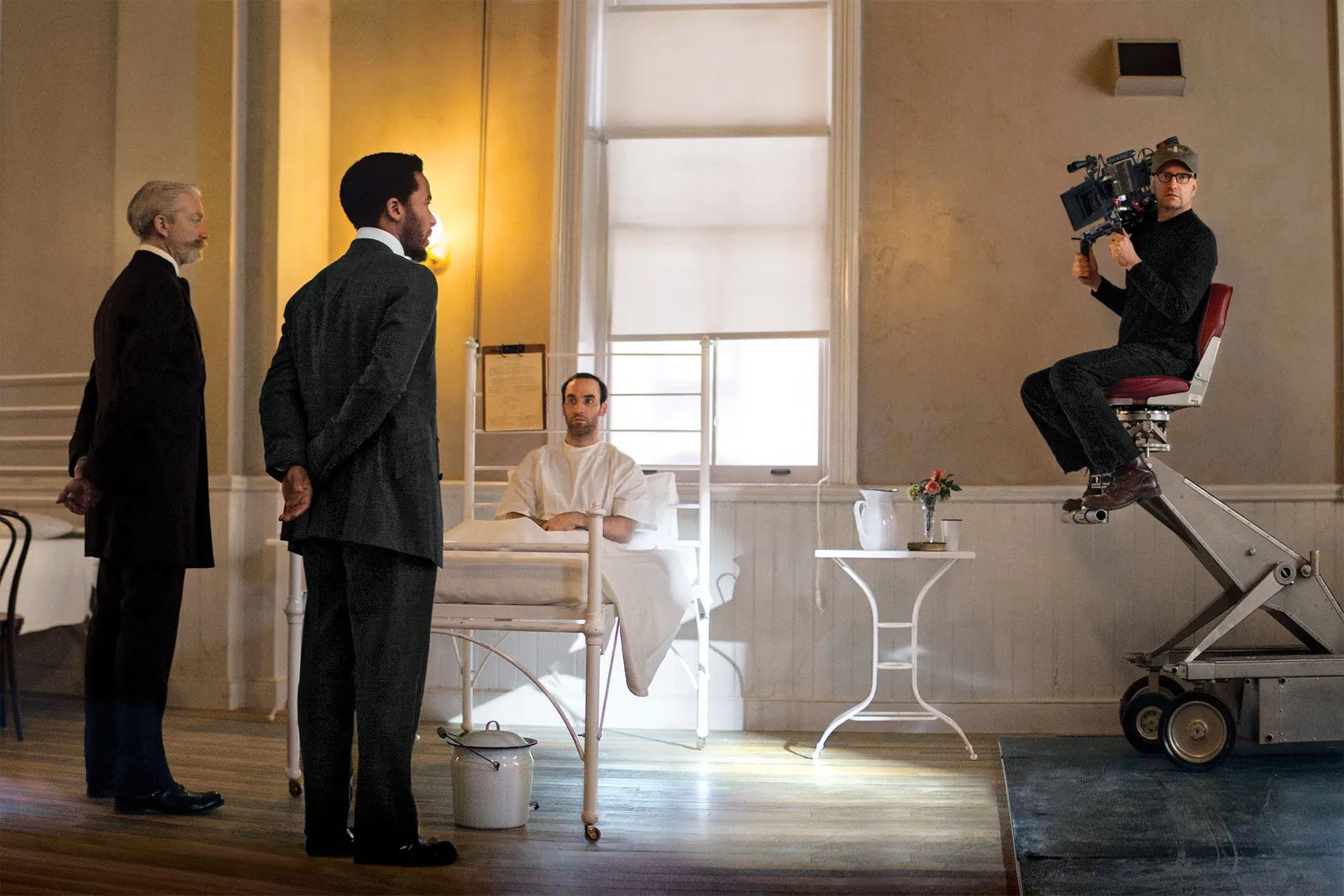
In 2025, Steven Soderbergh had a better Christmas Day than you.
While you were ripping open presents like a toddler, he was easing into the 1953 prisoner-of-war thriller Stalag 17 (2 hours). While you were stuffing yourself with roast potatoes, he was locked into David Fincher’s jet-black thriller Zodiac (2.5 hours). And while you were lying comatose on the couch, he was just getting started with 2025’s head-bangingly intense road movie Sirat (2 hours).

This is what peak performance looks like. From Steven Soderbergh’s 2025 media diary.
Every January for several years now, Soderbergh has posted his media diary. Unlike the curated top ten lists you usually find at the end of the year, his lists are never filtered or editorialised. You are given two pieces of information: what he watched or read, and on what day.
There’s something strangely compelling in learning, in painstaking detail, exactly how a great artist spends his consumption time. It’s worth checking out the last few years’ entries. They’re packed with fun details (a surprise love for Below Deck) and insights into his astonishingly quick creative process (on 7 February, he began production on The Christophers; by 13 March, it was already in his viewing diary).
Above all, the diary reveals how, despite his success, Soderbergh still thinks of himself as a student.
You’d think a Palme d’Or winner who landed two Best Director nominations in one year and won for Traffic wouldn’t have much to learn from his peers. Wrong! Soderbergh has long worshipped Steven Spielberg and still studies the old master. Here’s all the Spielberg-adjacent output he consumed in 2025:
Watched Raiders of the Lost Ark twice.
Watched Duel twice.
Watched Jaws three times.
Watched The Sugarland Express.
Watched the Jaws @ 50: The Definitive Inside Story documentary.
Watched the Heavy Spoilers YouTube channel’s episode on Jaws.
Read BFI Modern Classics: JAWS.
Read BFI Modern Classics: Close Encounters of the Third Kind.
Read a biography of Robert Shaw.
Read Ready When You Are, Mr. Coppola, Mr. Spielberg, Mr. Crowe, by Jerry Ziesmer.
Soderbergh has also regularly praised his friend David Fincher. In 2025, he watched Zodiac, Panic Room, Seven and The Social Network. And it's not just contemporaries. He also bashed out The Godfather, Chinatown, Barry Lyndon and Citizen Kane.
Soderbergh still thinks he has a lot to learn from going insanely deep on films and directors he respects. If he does, then so do you. [Ed]
⭐ Explore the OSV Field Notes Archive ⭐
Enjoyed OSV Field Notes? 💌 Forward it to a friend!
