
Welcome to OSV Field Notes, a weekly, high-signal curation of things worth your time.
This week: a 433-mile bike ride that brings small towns to life, a D&D campaign disguised as a heist movie, a Pulitzer-winning book and HBO miniseries about the marriage behind one of America’s founders, portraits staged like tiny theatres, and a documentary about a dump with one of the greatest sounds in music history.
1. Biking Across Iowa: Water Towers, Pie, and Small-Town Hospitality

In 1973, two Des Moines Register journalists wanted an excuse to get out of the office. John Karras, an avid cyclist, suggested they bike across Iowa and write their column from the road. Don Kaul, who authored “Over the Coffee,” agreed, but only if Karras came along. That ride became RAGBRAI, the Register’s Annual Great Bicycle Ride Across Iowa, now the oldest, largest, and longest multi-day bicycle touring event in the world. I just finished this year’s edition — 433 miles by my own tracker, thanks to an optional century loop and a campsite set well outside town — and I’m still feeling it.
Iowa is not flat. That myth dies somewhere around your fourth relentless roller on Day 2. This year’s route was the tenth-hilliest in RAGBRAI history, with over 16,000 feet of climbing. The heat and humidity can be unbearable. But the towns are what make this ride. You spot a water tower miles before you arrive.
Fitting that this year’s theme, “An Iowa Classic,” actually celebrates those beacons on the horizon. Then you roll into a community with a few hundred people and find churches serving homemade pies, kids with lemonade stands, and grain elevators taller than anything else in town.
In Marshalltown, an overnight stop of about 27,000 people, I counted at least four family-owned businesses that have been operating for more than 90 years. A miracle for a town that was practically leveled by an EF3 tornado in 2018.
An estimated 20,000 riders pour through these communities each day, and the money goes directly to local projects: new baseball fields, pool repairs, scoreboards. For towns losing people and businesses, one week of bikes can really help the local economy.
I have been all over this country. The hospitality and friendliness of Iowans remains unmatched. I also fulfilled a lifelong wish and got to take batting practice at the Field of Dreams. Until next time, Iowa. [Taylor]
2. Honor Among Thieves : What if Danny Ocean Played D&D?
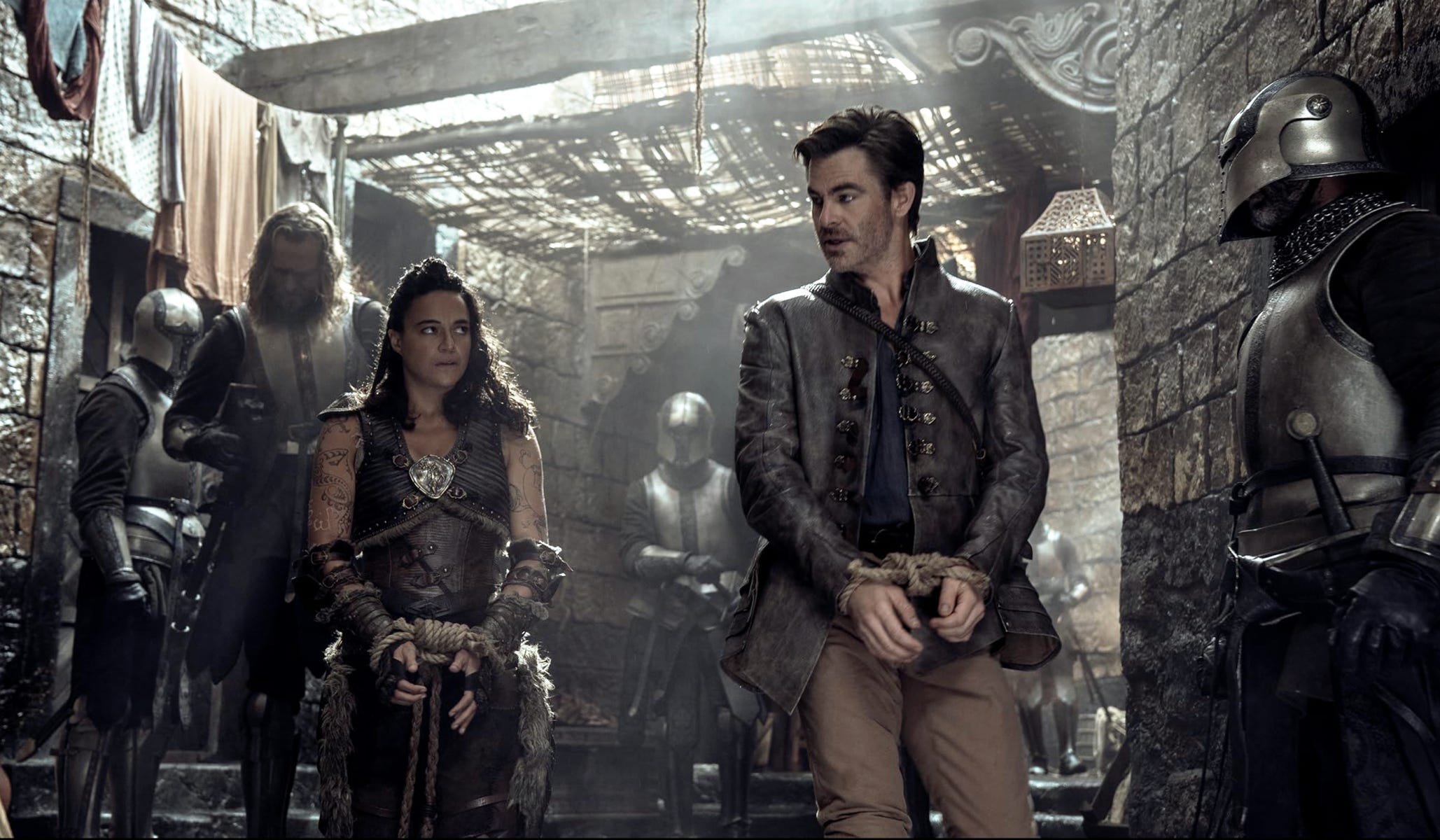
A few days ago, Jonathan Goldstein, one of the writer-directors of Dungeons & Dragons: Honor Among Thieves, mentioned that they’ve written a sequel, and that he doubts it’ll ever be shot “for a number of financial reasons.” So there’s a finished script for a movie nobody will pay for. Which is a shame, because the first one is a lot of fun. I watched it again recently with my kids (their first time), and it was a hit with them.
It’s a heist movie in a fantasy setting. Chris Pine plays a bard whose only real weapon is being charming (he’s the Danny Ocean of this film), and he assembles the usual crew of specialists: a barbarian, a sorcerer who keeps flubbing his spells, a shape-shifting druid. The goal is to rob a vault belonging to his old partner, played by a very funny Hugh Grant, clearly having a great time as the smiling con man.
My favorite scene is in a graveyard. The sorcerer casts Speak with Dead, a real D&D spell that lets you ask a corpse exactly five questions. The party immediately starts wasting them arguing about whether asking if something counts as a question counts as a question. The scene keeps finding new ways to make five a very small number, and it pays off later in a way I won’t spoil.
The reason it works, I think, is that a heist and a D&D campaign are the same thing. Both are an elaborate plan meeting reality and failing again and again until it somehow comes together. I’ve played D&D weekly for years, which is the only expertise I bring to this. What the film adapts is the playing, not the lore: somebody always improvises something idiotic, it half-works, and the party spends the rest of the night arguing about it.
You don’t need to have played to enjoy it. Knowing the game gets you extra references, but my wife has never rolled a d20 and enjoyed it as a straight adventure movie.
It’s a well-made crowd-pleaser, which is rarer than it sounds. They did a good job, the hard way. The dragonborn is an animatronic with motors in its face rather than a CGI render, and the directors said they were aiming at Willow and The Princess Bride (see Field Notes #1 for Cary Elwes’ memoir of making that film).
Stay through the credits for a bonus scene. Too bad the sequel will never be more than a PDF on somebody’s hard drive. [Liberty]
3. John and Abigail Adams: The Founding’s Greatest Partnership
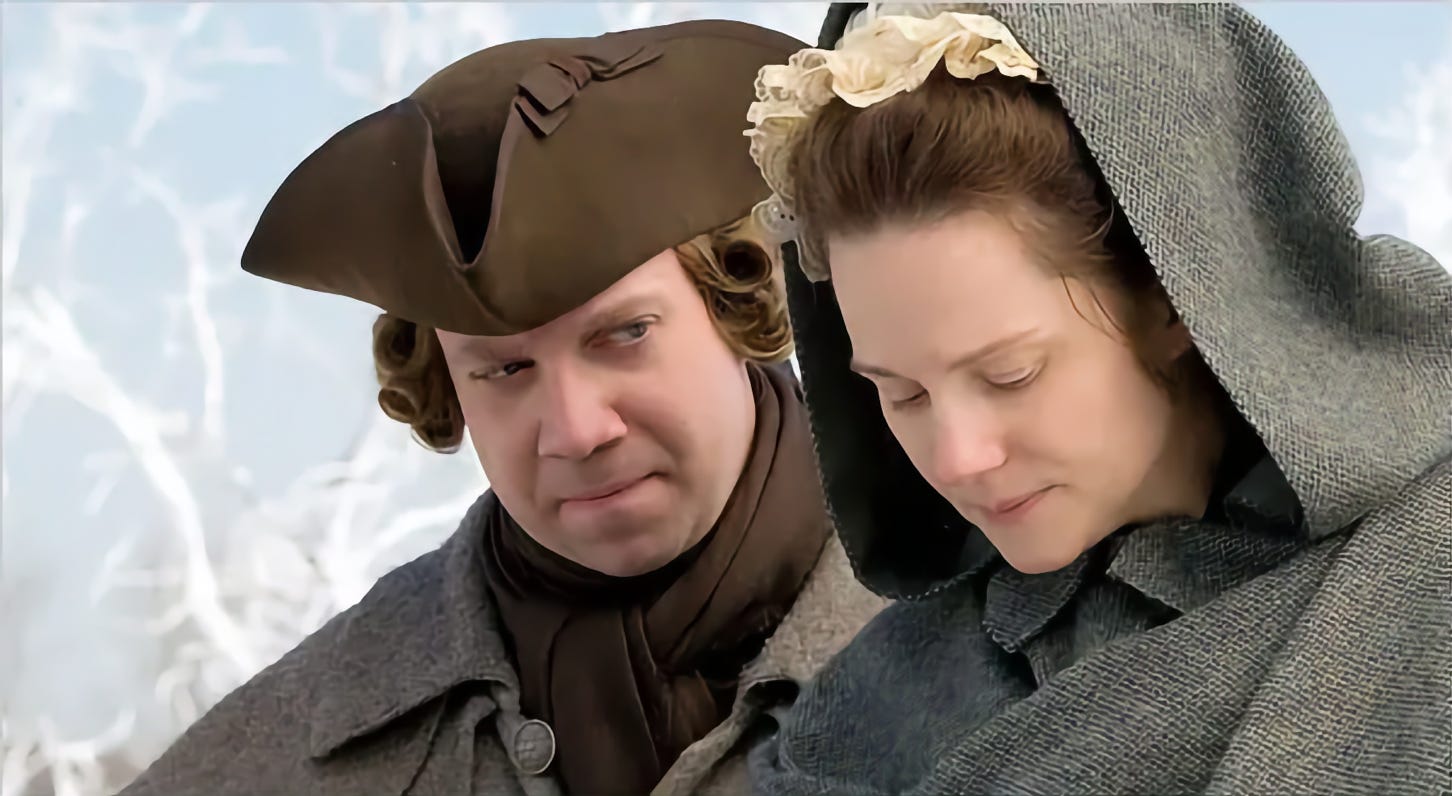
Two of my all-time favorites are really one story told twice: David McCullough’s John Adams and the HBO miniseries it became seven years later. I can’t think of another case where a book and its adaptation actually improve each other, but these two do.
McCullough won the Pulitzer for it, and it holds up.
He spent years in the Adams papers and came out with a portrait that doesn’t sand anything down. The vanity and the temper are all there, right alongside the courage. Adams wasn’t Jefferson and knew it, which is part of what makes him such good company on the page. He was a stubborn New England lawyer with an overdeveloped sense of duty who kept volunteering for the hardest jobs of the founding — defending the British soldiers after the Boston Massacre, arguing independence in the Continental Congress, negotiating the peace in Paris — and got most of them right, including the one nobody remembers to thank him for: losing an election, handing power to his rival, and going home.
The miniseries, directed by Tom Hooper, somehow adds to all this. Paul Giamatti plays Adams squat and twitchy and brilliant, funny and heartbreaking in the same scene. I’ve loved Giamatti in almost everything he’s done, but I think this is the best thing he’s ever done (I think it even edges out Billions!). That said, it’s Laura Linney’s Abigail who holds the seven episodes together.
The two of them wrote each other more than a thousand letters over the course of their marriage. He was gone for years at a stretch, and she ran everything in his absence: the farm, the money, the children, and a good deal of his political thinking. On many questions, she was the sharper politician. Watch Linney and Giamatti argue about slavery, the vice presidency, or the loneliness of Paris, and they stop looking like historical figures. They look married. So much of the founding was really a story of partnerships. This was one of the great ones.
I would say first read the book, then watch the series. And if you’re still not done with the Adamses after that, the letters themselves are in print. Worth a read on their own, as a portrait of what two people can do in a lifetime. [Jimmy]
📕 John Adams by David McCullough
🎬 John Adams the miniseries (2008, HBO)
4. The Man Who Photographs Actors Like Dioramas
Willem Dafoe has always been one of my favorite actors. As a kid, I remember seeing him in the Spider-Man movies, and he shines in every role. It helps that he has a classic theatrical face, which makes him seem natural as a mad sea-captain or in the many distinct roles he plays in Wes Anderson movies.
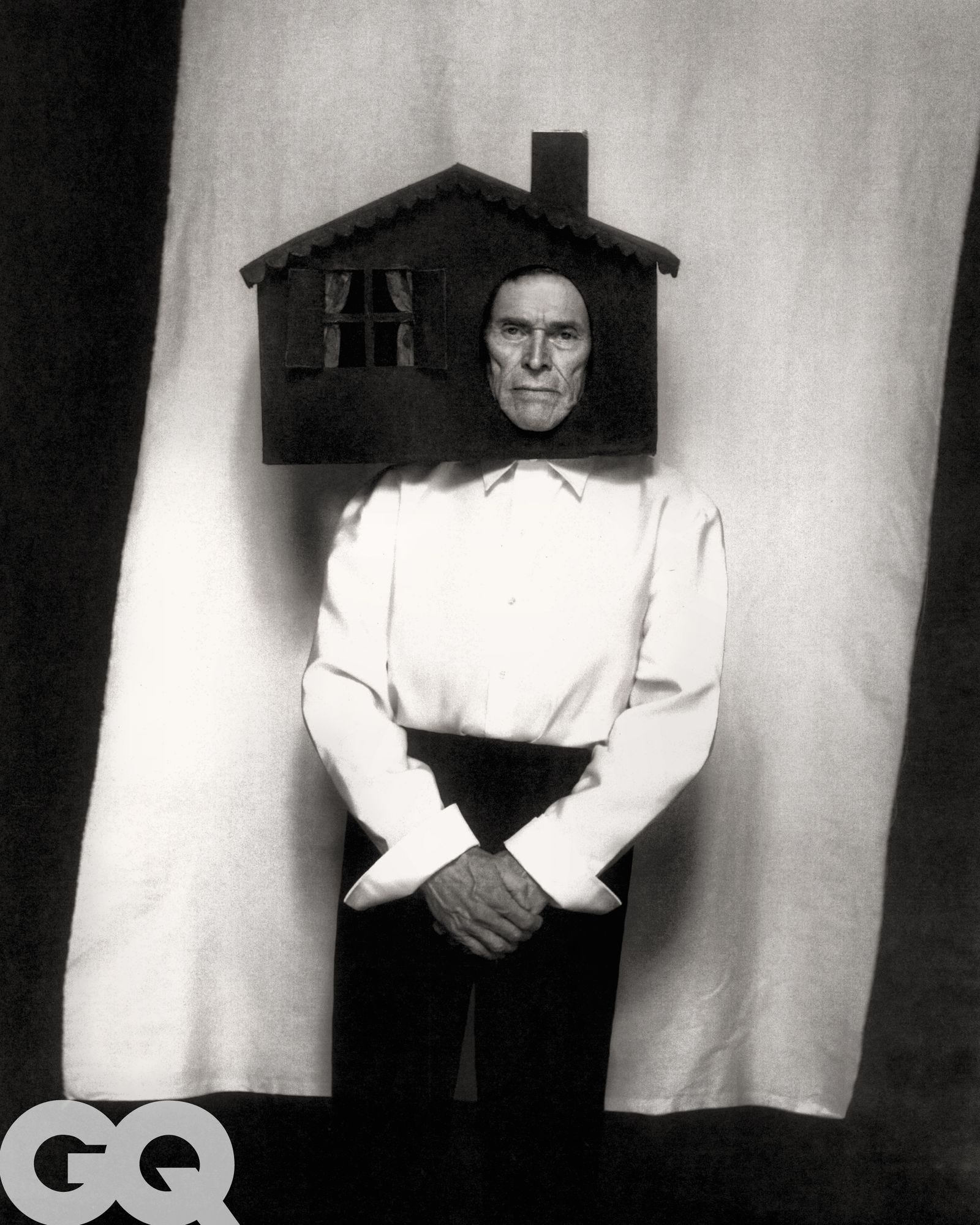
A few years ago, this photo of Willem Dafoe started circulating online. It’s part of a GQ Italia photoshoot. I was mesmerized by it. First of all, it’s strange. Why is Willem’s head inside a cardboard house? Why is he posing like that? Every single photo from that sepia-toned shoot accentuated his theatricality.

This was the work of photographer Szilveszter Makó, who I’ve been obsessed with ever since. Aperture magazine recently did a feature on him, and they showcase a lot of his strange work. Makó does not really think of himself as a photographer. He builds the sets, makes the props, and stages his subjects inside box-like rooms. The photographs look less like portraits than tiny theatre productions.
Two details from the Aperture profile stood out to me. One was Makó’s insistence on making sure everything is handmade, to elevate the textures and grain of the image. The other was the feature’s exploration of Makó‘s inner rooms:
“When he speaks about his inner architecture, though, the style morphs into something more intricate. He imagines “lots of little rooms,” each distinct, each filled with carefully gathered trinkets. Every object is collected and stored, separate yet connected in a sort of organized chaos…”
This snippet made me wonder: can we really know what’s going on in our favourite artists’ inner minds? Can we use our own inner chaos and channel it into magic the way Szilveszter does? [Rohan]
📷 Szilveszter Makó on Instagram
5. Brown Shag Carpet on the Walls and a Hundred Platinum Records
The Sound City studio opened in 1969 in a former Vox amplifier factory in a Van Nuys industrial park in Los Angeles. Brown shag carpet on the walls, no windows, and everyone who worked there describes it as a dump. It also had a Neve mixing console that cost $75,000, one of only four in the world, and twice what one of the owners had just paid for his own house. He says in the film that his wife never found out.
Neil Young recorded part of After the Gold Rush there. Fleetwood Mac made their 1975 self-titled album. Tom Petty made Damn the Torpedoes. Rick Springfield made “Jessie’s Girl.” Nirvana made Nevermind.
In 2013, Dave Grohl made a documentary about the place, his first time directing. He'd recorded Nevermind there in 1991, and bought that console when the studio closed in 2011 (it reopened in 2017, after the film came out). Then he interviewed forty musicians and staff who had worked in the room. That's the best part: people telling stories about how the records actually got made.
It took four months to dismantle and move the Neve console, and then a few hours for, as Grohl puts it, a guy with a toothbrush to remove all the cocaine and fried chicken from its insides.
My favorite of those stories: in 1974, Mick Fleetwood came by looking for a place to record. Keith Olsen, the house engineer, played him "Frozen Love" to show off what the room could do, a track he'd cut there with a duo called Buckingham Nicks. Lindsey Buckingham happened to walk past while his own record was being used as a sales pitch. Not long after, Fleetwood Mac needed a guitar player, and Buckingham told them they'd have to take his girlfriend too.
This is why I like a good behind-the-scenes documentary. It shows how random life can be. That room turned out to have one of the best drum sounds in the world, entirely by accident, and nobody wanted to make changes to it in case they ruined it.
The second half is weaker. Grohl brings a bunch of musicians to his own studio to write and record new songs on the old console, and it's fine. He’s very likeable, so it’s still fun to hang out with him, but I much prefer the first half.
The place was a dump. But make enough great records in one room and it gets a halo. Even the ugly carpet is part of the legend now. [Liberty]
🎬 Sound City (2013, documentary, directed by Dave Grohl)
⭐ Explore the OSV Field Notes Archive ⭐
Enjoyed OSV Field Notes? 💌 Forward it to a friend!

This is great reading to start the weekend and think about books to read!