
Welcome to OSV Field Notes, a weekly, high-signal curation of things worth your time.
This week: a British post-punk revival cures an allergy to new music, two books explain why football is the only religion without atheists, Bob Hoskins terrorizes 1980s London, a movie doubles as a history lesson, and the overlooked Bennet sister gets the spinoff she deserves
1. Dry Cleaning: British Post-Punk at its Best
Something no one told me about getting older is how much harder it gets to discover new music. I’m finding new movies, books and art all the time, but despite listening to hours and hours of music a day, I find myself consistently underwhelmed, retreating to the safety of my favorite artists. Why is this? Is it just a skill issue? Or is there something unique to music that makes us more discriminating in our tastes?
Anyway, after a brief interlude in the electronic music I listened to as a student, I’ve been back to bands recently. In particular, I’ve been digging Dry Cleaning, a British outfit headed by the taciturn lyricist Florence Shaw. They’re firmly in the post-punk lineage, with Shaw’s monotone, spoken-word delivery dancing over janky, spiky guitar riffs and moody basslines. There is something profoundly British about their weary, resigned tone (exactly what I need on the morning after yet another crushing World Cup exit).
Shaw’s lyrics - non-sequitur fragments accumulated magpie-like from found text and the dusty corners of her mind - are consistently interesting, just on the edge of amusing without veering over into parody or self-mockery. Take this interlude from Strong Feelings, complete nonsense that somehow makes poetic sense:
Tin blades, earthen ware
Flower brick painted in blue
On the sloping edge of a vase of flowers
On the front, Chinese landscape
On the sides, figures in a Dutch landscape
It’s Europe
Going through their back catalogue has reminded me of how I felt discovering new music when I was younger. I’d suggest starting with Strong Feelings and the slow-building Liberty Log for a good sample of their sound. If you like them, check out their first album and work from there. [Ed]
2. Football is the Only Religion Without Atheists
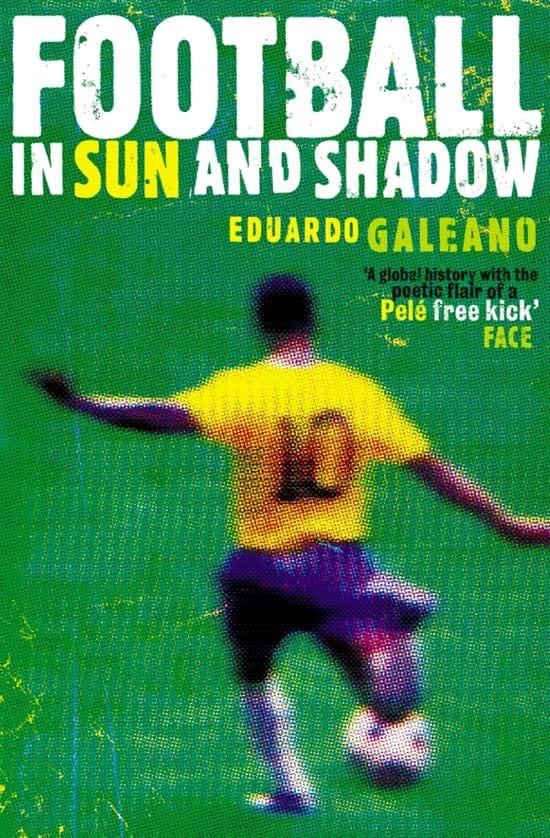
Good news: it’s World Cup season.
Bad news: it’s nearly the end of World Cup season.
As a football fan for over twenty years, I’ve watched thousands of matches. I could probably have learned another language in the number of hours I’ve spent watching 22 people kick a little ball around a field (no regrets).
But some of my most profound football experiences have come a long way from the stadium or the screen. Two books have taught me more about the art and science of the beautiful game than a TV pundit ever has.
The Art: Football in Sun and Shadow by Eduardo Galeano. This is a collection of vivid, bite-sized vignettes celebrating the “great pagan mass” of the sport. Galeano writes like a poet, and he is better than anyone at articulating the religious fervor that football invokes in its fans.
The Science: My Turn by Johan Cruyff. The Dutch master and architect of modern Barcelona delivers a masterclass on “Total Football,” skipping the ghost-written platitudes common to celebrity autobiographies to explain how he engineered space and rhythm on the pitch. Anyone wanting to understand Spain’s masterclass against France earlier this week should start here.
As the World Cup draws to an end, these books remind us why we care so much about 90 minutes of controlled chaos. As Galeano wrote, football remains “the only religion without atheists.” [Camellia]
📕 Football in Sun and Shadow by Eduardo Galeano
📕 My Turn by Johan Cruyff
3. Before Guy Ritchie Came the Long Good Friday
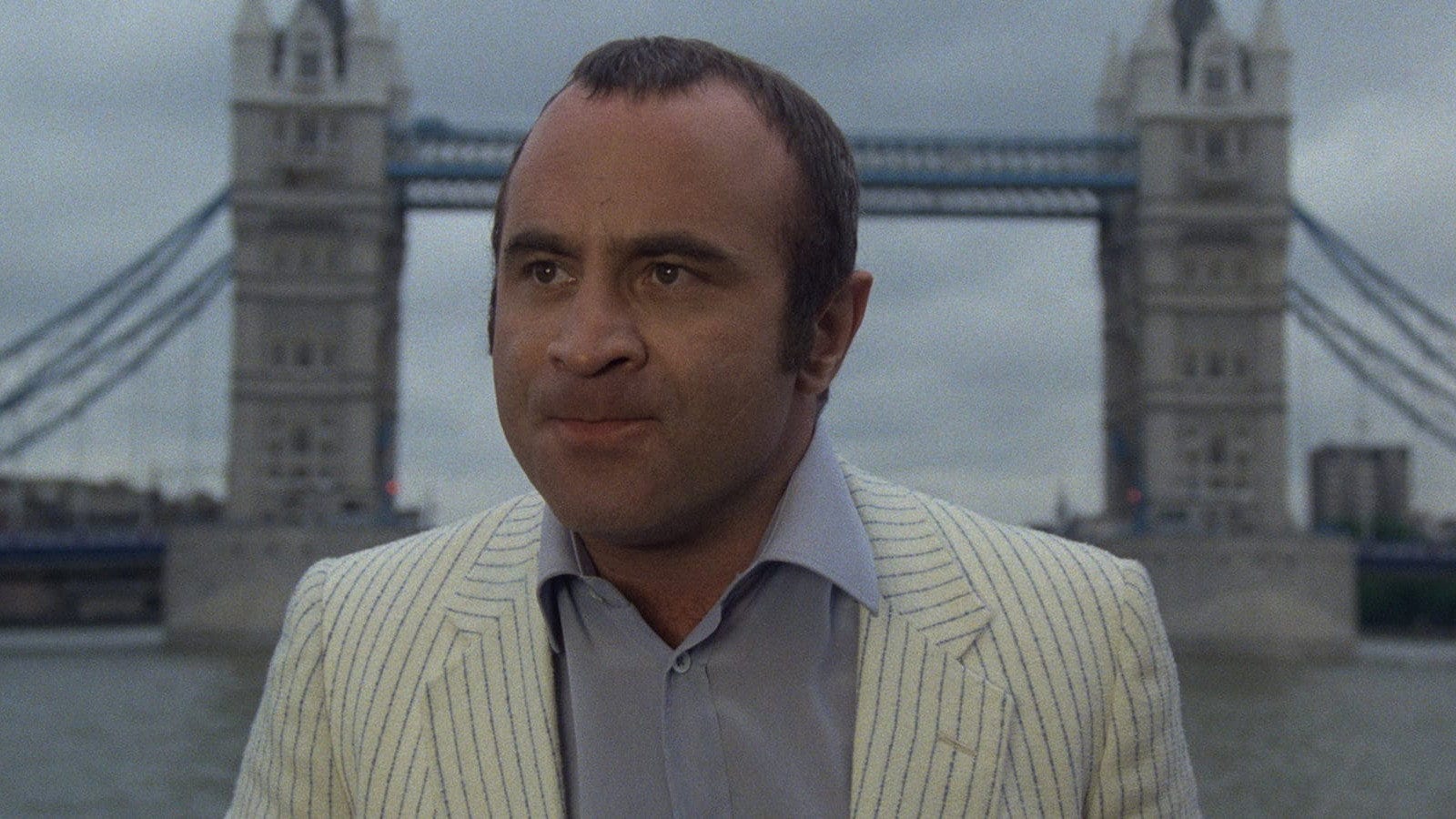
Harold Shand (Bob Hoskins, in his breakout role) is a London gang boss with lofty visions of legitimizing his operation by building a Docklands property empire, aided by an impending partnership with the American mafia.
Alas, a lifetime of murder and extortion has a nasty habit of leaving a few loose ends. When a series of attacks from a mysterious adversary threatens to dismantle Harold’s meticulously laid plans, he must threaten, bribe, shoot and slice his way into finding and stopping his enemy before it’s too late.
This film is an urtext for the British crime flicks popularized by Guy Ritchie and Matthew Vaughn in the early noughties. Snatch, Lock Stock, and Layer Cake aficionados will find a lot to love in the acidic script (“The Yanks love snobbery. They really feel they’ve arrived in England if the upper class treats ‘em like shit”), dreary London backdrop and compounding eruptions of eyewatering violence.
Oh, and need I add that there is a sinister mustachioed sidekick called ‘Razors’?
Bob Hoskins is inspired as the unnervingly vulnerable head honcho, imperiously sneering and snarling his way through London’s underbelly like a Cockney Robert De Niro one moment; shedding a tear for the death of his best friend the next.
There are stylistic flourishes aplenty (keep an eye out for the exquisite long take that closes the film), but there is a lot more going on under the hood. Gone are the winking, teenage-boy-coded sensibilities of Ritchie’s films, replaced by a sinking sense of claustrophobic dread as the noose tightens around the impulsive Harold. The script is whip-smart, landing blows on Thatcherist individualism, British exceptionalism and class tensions while still knowing when to shut up and play the genre hits. [Ed]
🎬 The Long Good Friday (1980)
4. 1917 : You Only Know What They Know
I’ve started watching war films with my 12-year-old. Not Rambo III or Commando. The more historically grounded ones. It started when I mentioned that something happened “during World War II” and realized the words meant almost nothing to him. How could they? My own love of history began with films rather than textbooks. They aren’t always accurate, but they gave the words meaning. Now I’m trying to do the same for my son.
So I built us a little curriculum: 1917, Saving Private Ryan, and Band of Brothers. They’re more violent than what I usually watch with him, but I know my kid, and the violence isn’t gratuitous. It’s supposed to be horrible.
We started with 1917 because I wanted to begin with the First World War before moving to the Second. I’d already seen it twice, including in the theater, and Roger Deakins is my favorite cinematographer.
Everyone talks about how it's made to look like a single continuous shot, unfolding in near real time. It’s neat, but it's not what I care about. What makes it special is that the camera never leaves the soldiers. You see nothing they don't see, you know nothing they don't know. There are no establishing aerial shots of the battlefield, no cutaways to the Germans setting their trap, no shot of Blake's brother waiting at the other end. That absence denies us the reassurance of knowing more than they do.
In 1917, you're just there. It’s the closest a film has gotten me to what it might feel like to be a young soldier having to cross no man’s land. I pointed out to my son how many of the soldiers looked like teenagers, or barely out of their teens.
The violence happens the way it often does in life: fast, brutal, unannounced, no slow motion.
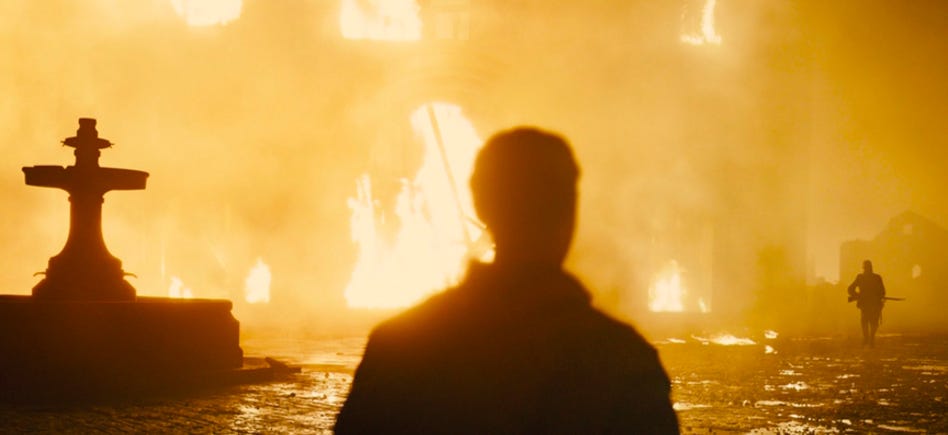
The filmmaking is incredible. Sequences that would be the highlight of another director’s entire career are just stacked one after another. The ruined town at night, lit by drifting flares and fire, is out of this world.
Being told about a war and seeing one are very different. The next time I tell my son something happened in 1917, he won’t hear only a date. [Liberty]
🎬 1917 (2019, directed by Sam Mendes)
5. How I Learned to Love Mary Bennet
Mary Bennet bored me stiff.
Jane was beautiful, Lizzy was witty and Lydia was reckless. When I first read Pride and Prejudice, it felt like all Mary did was give solemn little speeches and play the piano. Dull!
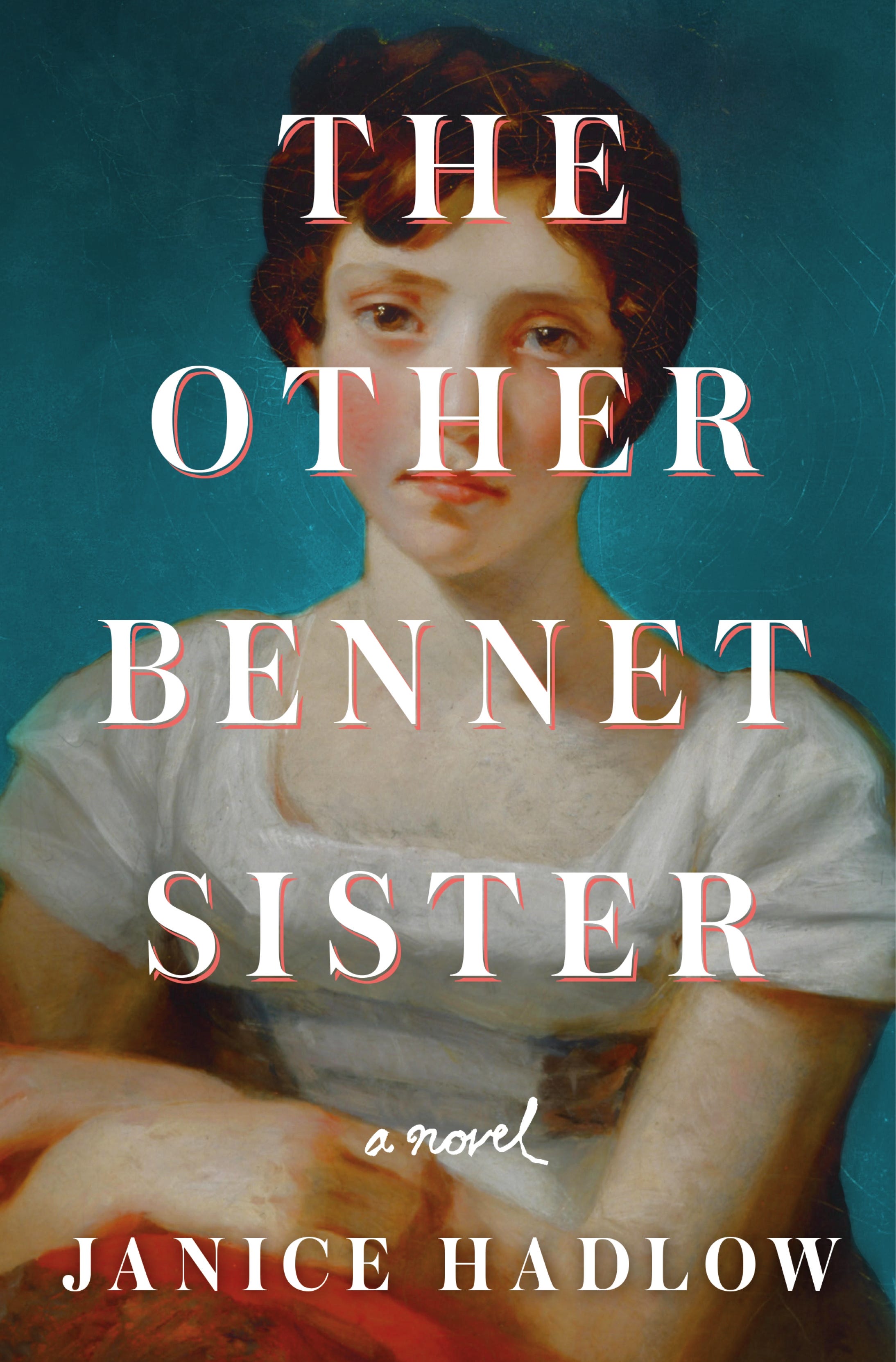
Honestly, given my dislike for Mary, I don’t know why I read Janice Hadlow’s The Other Bennet Sister, a partial retelling of Austen’s novel from her perspective. But I’m so glad I did.
I expected a clever extension of Pride and Prejudice. I did not expect to become so invested in Mary.
The first half revisits familiar territory: Longbourn, assemblies, drawing rooms, exhausting marriage calculations, etc. But now it’s all filtered through Mary’s acute self-consciousness. She is bookish, gauche and overlooked, and she knows it. It’s heartbreaking to sit with her as she watches her sisters attract attention she knows she’ll never get.
But once her sisters are settled and her own future becomes uncertain, the novel expands beyond Austen’s plot and forces Mary to build an identity for herself. A slow-burn reinvention follows (my favorite kind), managing to thread the needle between growing Mary as a person while keeping her recognizably Austen’s creation.
If you loved Longbourn (Pride and Prejudice from the servant’s perspective) or Wide Sargasso Sea (the madwoman from Jane Eyre given her own story), you’ll probably love this too.
It got me thinking about other stories whose side characters we’ve overlooked. Is it time for an Animal Farm from the horse’s perspective? [Aashisha]
📕 The Other Bennet Sister by Janice Hadlow
⭐ Explore the OSV Field Notes Archive ⭐
Enjoyed OSV Field Notes? 💌 Forward it to a friend!
