
Welcome to OSV Field Notes, a weekly, high-signal curation of things worth your time.
This week: the YouTube algorithm delights us, a Heian-era book feels like X or Threads, C-SPAN gives one author three uninterrupted hours, the world’s largest operating steam locomotive crosses America, and Louis L’Amour lives a life worthy of Hemingway.
1. Barry Can’t Swim & Crate-Digging at The Lot
Sometimes the YouTube algorithm gifts us in surprising ways. I’ve been getting into DJs lately, and after listening to Fred Again and the sets of Padre Guilherme (who I had the pleasure of seeing in Buenos Aires), YouTube started pushing a name onto my feed: Barry Can’t Swim.
I ignored it for a long time. Then one day, I clicked a set of his from Brooklyn and put it on while working through an essay. Within a few minutes, I was on my feet, swaying.
Was I able to finish the essay? No. Was my creative brain on fire? Absolutely.
Right after the Brooklyn set I put on another one, from The Lot Radio, and now I can’t stop listening to the guy. This one was even more surprising. Halfway through, I recognized a classic song of my parents’ generation: Anish Kumar’s Nazia, which samples Nazia Hassan’s 1980s Pakistani pop banger Disco Deewane.
Stuff like this is why I love DJs. The best ones are masters of “crate digging” — going into the musical archives, pulling out amazing tunes, and resurfacing them. And Barry Can’t Swim is really good at it. For example, near the end of this set he plays Midnight or Late Afternoon by Mike Simonetti, which is an edit of a bangin’ 70s disco track titled I’m Your Boogie Man by KC and The Sunshine Band. That’s just a taste of his worldly ear; he’s cited Ravi Shankar and Fela Kuti as inspirations.
It helps that the setting suits him. The Lot Radio is a small 24/7 online station in Greenpoint, built by Francois Vaxelaire in a triangular patch of vacant land he found full of trash. A DJ booth and a coffee kiosk inside a repurposed shipping container, and not much else. It runs live all day and takes no brand money. “We never want to contribute to the noise,” Vaxelaire likes to say. The programming is open format on purpose: techno at noon, a rock band at six, whatever a resident wants at two in the morning.
What a way to experience music. [Rohan]
2. The Woman Who Noticed Everything

I live for little observations. When someone says something a bit too loudly, the particular way someone pinches their nose, the small irritation that reveals way more than a dramatic confession ever could. That’s probably why Sei Shōnagon’s Pillow Book felt so alive to me.
It read like a diary when I started, but halfway through I realized it was a huge list — a collection of lists, gossip, memories, judgments, court scenes, aesthetic preferences, and private annoyances, written by a court lady in tenth-century Japan. Shōnagon writes about “things that make one’s heart beat faster,” “things that should be short,” “hateful things,” “elegant things.”
I loved how contemporary her lists felt. She was snobbish, funny, observant, vain, tender, and cutting, sometimes on the same page. The best thing about her was that she noticed everything: clothing, handwriting, weather, flirtation, rank, timing, embarrassment. Basically, she’s the Heian-era version of X, Bluesky, or Threads — or, better, an aristocratic WhatsApp group chat.
In one section, usually translated as “Very Tiresome Things,” she writes: “When a poem of one’s own, that one has allowed someone else to use as his, is singled out for praise.” I laughed so hard at that line.
The book can feel fragmentary, but that is also its pleasure. It doesn’t have a plot as such, but if you read it to see what a Heian court felt like, you’ll be fascinated. Read it with a cup of tea and it will feel like Shōnagon is talking to you.
If you like books that preserve the texture of a mind rather than just the events of a life, this is worth reading. Some writers build worlds through plot. Shōnagon does it by noticing what everyone else would have missed. [Aashisha]
📕 The Pillow Book of Sei Shōnagon translated by Ivan Morris
3. Three Hours, One Writer, One Camera

I realize I’m going full book nerd on you, but it comes with the territory when you make books for a living. So indulge me: today’s recommendation is C-SPAN’s Book TV.
I stumbled onto it back in 2017, when Michael Lewis came on In Depth, Book TV’s flagship program, for a three-hour interview. Three hours. One writer. One camera. He talked about Liar’s Poker and Moneyball and The Undoing Project, and he took questions from a moderator and, one after another, from viewers calling in from their kitchens and their cars. It was the most unhurried treatment of a working writer I had ever seen on American television. I have been hooked ever since.
Book TV airs Sundays on C-SPAN2 and has run since 1998. C-SPAN founder Brian Lamb once said he got tired of watching authors show up on talk shows and disappear before he could decide whether he wanted to read the book. So he built the thing he wished existed. For years, C-SPAN estimated that Book TV featured roughly two thousand nonfiction authors a year.
In Depth ran monthly from 2000 through 2023, with later episodes shortened from three hours to two. The complete archive remains online. The format was simple: one writer, one moderator, viewer call-ins, no b-roll, no jump cuts. The camera just sits there and the writer talks.
I find the whole thing quietly moving. The writers take the questions seriously. The moderators let them answer at length. And for a couple of hours on a Sunday afternoon, the country’s most patient literary talk show carries on, an artifact of a slower era doing its slow work.
If you love books, spend a Sunday with it. You will not want the show to end. [Jimmy]
4. Big Boy: 1.2M Pounds of American History, Steaming Across the Country
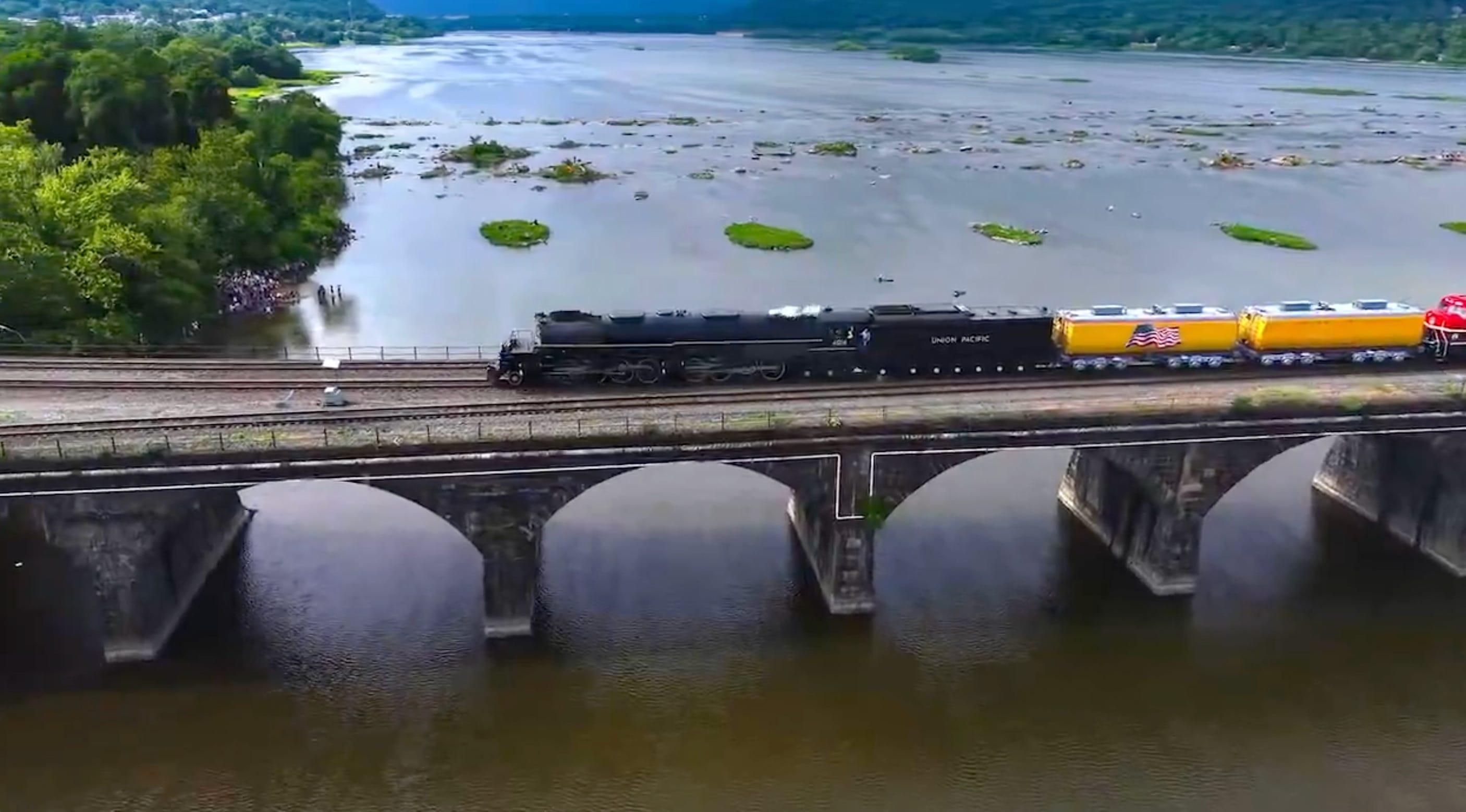
In 1941, an unknown worker at the American Locomotive Company in Schenectady, New York, chalked the words “Big Boy” on the smokebox door of No. 4000, the first locomotive in a new class so large nobody had a better name for it. The name stuck. Eighty-five years later, one of its surviving sisters — Union Pacific No. 4014 — steamed east from Cheyenne, Wyoming, to Philadelphia for America’s 250th birthday, and thousands of people lined the tracks to watch it pass.
Big Boy is the world’s largest operating steam locomotive: 133 feet long, 1.2 million pounds, sixteen driving wheels, and enough power to haul a 3,600-ton freight train over the Wasatch Range without a helper engine. It was built to move war materiel over the Wasatch Range and logged over a million miles before being retired in 1961. It sat in a museum in Pomona, California, for just over half a century.
Then Union Pacific spent three years taking it completely apart and rebuilding it. In May 2019, it moved under its own power for the first time since John F. Kennedy was president. This summer’s eastern tour — the centerpiece of Big Boy’s 250th anniversary celebration — marks the first time a Big Boy has traveled on eastern rails since 1941, when it rolled off the assembly line. It crossed the Rockville Bridge into Pennsylvania this week and is now making its return westward to Wyoming. Even mega-transportation influencer and new Grand Tour presenter Francis Bourgeois showed up.
You can feel Big Boy before you see it. The ground shakes. The whistle carries for miles. The heat radiates off the boiler and you understand, in your body, why people drove hours to stand trackside in the rain. As lead engineer Ed Dickens told WJAC, “Everywhere we go, we have looks of amazement, some looks of terror when people are too close.” In a country that moves everything by algorithm, there is something deeply right about a machine you can hear coming. [Taylor Pipes]
🗺️ Big Boy’s Remaining Summer Schedule (Union Pacific)
5. The Man Who Was More Hemingway Than Hemingway
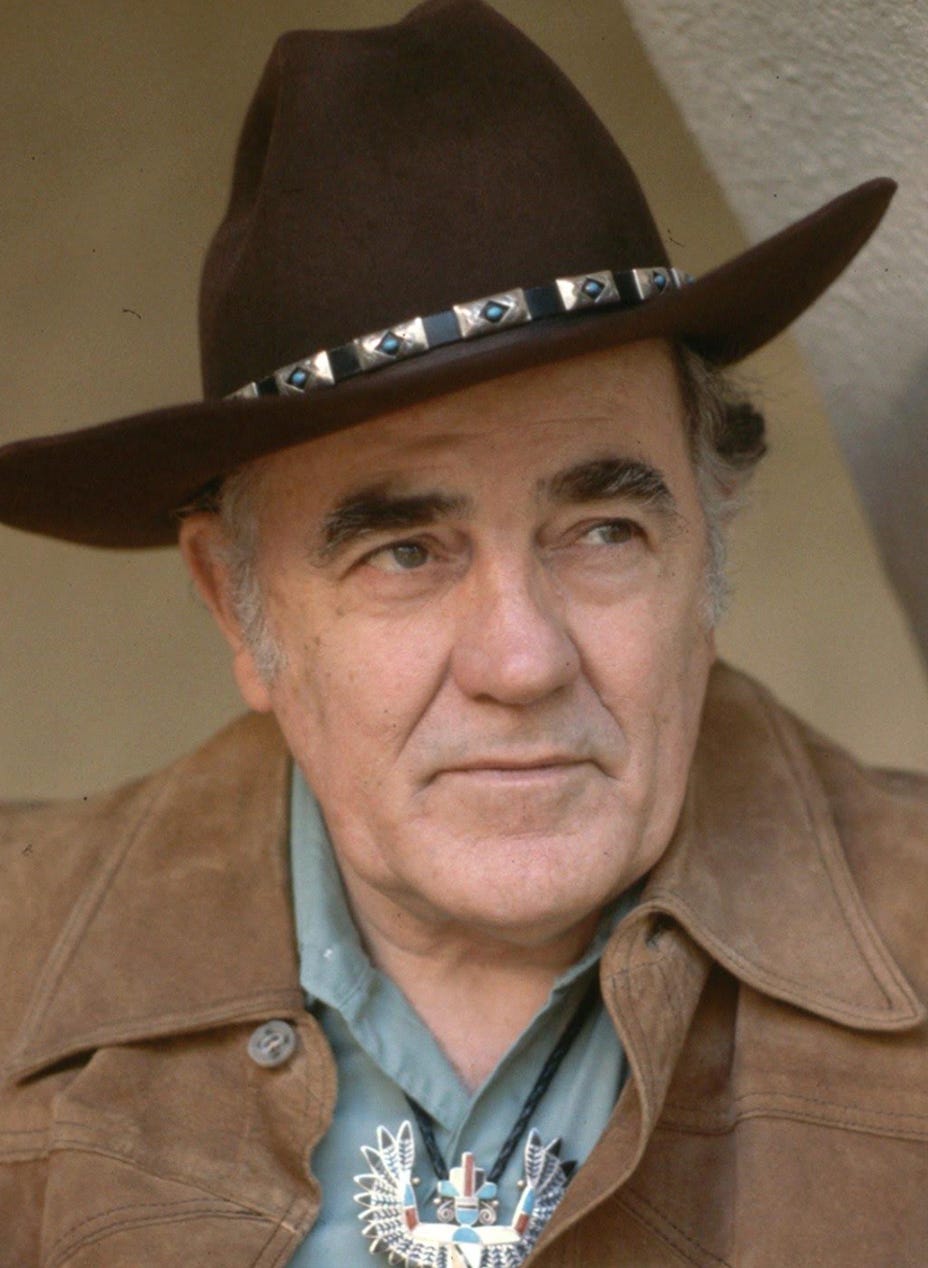
I won’t say you have to live an interesting life to be a good writer, but I’d definitely say it’s an advantage. That’s why I’ve always been drawn to Louis L’Amour.
He left his small North Dakota home at 15 and took on any job he could find while traveling the world. Miner, fruit picker, elephant handler for a circus — he even had a few stints as a professional boxer. He went to China, Japan, Singapore, Egypt, Europe... I could go on. All of this happened before he made a living as a writer.
Even though none of his books are as acclaimed as Ernest Hemingway’s, and he’s often dismissed as “only” a genre writer good at cowboy stories, L’Amour wrote about 100 novels and hundreds of short stories across many genres. He pushed himself to write every day because he believed that “nature has no place for non-producers.”
I bring all this up because I admire him as someone who wrung every last drop out of life — and lately I’ve been reading a lot of those short stories. Most of them have been collected in seven volumes, and I’ve been working my way through volume one. L’Amour’s straightforward prose is easy to read, and I’ve been struck by how many simple stories have left me with something to think about.
If you’ve got an appetite for short fiction that instills values like bravery and integrity, add L’Amour to your rotation. [Jameson]
⭐ Explore the OSV Field Notes Archive ⭐
Enjoyed OSV Field Notes? 💌 Forward it to a friend!

There was a good movie based on The Pillow Book (and called The Pillow Book) about 35 years ago. Directed by Peter Greenaway and starred Vivian Wu and Ewan McGregor. Lush, beautiful movie with a great soundtrack.
I think it’s still streaming on Apple TV.