
Welcome to OSV Field Notes, a weekly, high-signal curation of things worth your time.
This week: the strange distance between where something starts and how big it gets. A band of engineers one failed launch from bankruptcy who somehow became the biggest IPO ever, a forgotten photo of an empty room that a teenage VFX artist turned into the summer's biggest movie, the 1981 paper that explains why a hundred good actors don't add up to one DiCaprio, a star-stacked 1992 thriller that predicted our data-run world, and a satirical 1823 essay carrying the best writing advice you've never read.
1. One Shot Left

SpaceX went public yesterday, the largest IPO in market history, at a valuation that exceeded two trillion dollars soon after the stock started trading. The right book to read this week is Eric Berger’s Liftoff, which tells you how close the company came to never reaching this morning at all. It is one of my favorite books about a company’s origin story.
Berger’s book covers the years between SpaceX’s founding in 2002 and its fourth Falcon 1 launch in September of 2008. For most of that stretch, the company was a small band of engineers sleeping in mosquito-ridden barracks on a sandbar in the Marshall Islands called Omelek, trying to build a cheap rocket on a shoestring.
They failed three times in a row. The first Falcon 1 caught fire seconds off the pad. The second made it to space and then began to wobble. On the third, the first stage collided with the second at separation. Musk had money for one more attempt. The fourth launch was the make-or-break shot, and Berger’s account of those weeks feels a bit like the Shackleton expedition. He writes beautifully about the improvised solutions in tropical rain, critical hardware flown in on commercial flights, and engineers sleeping under their workbenches.
Berger is the senior space editor at Ars Technica, and his reporting is the kind of access the genre rarely gets. He sat with nearly everyone who was there: the engineers, the launch director, Gwynne Shotwell, Tom Mueller, Musk himself. The result is a book that reads like an adventure story because it is one, and it’s history worth reflecting on as the company reaches another historic milestone. [Jimmy]
📘 Liftoff: Elon Musk and the Desperate Early Days That Launched SpaceX by Eric Berger
2. From a Hobby Store in Oshkosh to A24’s Biggest Hit

In 2003, someone snapped a photo on the second floor of a hobby store in Oshkosh, Wisconsin. It showed nothing remarkable — a windowless commercial space with dull yellow walls and fluorescent lighting. The image sat on the HobbyTown Oshkosh website for years, forgotten. Then, in 2019, it surfaced on 4chan, where an anonymous poster captioned it with a description of “the Backrooms” — an endless, empty dimension of humming lights and damp carpet that you could accidentally slip into if you “noclipped out of reality in the wrong areas.” The image went viral. The concept became a full-blown internet mythology, spawning fan fiction, games, and videos.
In 2022, a sixteen-year-old VFX artist from Petaluma, California, named Kane Parsons uploaded a found-footage short to YouTube that turned the meme into something genuinely terrifying.
It got 84 million views.
That short became the basis for Backrooms, which opened May 29, 2026, and has already grossed $237 million worldwide on a $10 million budget, making it A24’s highest-grossing release ever. Parsons directed it. He is twenty years old, making him the youngest director in the studio’s history and the youngest filmmaker ever to direct a #1 movie at the U.S. box office. His parents sat with him on the initial Zoom calls with the studio when he was still in high school. He taught himself visual effects after an arthritis diagnosis at thirteen left him unable to walk for stretches, so he stayed up under the covers watching horror shorts on YouTube and learning VFX software.
He was born in 2005. The same year YouTube launched.
The whole arc is worth sitting with: a throwaway photo from a Wisconsin hobby store, dormant for sixteen years, reanimated by the internet, turned into a mythology by a teenager, and now a box-office phenomenon produced by James Wan and Osgood Perkins. The building in Oshkosh is now a different hobby store. The original room is an RC car track. A24 put a billboard downtown anyway. [Taylor]
🎬 Backrooms (2026)
3. Winner-Take-All vs Finding Easy Games
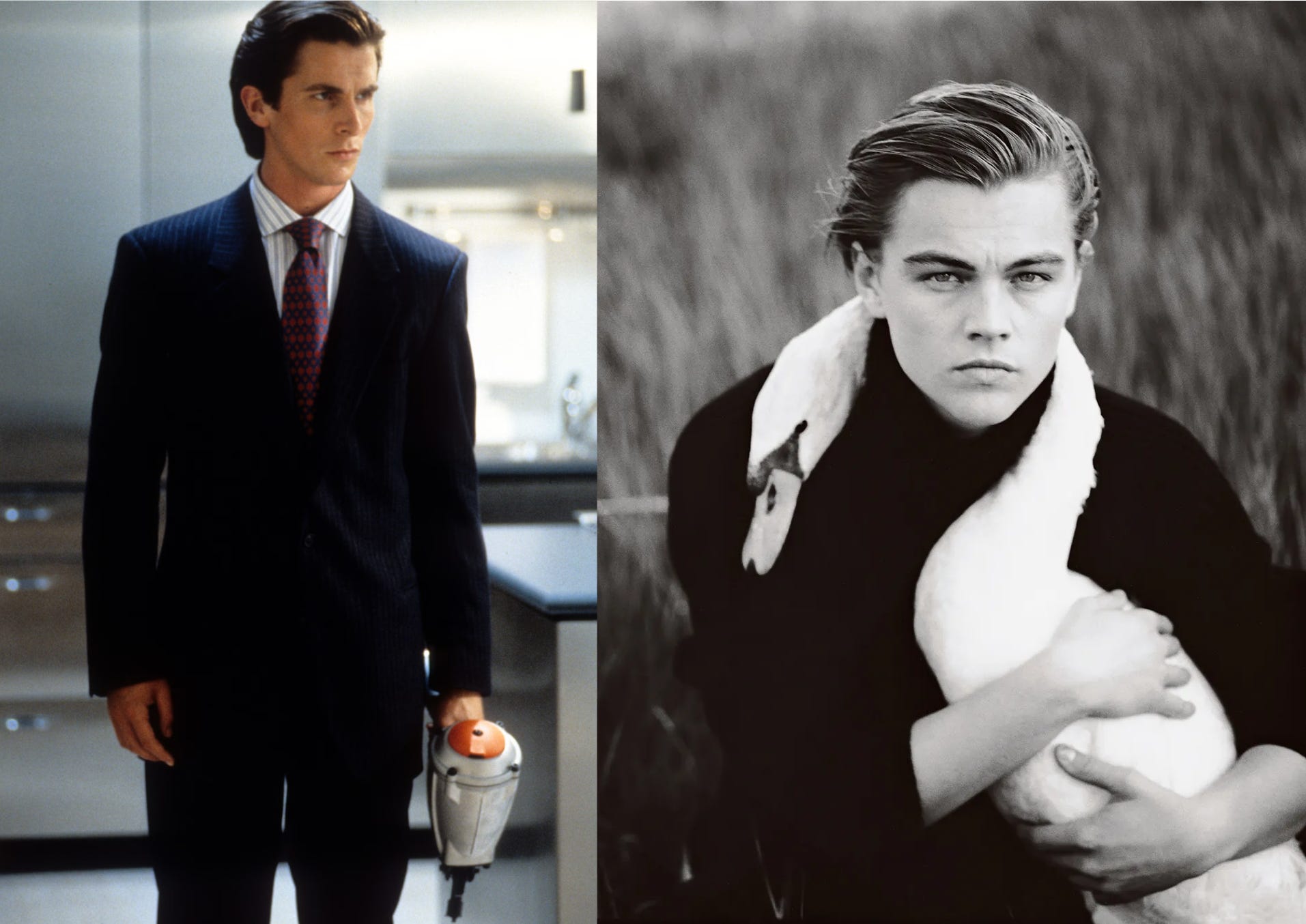
Christian Bale once quipped that any role he ever landed was only because Leonardo DiCaprio passed on it first. It’s a joke with a serious thesis behind it, one that forms the backbone of Sherwin Rosen’s 1981 paper, The Economics of Superstars, and Frank and Cook’s The Winner-Take-All Society.
I’ve been thinking about the business of media a lot lately, and I’m especially interested in how firms underwrite projects. What makes a hit? Who gets to command a premium? Rosen’s paper has some answers.
First, people refuse to substitute. A hundred pretty good actors do not add up to one DiCaprio. Second, technology lets the best performer serve everyone at once. Put the two together and a minor difference in quality produces an enormous difference in outcome. This is why a studio will pay one actor more than the rest of the cast combined.
So what becomes of everyone who isn’t DiCaprio? They have two choices. One is to get better, and most pick it, which is exactly the problem. Winner-take-all markets attract far more entrants than they can pay. The smarter choice is to leave the tournament and find a market where substitution still works. ‘Finding Easy Games’ as Michael Mauboussin would say.
A lot has changed since Rosen wrote his paper and Frank and Cook built on it. There used to be many tournaments. Every city had its scene, every genre its circuit. Our social feeds collapsed them into a single prize pool, with an algorithm handing out the prizes. Slop is what a winner-take-all market produces when the prize is attention.
Maybe the answer is to bring back the smaller tournaments. Scenes, niches, local circuits that don’t compete for global attention. The winner-take-all market is not going anywhere. But nothing says we have to live our whole cultural lives inside it. [Rohan]
📄 The Economics of Superstars (1981) by Sherwin Rosen
📙 The Winner-Take-All Society (1995) by Robert H Frank and Philip J Cook
4. Sneakers : Too Many Secrets

I've been showing my kids movies from my youth lately. Last week, we watched WarGames and they loved it. I figured the next logical step was Sneakers (co-written by the duo behind WarGames).
It was another hit with the kids, and while it was probably my fifth time, I enjoyed it as much as ever. (Yes, after Butch Cassidy and The Sting, the accidental Robert Redford retrospective continues. It’s oh-so-much-fun.)
Redford leads the crew of security specialists that companies pay to break into their own buildings and systems to find the weaknesses. The cast is bonkers: Sidney Poitier, Dan Aykroyd, River Phoenix, David Strathairn, Mary McDonnell, Ben Kingsley, and James Earl Jones (the voice of Darth Vader!).
It's a bit of everything: a heist movie, a con movie, a comedy, a thriller, and a hangout movie. James Horner's score (with Branford Marsalis on saxophone) is memorable and gives me a Pavlovian response every time I hear it.
One reason it has aged well: the hacking happens through doors, motion sensors, surveillance, and social engineering rather than screens full of code (there’s some of that too).
What hit differently this time was the villain's speech: "The world isn't run by weapons anymore, or energy, or money. It's run by little ones and zeroes, little bits of data... It's about who controls the information." In 1992, it sounded like a supervillain monologue but today it’s just stating a fact.
So why does almost nobody under 40 seem to know it? My best guess is the title is confusing and makes people think it's about shoes, and the poster was mostly text and white space (pre-internet, many people picked films based on the title and poster). The thesis is "too many secrets," but this film shouldn’t be one. [Liberty]
🎬 Sneakers (1992)
5. The Censor in Your Head
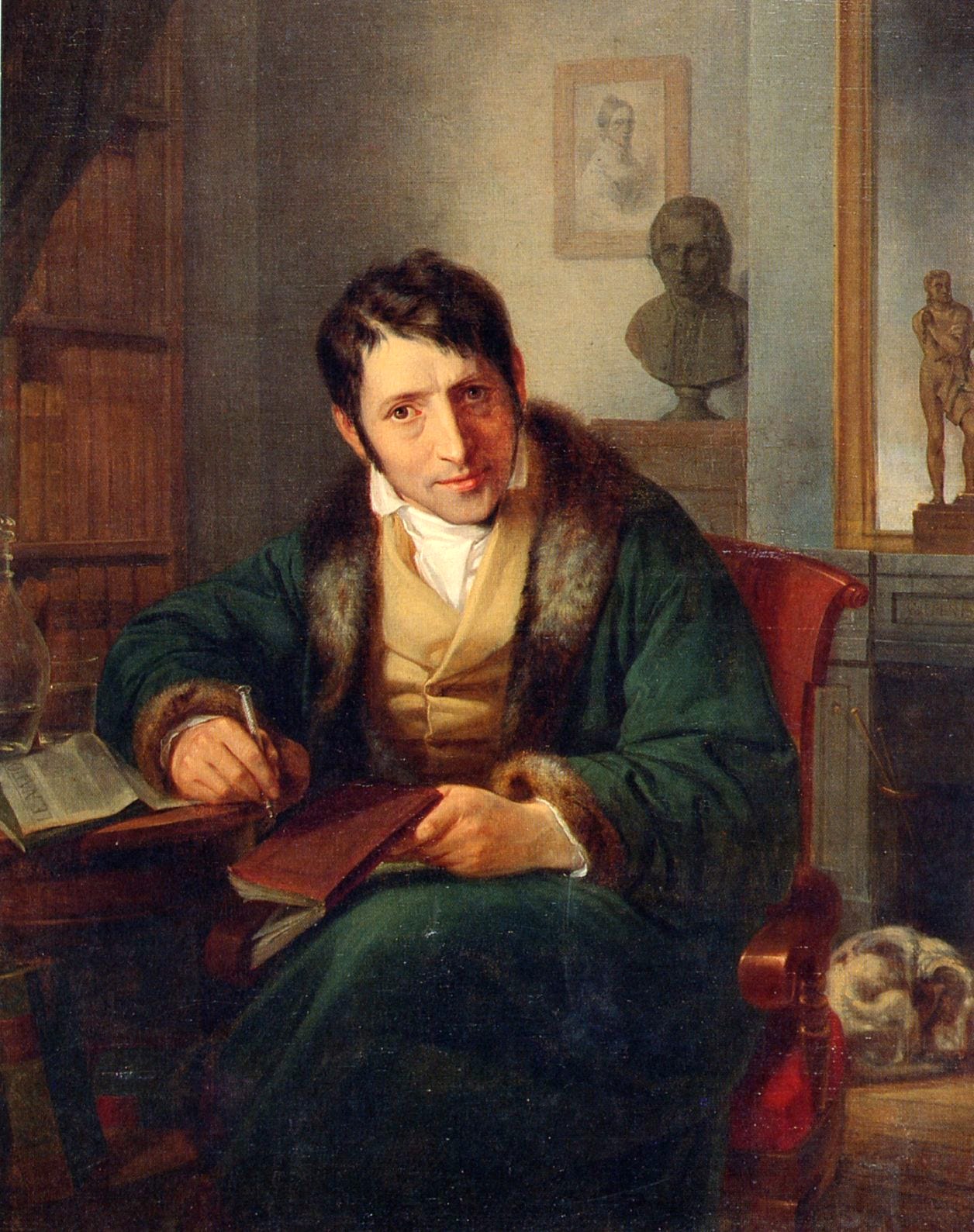
In 1823, a German journalist named Ludwig Börne published a short essay called How to Become an Original Writer in Three Days. While intended as satire, it contains the best writing advice I’ve ever read. It also happens to be the first ever description of freewriting. Freud was given Börne's essays at thirteen. Decades later, rereading this one, he suspected it had been a buried influence on his method of free association (a case of possible cryptomnesia).
Börne’s argument is simple: originality is more the product of character than skill. Most writers fail to write well (or fail to write at all) because they listen to the market instead of themselves, often subconsciously. Whether rooted in fear or ego, our inner censor stands in our way. The only way past him is through him, and the only way through him is through volume.
As Börne writes: “The good writer follows the same path as the bad writer, only he follows that path somewhat farther.”
You cannot think your way into original writing, and you can certainly overthink yourself out of it. You can, however, write your way into original writing. In fact, that’s the only way in.
Here’s how Börne suggests you proceed: “Take a stack of paper and write. Write everything that goes through your mind for three consecutive days with neither hesitation nor hypocrisy. Write down what you think of yourself, what you think of your wife, what you think of the war with the Turks, what you think of Goethe, of Fonk’s trial, of the Last Judgment, of your superiors. At the end of the three days, you will scarce be able to believe what new, unheard-of thoughts have come to you.”
Five minutes to read. Three days to test it out. Why not give it a go? [Dylan]
📄 How to Become an Original Writer in Three Days by Ludwig Börne (free PDF)
⭐ Explore the OSV Field Notes Archive ⭐
Enjoyed OSV Field Notes? 💌 Forward it to a friend!

Excellent read Jim. As a musician and aspiring screenwriter, lots of news you can use. My daughter works at SpaceX so I was juiced to see you mention the Thomas Edison of our time
Thanks. I watched Listers this week. It was a great two hours.