
Welcome to OSV Field Notes, a weekly, high-signal curation of things worth your time.
This week: five things that aren't what they look like. A Michael Jordan biography that's really about the birth of the athlete as a global brand, a 2,000-year-old war epic that's really an argument about whether anyone can be good, two clueless bird-chasing brothers and a minivan that somehow add up to one of the best films in years, a Stasi thriller that's really about whether art can change a person, and a con movie whose real mark may be you.
1. He Reported Jordan Like a War: David Halberstam’s Playing for Keeps

I grew up in suburban Chicago in the 1990s, which means I grew up inside the Jordan era. We watched the games on WGN. We argued about Pippen. We knew the announcers’ voices the way other kids knew their grandparents’. So I came to David Halberstam’s Playing for Keeps: Michael Jordan and the World He Made with an unusual amount of skin in the game, and I can tell you that he got it right. Every detail, every cadence of the era, every moment of the dynasty’s slow assembly and faster collapse. The book is the era.
What makes Playing for Keeps great is what made Halberstam great. He treated Jordan the way he treated Robert McNamara in The Best and the Brightest or the heads of CBS and Time in The Powers That Be. He reported the hell out of it. He talked to everyone. He wrote about Jordan as a node in a much larger system: Phil Knight’s Nike, the globalization of the NBA, and the rise of the celebrity athlete. The book is as much about the world Jordan made as about Jordan himself, which is what the title told you it would be.
I think about Halberstam and his work and range often. He started at the smallest daily in Mississippi, then covered the civil rights movement for the Nashville Tennessean. He won a Pulitzer at thirty for his Vietnam reporting at the Times. He wrote books about the 1949 pennant race, the Nashville sit-ins, the American auto industry, the 1950s, the Korean War, and FDNY Engine 40 after 9/11.
He covered whatever he wanted and refused the silo. That kind of range is rare in any writer and almost extinct now.
Jordan went global at the exact moment the Cold War ended, and Halberstam was the one reporter serious enough to see that the kid from Wilmington had become America's biggest export. [Jimmy]
🏀 Playing for Keeps: Michael Jordan and the World He Made by David Halberstam
2. When Telling the Truth Sends You to Hell

I picked up this book in April from the small library in my in-laws’ apartment complex. It seemed to have answers to my own moral conundrums, and after finishing it, I can say that it delivered… and handed me the Mahabharata as a bonus.
The book by Gurcharan Das weaves The Mahabharata (the great Indian epic) with the author’s own journey of intensely studying it in his search for Dharma and how to live his post-retirement life.
In a Greek epic, Das points out, the hero errs and moves on. In the Mahabharata, the action stops while everyone argues the right thing to do for pages. Many stories encapsulate why Dharma is subtle. The story of Kaushika is illuminating.
Bhishma tells Yudhishthira about Kaushika, an unlearned ascetic who has vowed always to tell the truth. When cutthroats ask which way their fleeing witness ran, he tells them. For that truth, which gets an innocent man killed, he is damned to a 'gruesome hell.'
Bhishma explains that while ‘there is nothing higher than the truth’, the thing most difficult to understand in the whole world . . . is that truth should not be spoken and that falsehood should be spoken, where falsehood would be truth, or truth falsehood. Someone simple is dumbfounded in that circumstance where truth is not fixed . . . If escape is possible by not singing your song, then you should not let out the smallest note. But if your not singing would arouse suspicion, then you absolutely have to sing away.
The epic doesn't only live on the page. I recently came across the work of Italian artist Giampaolo Tomassetti, who became a Hindu monk and spent 5 years studying the Mahabharata. He painted twenty-three large canvases between 2008 and 2013. They render the Indian epic in the style of a European Renaissance fresco and are among the finest artworks I’ve seen.
During a May visit to Italy, India's prime minister posted about Tomassetti, and it brought a lot of attention to his paintings.
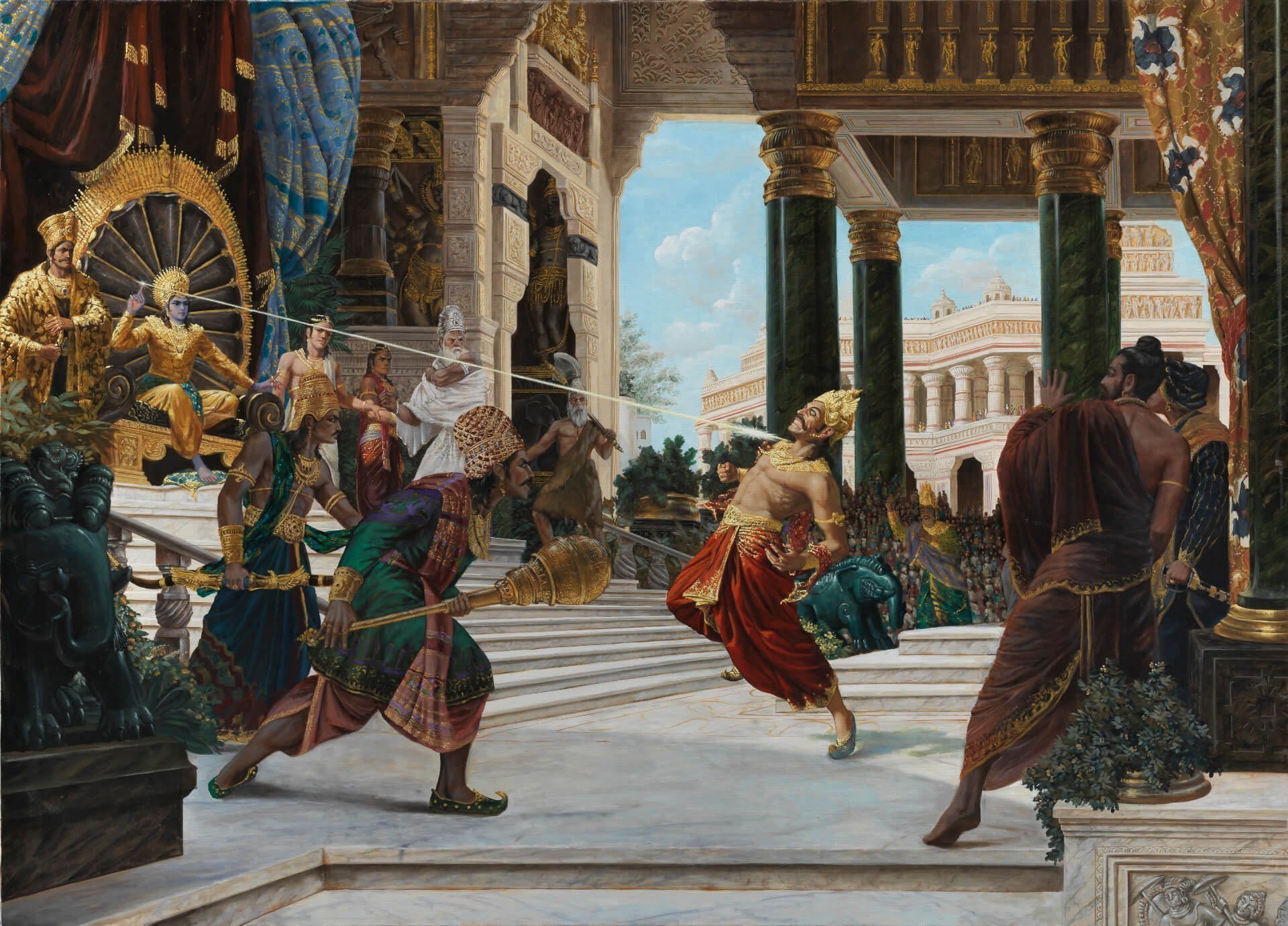
The epic is 2,000 years old. It has outlasted the empires that copied it and keeps finding advocates: a retired Punjabi CEO, an Italian painter, now a prime minister. Whatever ‘doing the right thing’ means, we’re clearly still arguing about it. [Atman]
📙 The Difficulty of Being Good: On the Subtle Art of Dharma by Gurcharan Das
🖼️ See all of the paintings on Giampaolo Tomassetti’s website
3. 579 Birds, One Minivan, and Zero Idea What They Were Doing
The average American birder is 49 years old. Birders collectively spend $107 billion a year on trips and equipment. The hobby has long carried the image of retirees in khaki vests squinting through spotting scopes.
Listers destroys that image in two hours.
Owen and Quentin Reiser are two brothers from Collinsville, Illinois. The idea for the film came to Quentin while high and staring at the family’s field guide. They spent all of 2024 living in a 2010 Kia Sedona minivan, driving 38,757 miles across the Lower 48, attempting a Big Year — the quest to see as many bird species as possible in a single calendar year. The record to beat was 751. They knew almost nothing about birds. They called every small brown bird a “chickadee.”
What they made from it is profane and proudly juvenile, but also one of the best documentaries I’ve seen in years.
Owen, a professional wildlife videographer with National Geographic credits, balances gorgeous high-definition bird footage with grainy handheld shots of two brothers eating canned beans on the side of a highway, sleeping in Cracker Barrel parking lots (42 nights), and losing their minds over species with names like the dickcissel, the ferruginous pygmy owl, the northern beardless tyrannulet, and the elegant trogon.
They turned down offers from Netflix, HBO, and Amazon and instead released it on YouTube for free. It’s been watched nearly 5 million times, and the comment section is full of people stunned that a two-hour birding documentary is the best thing they’ve watched all year. A companion book, Field Guide of All the Birds We Found One Year in the United States, documents every species they encountered with Quentin’s illustrations.
The Reisers ended their year with 579 species. They didn’t break the record. They didn’t care. Somewhere along the thousands of miles, the contest stopped being the point, and the love of birds took over. [Taylor]
4. The Stasi Officer Who Heard Too Much: The Lives of Others
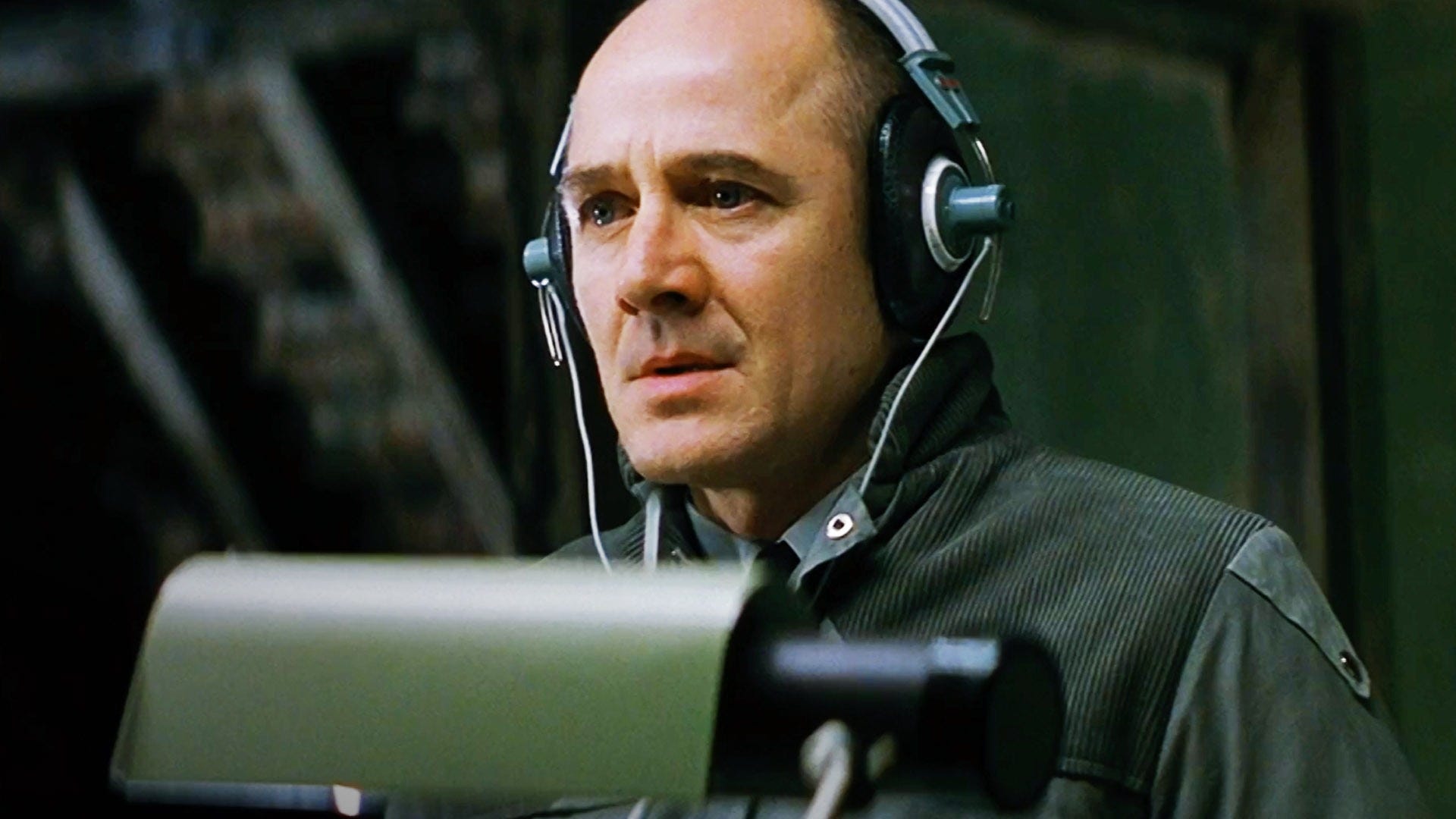
If you ask me to name a favorite film, I will struggle. There are too many great ones, and the answer changes with the weather. But if I had to choose just one, it would be The Lives of Others.
The film is set in East Berlin in 1984. A Stasi captain named Gerd Wiesler is assigned to surveil a playwright, Georg Dreyman, and his actress girlfriend, Christa-Maria. Wiesler is the perfect instrument of the state: humorless, unmarried, ruthless in interrogation.
He sits in the attic above the playwright’s apartment, headphones on, listening through the walls. And as he listens, to the music, to the arguments, to the love, something in him begins, almost imperceptibly, to shift. There is a scene in which Dreyman sits down at his piano after a friend’s suicide and plays a piece called the Sonata for a Good Man. Up in the attic, Wiesler listens. Whatever happens after that, the system has lost him.
I will not spoil the ending. I will say only that the film’s final line is among the great closing lines in cinema. Ulrich Mühe, who plays Wiesler, had himself been spied on by the Stasi as a young actor in East Germany. He died of cancer less than a year after the film won the Oscar. Watching him in this role, knowing that, you understand the weight of the performance.
The Lives of Others is a film about whether a person can change, and whether art can be the thing that changes them. And the answer? Indisputably yes. [Jimmy]
🎬 The Lives of Others (2006)
5. The Sting : The Double-Edged Long Con

After watching Butch Cassidy and the Sundance Kid with my family a few weeks ago (see Field Notes #20), the next stop was obvious: The Sting (1973), the film that reunited Paul Newman, Robert Redford, and director George Roy Hill. Unlike Butch, I had never seen this one.
The setup: small-time grifter Hooker (Redford) and his crew accidentally rob a courier working for mob boss Doyle Lonnegan. Lonnegan has Hooker’s mentor killed, and Hooker recruits a washed-up master con man, Gondorff (Newman), to take the gangster for everything he has. From there, the whole thing is a long, elaborate con.
I don’t want to spoil a 53-year-old film (the statute of limitations on spoilers must’ve expired by now), but let’s just say the real mark isn’t Lonnegan. It’s you. The film spends two hours teaching you to feel like a member of the crew, in on every scheme, and then cons you with the same move it uses on him. But it’s so delightful, you won’t mind.
Gondorff was a smaller role in the original script. Newman’s interest got it enlarged, and the rebalancing turned the film into a twin-lead engine like Butch. I spent the whole time trying to decide which of them is more charismatic (I’d probably vote Newman).
We’ve seen so many descendants that it’s easy to forget that The Sting set the template for the modern heist movie. The ensemble con, the twist that the apparent screwup was the plan all along. The Ocean’s films owe it the most. They even considered casting Newman and Redford as Clooney and Pitt’s grifter dads.
One more thing. This is a 1973 film set in 1936, but it has no interest in the real 1936. The Depression is set dressing, not the catastrophe it actually was. You get sepia tones and snap-brim hats and a Scott Joplin ragtime score that was already thirty years out of date by 1936. Watching it today compounds the effect: it’s an old film pretending to be an older film. Maybe it’s why the con works on the audience: you’re enjoying the fake world too much to keep your guard up. [Liberty]
🎞️ The Sting (1973)
I've been meaning to watch The Lives of Others for years but somehow never got around to it. This is the final push! I'm bumping this up the list!