
Welcome to OSV Field Notes, a weekly, high-signal curation of things worth your time.
1. The Big Heat : The 1953 Blueprint for the 1970s Antihero

We had an uncharacteristically hot summer last year in Britain. So I’m told anyway: I spent much of it in a dark room, immersed in the world of film noir, that distinctly American cinematic movement that emerged in the mid-1940s and flourished in the immediate postwar years.
Rooted in the hardboiled crime novels of writers like Raymond Chandler and Dashiell Hammett, noirs were generally produced cheaply and efficiently by studios battling tightening production budgets. Despite being often dismissed by contemporary critics, noir has aged into the most interesting and timeless of the American film movements (sorry, Westerns), inspiring filmmakers ever since. One shorthand for the health of American movie culture is how enthusiastically directors return to the genre – both the 1970s and 1990s saw major noir revivals.
The Big Heat is a shockingly violent vigilante tale from 1953. Directed by the legendary Austrian Fritz Lang (Metropolis, M, Scarlet Street), it is among my favourites. Glenn Ford plays a cop investigating another cop’s suicide, getting sucked into the orbit of a mob bigwig in the process. When the stakes become personal, he launches a bloody revenge campaign.
As with all great vengeance stories, it functions as both a brutally effective crowd-pleaser and a complex tale of moral decay. Don’t get persuaded by the seemingly righteous fury of our protagonist; instead, pay attention to who and what he is willing to sacrifice to get his justice.
Warning: this is as dark and bleak as they come (genuinely shocking, for 1953). Ford’s protagonist lacks the wry humour or easy charm of someone like Humphrey Bogart. He is a grimly determined angel of death in a way that feels like a direct precursor to the cynical antiheroes who would go on to stalk 1970s cinema and beyond. [Ed]
🎞️ The Big Heat (1953)
2. The Soul of A New Machine : Turning Circuit Boards into Drama

Tracy Kidder, who died last week at 80, was one of my favorite authors and a great practitioner of narrative nonfiction. His book, The Soul of a New Machine, remains his masterpiece and one of my all-time favorite reads.
Published in 1981, just as the personal computer revolution was beginning, the book follows a team of engineers at Data General Corporation as they race to build a new minicomputer. It won the Pulitzer Prize and the National Book Award, and it deserves both. I read it obsessively while working on The Founders, and it shaped how I thought about telling a story set inside a company.
What makes the book extraordinary is Kidder’s ability to render technical work as human drama. He had no background in computers when he started the project, and he relied on his subjects to teach him. I valued this deeply because I’m not an engineer either, and yet I would lose myself reading it, completely absorbed in the details of circuit boards and debugging sessions and the internal politics of a computer company. Kidder was engaging in what Richard Feynman called “the pleasure of finding things out,” and the best nonfiction I read does exactly that. It makes you curious about worlds you never thought you’d care about, and it earns your attention by taking its subject seriously.
Kidder also pioneered a method I came to admire: immersive, long-duration reporting that lets you disappear into a world. He spent months with the Data General team, watching and listening, earning the kind of access that makes scenes feel lived rather than reconstructed. The result is a book that moves even when it’s explaining technical minutiae. It’s a portrait of what it actually feels like to build something under constraints, and it remains one of the best books ever written about work.
His obituary in the New York Times noted that he once described his ambition as writing about “intensely good people.” The Soul of a New Machine is full of them, and Kidder gave them the prose they deserved. [Jimmy]
📕 The Soul of a New Machine by Tracy Kidder
3. The Forever War : The Sci-Fi War Novel Where Physics Is the Cruelest Weapon
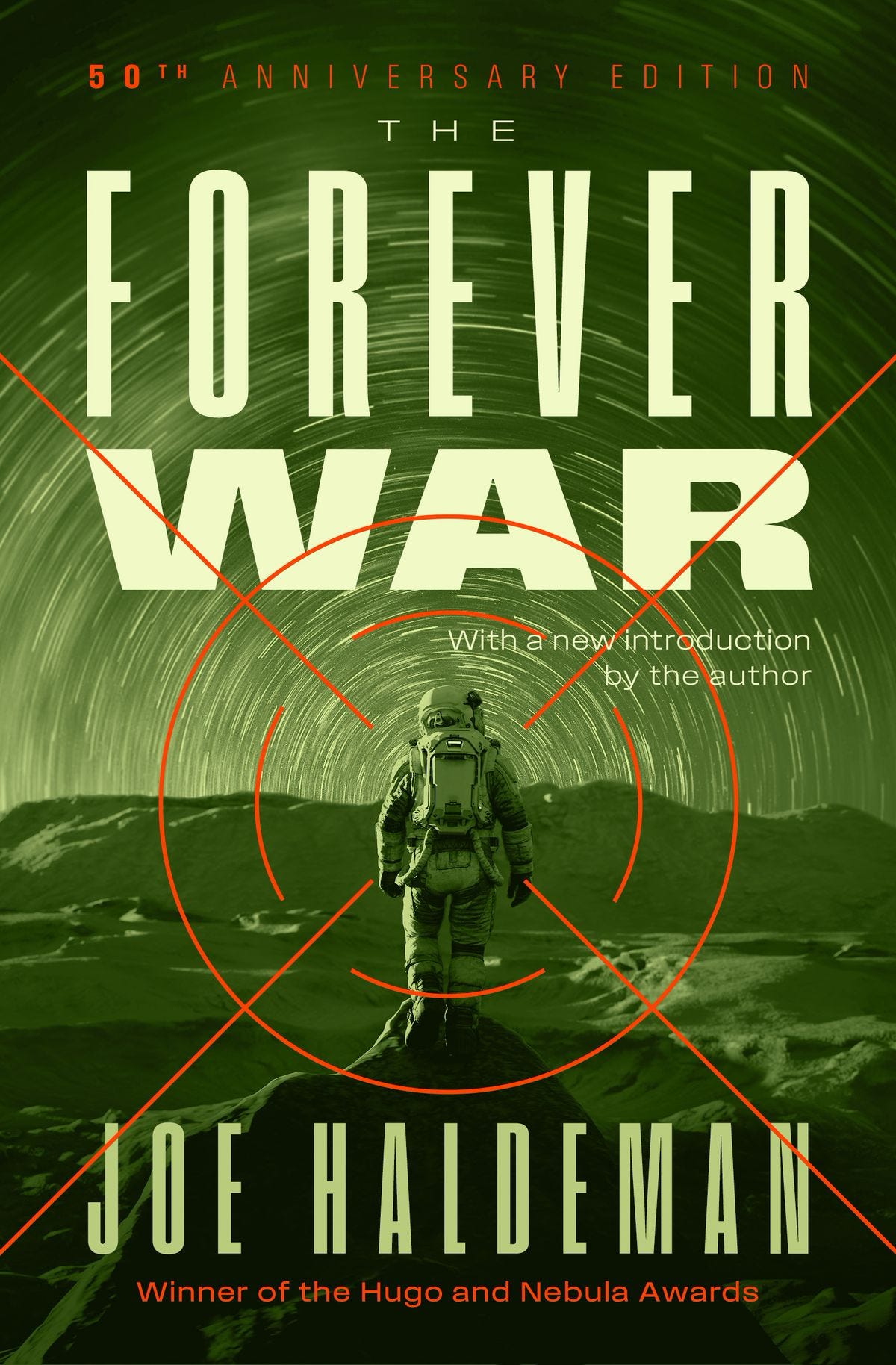
I read The Forever War as a teenager, and it blew my mind. I had to tell all my friends about it. Most space-combat novels treat relativistic physics the way superhero movies treat gravity: as an inconvenient problem to handwave away. Joe Haldeman builds his entire plot on it. His soldiers ship out at near-light speed, fight a brief engagement, and return to find that decades have passed on Earth. After protagonist William Mandella’s first campaign — about two years of his subjective time — more than twenty-five years have elapsed back home.
And it compounds! The war drags on for centuries of Earth time. Each subsequent deployment pushes Mandella further out. Each return is worse. The society he comes home to doesn't just change — it becomes alien, in ways more disorienting than anything he faces in combat.
That premise alone would make a good hard-SF novel. What makes it a great war novel is that Haldeman uses time dilation emotionally, not just technically. He’s writing about what every combat veteran knows: you leave, what you experience changes you, and when you come back, the distance between you and everyone who stayed is measured in a different kind of light-years. This isn't WWII-epic clarity of purpose. It's more like the chaos of Vietnam as seen through the eyes of a grunt. Haldeman was a combat engineer in Vietnam, wounded by a booby-trapped munitions cache in the Central Highlands.
It’s remarkable that no film exists. The book won the Hugo, Nebula, and Locus — the scifi triple crown. Ridley Scott was attached to adapt the book in 2008; David Webb Peoples, the screenwriter behind Blade Runner and Unforgiven, reportedly wrote multiple drafts. It’s been in development limbo ever since. With Project Hail Mary proving that hard-scifi can pack theaters, maybe the window is finally open. But honestly, the book doesn’t need the movie. Fifty years later, a novel about a war that goes on so long it forgets why it started still doesn’t feel like science fiction. [Liberty]
📗 The Forever War by Joe Haldeman
4. Ope! Is That Your Friend In The Wood Chipper? The Making of Fargo
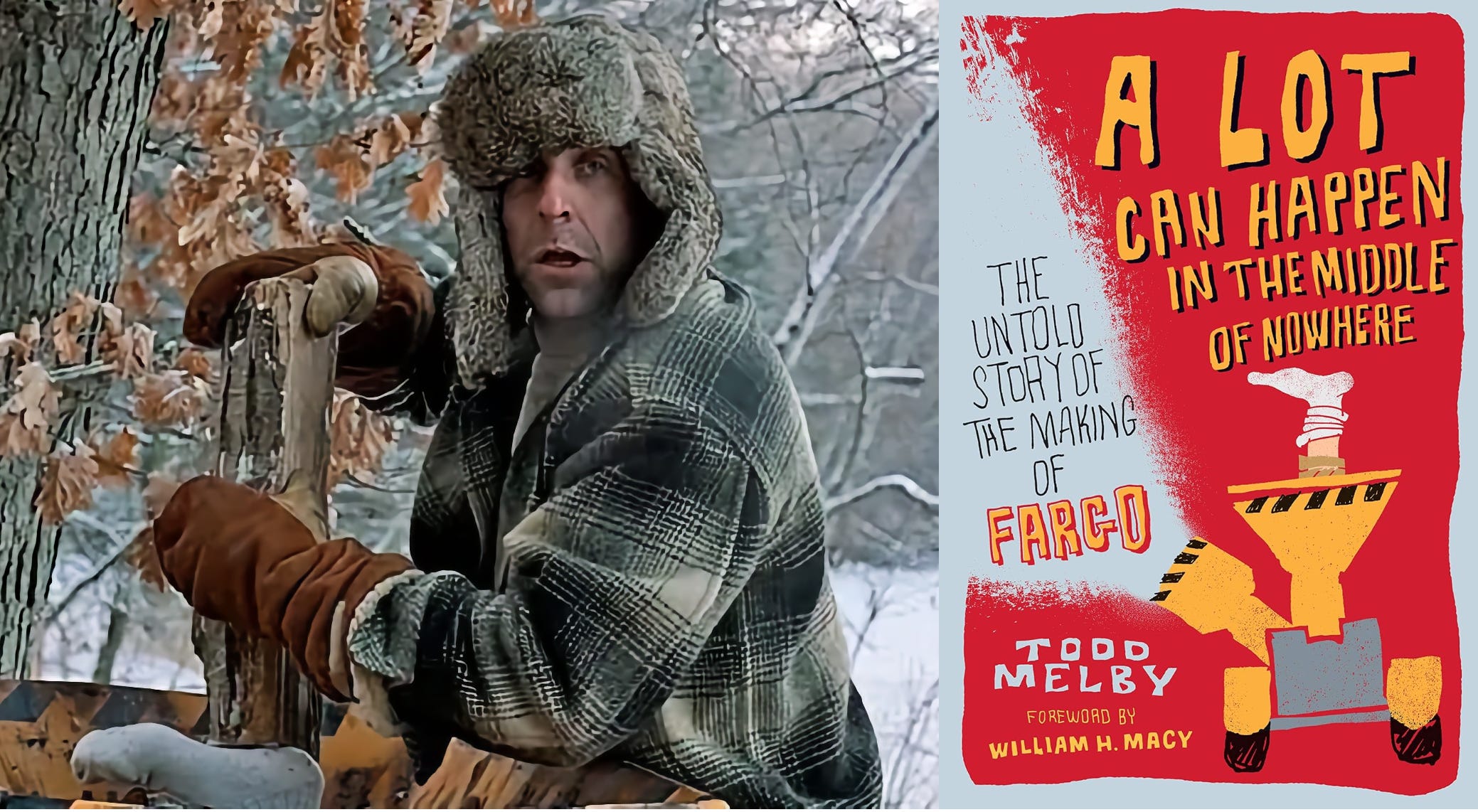
Fargo is my favorite film. It’s the movie that rewired how I think about cinema: a film where a pregnant police chief in a parka could anchor one of the great American neo-noirs and violence could be both horrifying and banal in the same frame.
This past March marked thirty years since Fargo opened in theaters, and I picked up Todd Melby’s book, A Lot Can Happen in the Middle of Nowhere, at exactly the right time.
Melby, an MPR journalist, spent years interviewing the cast, crew, and locals who lived through the production. My favorite chapter is devoted to the wood chipper. In the scene, Peter Stormare feeds Steve Buscemi’s body into a chipper while snow sprays red. Special effects coordinators fed it tiny pieces of raw chicken and pork, figuring the flying meat would pass for human flesh on camera. The chipper itself was a Yard Shark with an eight-horsepower Briggs & Stratton engine, its dangerous guts ripped out so nobody on set lost a limb, then given a fictional name (the Iron Sphincter, Ethan Coen recalls) and a fresh paint job because the Coens wanted the machine to feel, in production designer Rick Heinrichs’ words, “both utilitarian and familiar.”
After the shoot wrapped, dolly grip Milo Durben bought the chipper for his hobby farm outside Minneapolis. He used it for a year, then retired it to storage. When the Coens came back to town to shoot A Serious Man, Durben brought the prop to set and got them to sign it. In 2011, the Fargo-Moorhead Visitors Bureau bought it. Today, it resides inside a grain elevator–shaped visitors center off I-94, complete with a mannequin leg, a fake gym sock, and a rack of fur-lined earflap hats for tourist photos. This summer, the local minor league team is rebranding as the Fargo Woodchippers for five home games in its honor.
Melby’s book is full of details you’d never think to look for about a film you thought you already knew — from a gutted Yard Shark on a hobby farm to the most cheerfully macabre tourist attraction in the Midwest. [Taylor]
🎬 Fargo (1996)
5. 1975 Richard Feynman Lecture: "Los Alamos From Below"
For those Richard Feynman fans who, like myself, find the world holds not nearly enough Feynman content, I present one of his most underrated artifacts: “Los Alamos From Below”, a roughly 75 minute lecture Feynman delivered at UC Santa Barbara in 1975. Thankfully, the full audio has been preserved on YouTube.
The lecture explores Feynman’s participation in the Manhattan Project as a young PhD surrounded by some of the most formidable minds alive. Feynman’s hilarious anecdotes — the cat and mouse game that he and his wife played with the censors is great — unwrap one of the most interesting and consequential undertakings of all time in a way it’s never been done before, bringing all his humanity, humor and his famous curiosity to examine the surreal experience that was the Manhattan Project.
I revisit this lecture multiple times a year and find myself always rediscovering pieces I’ve forgotten and loving it more than the last time. The only shortcoming is, like most Feynman, it leaves you wishing it was three times longer. [Chris]
this was great! Short, to the point, I will buy those books ASAP.