
Welcome to OSV Field Notes, a weekly, high-signal curation of things worth your time.
1. Two Underrated Duvall Deep Cuts
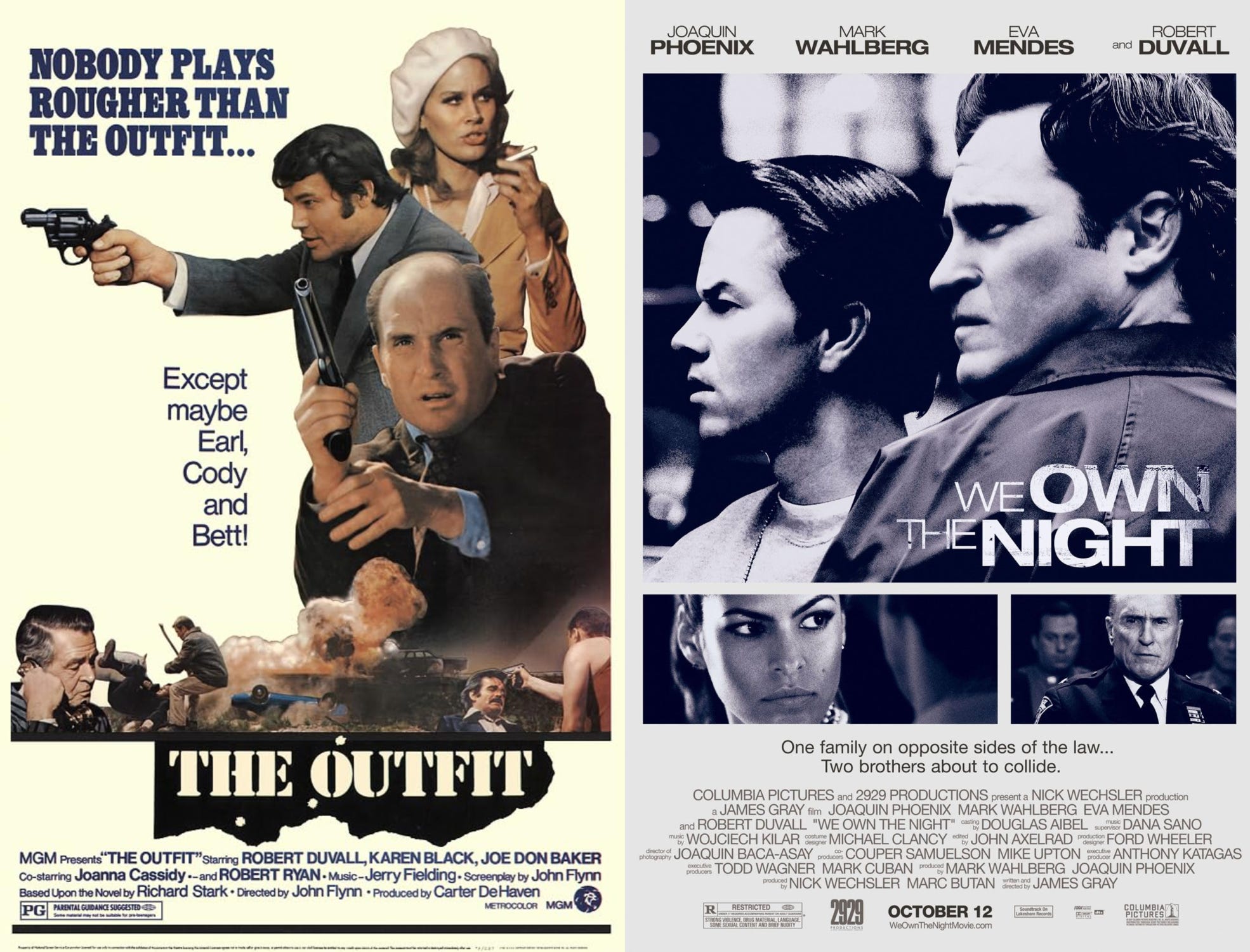
When you’ve got The Godfather, The Godfather Part II, Apocalypse Now, and Network at the top of your CV, it can be hard for your other achievements to get a look-in.
Such was my experience with Robert Duvall, an actor I’ve always admired but never truly appreciated. Following his passing on February 15, 2026, at age 95, I’ve been pouring one out for the great man by revisiting some of the hidden gems in his extensive filmography.
In The Outfit (1973), Duvall plays a small-time bank robber who accidentally takes a score on the mafia. When they kill his brother in retaliation, he ropes in his old partner for a revenge mission: a series of raids on mob businesses. A great character detail: Duvall’s protagonist, ever the pragmatist, has no interest in a John Wick-style bloodbath; he simply wants a compensatory payment of $250,000. Naturally, a bloodbath follows anyway.
This is unmistakably a product of the 1970s: stripped to the bone, gritty, packed with memorable characters and defined by a sober, unfussy craftsmanship that elevates its B-movie bones into something far richer.
Something similar can be said for James Gray’s We Own the Night (2007), a downbeat crime thriller in which Mark Wahlberg and Joaquin Phoenix find themselves on opposite sides of the law. Phoenix runs a nightclub that has become a haven for the mob; his brother, Wahlberg, is a cop investigating it. Caught between those two worlds, Phoenix is forced to choose allegiances.
Duvall plays the morally righteous but emotionally suppressed patriarch, who is also, you guessed it, the deputy chief of police. The role could easily have curdled into a gruff bully, someone incapable of love. Instead, Duvall brings genuine humanity: a real sense of personal betrayal and deep hurt at the fractured relationship between his two boys.
Yes, it’s all a bit convoluted, but Gray pulls it off. He is a devoted student of the morally grey, conspiratorial realism of the 1970s, and brings an unjudgmental complexity to his characters that the material might not, in lesser hands, have earned. He also casually drops in one of the best car chases of the century. [Ed]
🎬 The Outfit (1973)
🎬 We Own the Night (2007)
2. The Thick of It : Real Politics Was Always This Stupid

If you know Armando Iannucci, it’s probably from Veep. Maybe from The Death of Stalin. But before either of those, Iannucci made a low-budget BBC series about the inner workings of British politics. And it might be one of the funniest comedies ever made.
The Thick of It follows a hapless politician and his team of advisors as they lurch from crisis to crisis under the supervision and wrath of Malcolm Tucker, the Prime Minister’s Director of Communications. The performance of Peter Capaldi as Malcolm Tucker is so hilarious and outrageous that if there’s a Mount Rushmore of comedic performances, Capaldi’s face is right there.
The dialogue feels mostly improvised, delivered at a pace so breathless it blows your mind, and yet somehow winds up as endlessly quotable. True catching-lightning-in-a-bottle stuff. The whole cast were in some kind of flow state.
And hilarity aside, if the last decade or so is anything to go by, I’d argue it’s also one of the most accurate portrayals of politics ever captured on screen. Real politics isn’t House of Cards. Real politics is a comedy of errors.
Much like the two versions of The Office, watching The Thick of It alongside Veep is one of the best ways to understand the difference between British and American comedy. Veep is funny but entirely sanitized and slowed down by comparison. Although they share DNA, The Thick of It is a different animal altogether: meaner, faster, and much closer to the chaos of the real world. [Dylan]
📺 The Thick of It (2005-2012)
3. Walter Lippmann: Who Supplies the Pictures in Your Head?

I spend time thinking about human nature and what it means to think critically. It’s incredibly helpful in military leadership, private equity (i.e., spending other people’s money), and storytelling. So I’ve come to appreciate how a book published in 1922, before television existed, can still illuminate algorithmic media consumption 100 years later.
Walter Lippmann (1889–1974) knows how you think because he spent his professional life studying how everyone thinks. In 1922, he gave the word “stereotype” its modern meaning: the simplified “pictures in our heads” that stand in for reality. He used it to describe something he’d watched reshape democracy during World War I.
Public Opinion is his account of how that process works at scale, and why it makes mass societies so vulnerable to propaganda. Lippmann’s core insight: we don’t react directly to the real environment, what he calls the “world outside.” We react to a representation of it, the “pseudo-environment,” built from fragments: news headlines, political speeches, films, textbooks, memes, clips, and the conversations of people who are also operating on their own pseudo-environments. These fragments assemble into a coherent picture that feels like reality, even when it is only a selective sketch.
Most of us will never personally witness the wars we have opinions about, the economic systems we debate, or the political actors we support or condemn. And yet these distant events are enough to blow up Thanksgiving tables across the country.
Journalists choose which events are worth reporting. Editors choose the language to describe them. Platforms decide what gets repeated and to whom. These pictures are constructed and curated for our consumption, and through repetition and familiarity — like a pop song — they begin to feel natural, inevitable, and true. By the time a narrative reaches you, it has already been selected, shaped, and amplified. The power is structural.
Understanding propaganda begins with a question:
Who supplied the pictures in your head? [Nick]
📗 Public Opinion: How People Decide; The Role of News, Propaganda and Manufactured Consent in Modern Democracy by Walter Lippmann
4. On Writing Well : A Tuning Fork for the Mind

William Zinsser’s On Writing Well is a book I return to about once a year, the way some people reread favorite novels. It’s ostensibly a guide to nonfiction writing, but it’s really a book about thinking clearly and communicating with intention.
First published in 1976, it grew out of a course Zinsser taught at Yale, where more than 170 students signed up for a class designed for 20. The English department reportedly wondered if perhaps they hadn’t been teaching writing at all. Zinsser, who had spent over a decade at the New York Herald Tribune as a feature writer, drama editor, and film critic before turning to freelance work for magazines like Life and the Saturday Evening Post, brought a practitioner’s eye to the classroom. He wasn’t interested in theory. He wanted to help students write about the world they were living in.
What I love most is how Zinsser insists that writing is meant to be heard, not just read. He wants you to listen to your sentences, to test them against the ear, to feel when a rhythm is off or a word lands wrong. This is advice that sounds simple until you try to follow it, and then you realize how much of what passes for good prose is actually dead on arrival. He also emphasizes warmth, the idea that the writer’s humanity should come through on the page, which serves as a corrective to the bloodless, institutional prose that dominates so much professional writing. His four principles are clarity, simplicity, brevity, and humanity.
Zinsser also does something rare for a writing guide: he shows you his own revisions. The book includes pages from his drafts, covered in cross-outs and scribbled corrections, and the effect is both humbling and liberating. Even Zinsser, one of the best practitioners of the craft, built his clean final pages atop a mountain of rough attempts. The lesson is that revision is where writing actually happens, and that the first draft is just permission to begin. He revised the book itself seven times over its 30-year run, adding examples, updating references, and refining his arguments. He was himself a work in progress; we all are.
The book has now sold over 1.5 million copies and remains a staple of college writing courses. Whether you’re just starting or are decades into a career, it stays useful. It’s a tuning fork for the ear and a reminder of what good writing feels like when it’s working. I’ve given away more copies than I can count. [Jimmy]
📘 On Writing Well by William Zinsser
5. The Power of One: The Tokyo Bookstore That Only Sells One Book
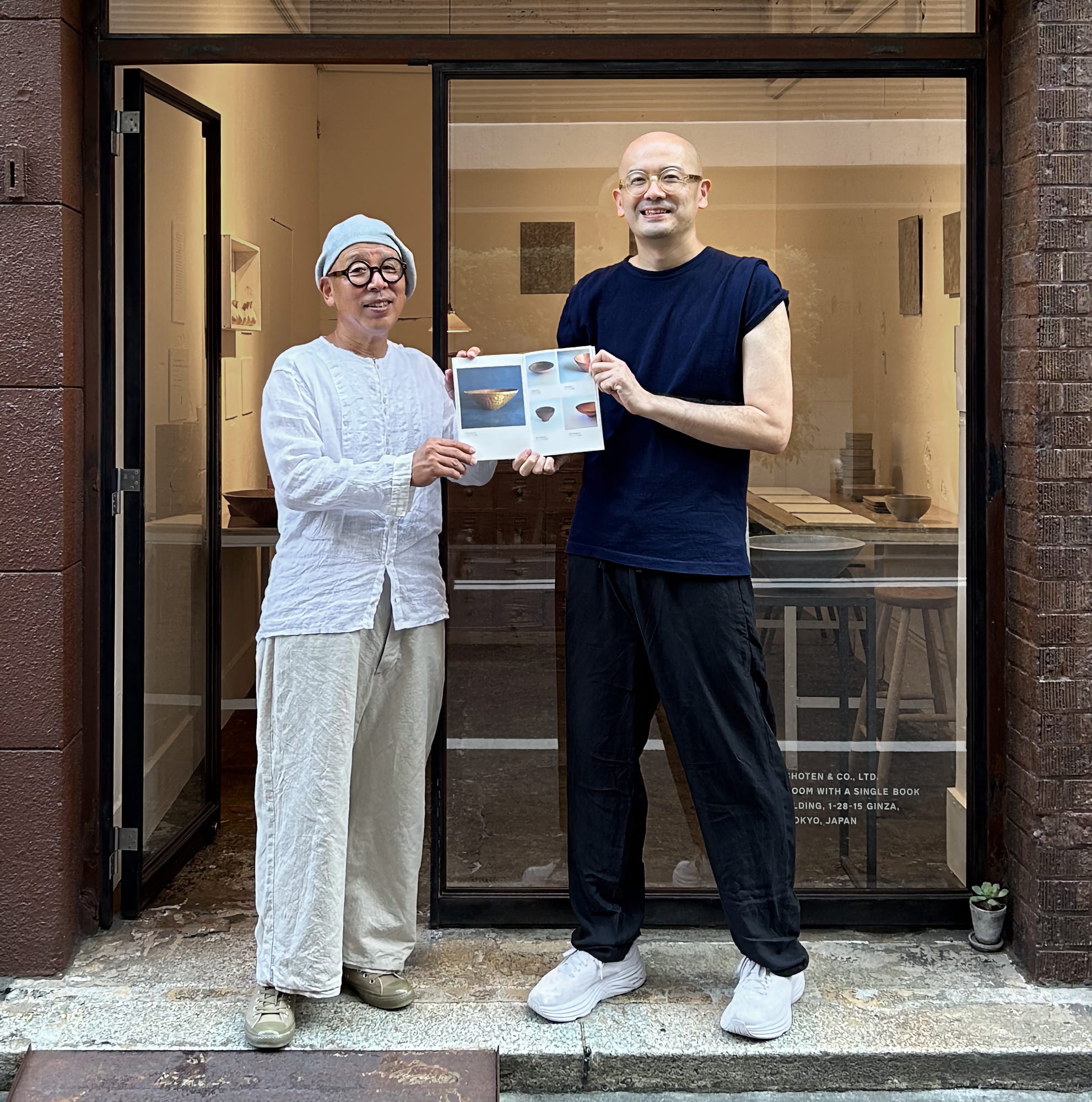
Since stumbling across it online, I’ve become a bit obsessed with “Morioka Shoten,” a tiny bookstore nestled in the heart of Tokyo. It struck me as either marketing suicide or an act of genius.
Founded in 2015 by veteran bookseller Yoshiyuki Morioka, this unusual store takes curation to its logical conclusion and sells exactly one book per week. Based on the philosophy of issatsu, isshitsu (single room, single book), the store selects one title and builds the entire space around it: photographs, objects, artworks, and events that extend the text into physical space. So, if Murakami’s 1Q84 were exhibited in this shop, you’d probably encounter a two-mooned-sky ceiling, an air chrysalis and maybe even Little People.
When Morioka Shoten featured Kenya Hara’s DRAW, the shop was filled with around sixty original sketches. For Tomonori Taniguchi’s Gorilla no Kutsuya, the exhibition included original picture-book art and woodblock prints.
What I liked most about the concept is that it treats attention as something to be protected, rather than captured. In a typical bookstore, thousands of titles compete for a reader’s curiosity. Morioka does the opposite; by reducing the choice to one, he turns browsing into something much richer and more immersive. In a world of abundance and frayed attention, this store relies on the power of one to break through the clutter.
The bookstore is housed in the historic Suzuki building, once home to the publisher Nippon Kobo; design studio Takram later helped reshape the space so it feels less like retail and more like a gallery devoted to literature. Sure enough, this bookstore has earned a spot on my Japan travel checklist! [Aashisha]