
Welcome to OSV Field Notes, a weekly, high‑signal curation of things worth your time.
1. Night of the Juggler : New York Pulp at its Best

Imagine Mad Max: Fury Road, but instead of a post-apocalyptic Australian desert, it’s set in sleazy 1970s New York.
James Brolin plays a down-on-his-luck ex-cop who can’t catch a break. When his daughter is kidnapped in broad daylight by a psychotic criminal with a grudge against the city’s wealthy elite, he launches a relentless, bloody vendetta through New York’s streets, sex clubs, and sewers. Chasing him is a crooked cop (a gleefully demented Dan Hedaya) with his own score to settle.
The action starts with a batshit crazy 20-minute chase scene, all filmed on location à la The French Connection (seriously, I don’t understand how they filmed it without anyone getting hurt), and doesn’t let up from there. Like its apocalyptic Australian cousin, it’s effectively an exploitation movie delivered with maximum craft.
Being an Englishman born in the 1990s, I can’t vouch for how accurately it captures what New York actually felt like at the time, but I can say that it embodies the grimy, pulpy, purgatorial id of ‘70s New York cinema as well as anything I’ve seen.
For a long time, the film was invisible, having never made it to DVD or Blu-ray. Then last year, it was restored for theatrical presentation alongside a delicious 4K Blu-ray transfer. It's now on streaming, but if you can get your hands on the disc, do it — it looks great.
PS: If you’re thinking “they don’t make them like this anymore,” then check out last year’s One Battle After Another and Highest 2 Lowest, both of which feature glorious on-location urban chase sequences. [Ed]
🎬 Night of the Juggler (1980)
2. Homebound : A Window Into the India You Haven't Seen
Many of my peers with remote-possible jobs say that COVID was a great time. They may say it half-jokingly, but there’s truth in it. We got to work from home, binge Netflix, skip commutes, students got to skip exams and homework. No one had to pretend they didn’t enjoy at least some of it. And sure, we all intellectually accept that life was brutal for millions during the lockdown. But it stays abstract. It’s a thing we know but don’t really feel.
Homebound changed that for me. The film is set during India’s COVID lockdown and follows two young boys and their families, migrant laborers for whom “stay home” meant losing everything. It makes the devastation real in a way that news coverage and statistics do not. For viewers in the West, the film also opens a window into parts of Indian society that rarely get screen time. The desperation around government jobs as a path to not just financial stability but social dignity. The quiet cruelty of caste, shown through a character who hides his surname because it would invite judgment before anyone even gets to know him. These aren’t presented as exotic spectacle. They’re just the texture of these characters’ lives.
But it is not an exercise in misery. It is, at its core, a story of friendship and connection that manages to capture multiple emotions exceptionally well. The acting is excellent throughout, and Neeraj Ghaywan’s movies are now in my “must-watch” list.
When the credits started rolling, I was pleasantly surprised to see Martin Scorsese listed as an executive producer. That’s the first I’ve seen for a Bollywood film, and it feels like a fitting endorsement.
It’s a film that leaves you feeling more connected to people whose lives look nothing like yours. [Vatsal]
📺 Homebound (2025, Netflix)
3. Project Hail Mary : MacGyver Goes to Space

If your favorite scene in Apollo 13 is the one where engineers have to make square CO₂ filters fit into round holes using only what's on the spacecraft, then Andy Weir wrote this book for you.
Project Hail Mary is hard sci-fi with a MacGyver soul. A lone astronaut wakes up on a spaceship with no memory of how he got there, no crew, and a very large problem that needs solving. The book is essentially a series of escalating puzzles: here is your situation, here are the laws of physics, figure it out. You'll absorb more physics and engineering than you'd expect from a page-turner. Weir clearly delights in this, you can feel him grinning as each new obstacle appears.
I've read The Martian, which made Weir's reputation, and I liked it, but I like this one significantly better. I can't tell you why without spoiling it, and avoiding spoilers is particularly rewarding here (if you haven’t seen the film trailer yet, DON’T!).
Thanks to a film adaptation starring Ryan Gosling, this novel is getting a second life. My honest advice: read it first. Even the best adaptations compress. A 156-minute film can't do everything a novel does, and this is a novel that earns its length.
One strong recommendation: get the audiobook. The narrator, Ray Porter, is exceptional, and there's an element of the story that works better in audio than on the page. I’m not surprised that it sold over two million copies in audio format alone.
Just be warned: This is a book people finish at 2 AM and immediately want to tell someone about. [Liberty]
📔👨🚀 Project Hail Mary by Andy Weir
4. The Everything Store : What Relentless Actually Looks Like

Brad Stone’s The Everything Store is the definitive account of Amazon’s rise, and it remains one of the best business books of the past two decades. Stone traces the company from a garage in Bellevue, Washington, through its transformation into a force that reshaped retail, cloud computing, and the infrastructure of the internet itself. What makes the book work is that Stone never loses sight of the human being at the center. Jeff Bezos emerges as brilliant, demanding, occasionally cruel, and utterly relentless.
That last word is not accidental: Bezos originally wanted to call the company Relentless, and if you type relentless.com into your browser today it still redirects to Amazon. He chose Amazon because it started with ‘A’. Even the naming was strategic.
The book is full of nuggets like that. One of my favorites is the origin of AWS, which began as a solution to Amazon’s own infrastructure headaches. The company needed a way for internal teams to build services without constant coordination, so they developed simple building blocks that could be combined and recombined. Then someone realized that if Amazon needed this, other companies probably did too. What started as an internal fix became one of the most profitable businesses in history.
Even if you have no particular interest in Amazon, the book is worth reading because it’s fundamentally about belief, vision, and relentless problem-solving. Bezos has a line I think about often: many things will change in ten years, but no customer is ever going to ask for slower delivery or higher prices. So he built everything around the things that wouldn’t change. Stone captures both the power of that thinking and its costs. When I was writing The Founders, this book served as a model for what I was trying to do: tell a business story with narrative drive, blend strategy and character, and make the reader feel like they’re watching history unfold. It’s a high bar, and I return to it often. [Jimmy]
📙 The Everything Store by Brad Stone
5. McCartney 3,2,1: Sixty Years of Familiarity Dissolved
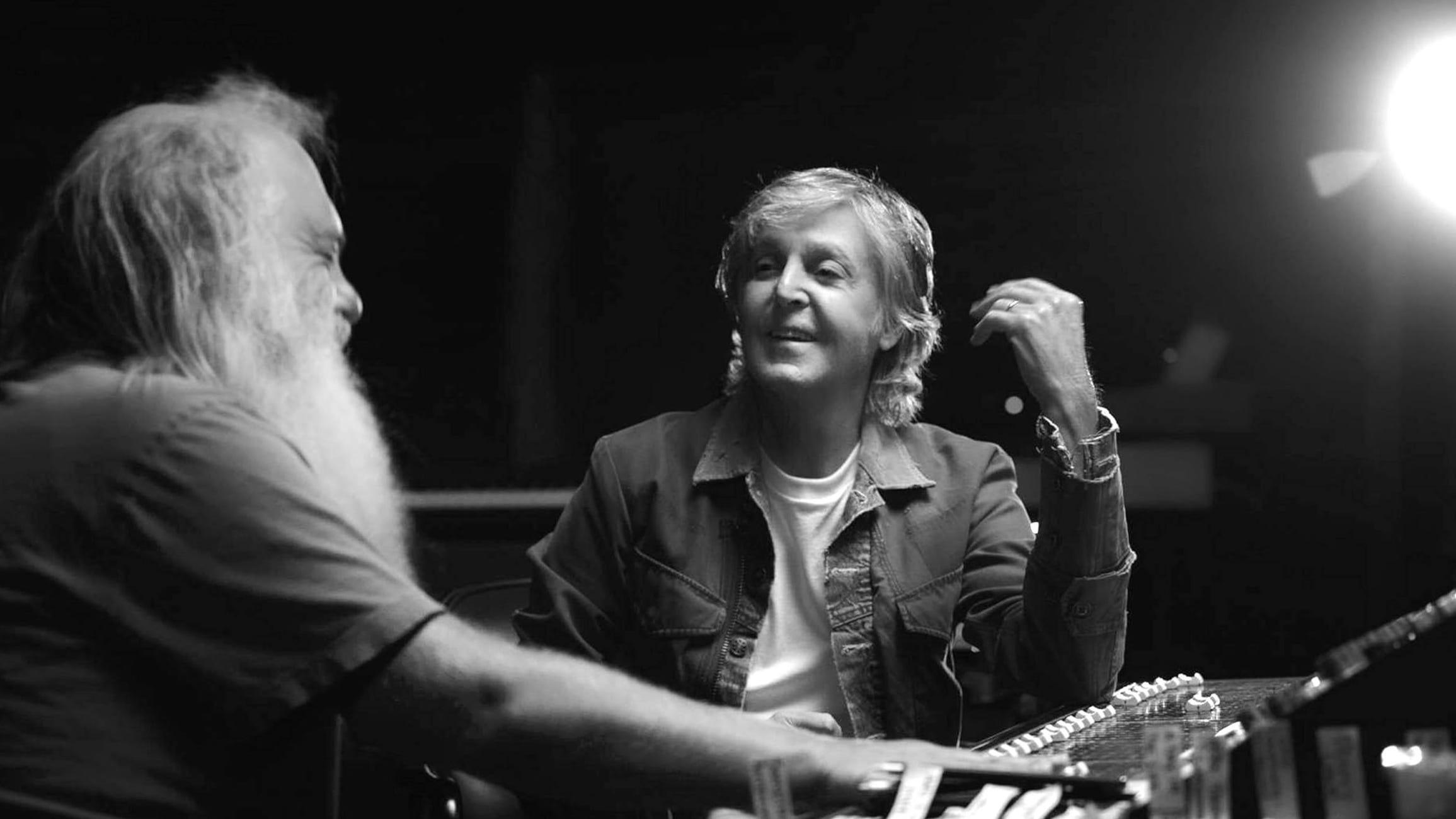
You already know these songs. Or at least you think you do.
Rick Rubin’s premise is simple: sit Paul McCartney down at a mixing board, pull up the master tapes for many of his best songs, and prove that you don’t know them as well as you think. He isolates the individual tracks: first the full mix, then layer by layer until there’s nothing left but McCartney’s bass, or the vocal harmonies, or some detail that’s been hiding underneath the arrangement for six decades. Songs you’ve heard five hundred times suddenly sound fresh.
One thing that surprised me was the bass, how rich a character it is, and how much it adds to these compositions.
McCartney came to it by accident. Nobody in the band wanted to be the bass player after their original bassist left, so Paul got stuck with the job. He approached it without the habits and constraints of most bassists, bringing melodic instinct to an instrument that was too often restrained to rhythm duties. He often showed up to the studio with nothing written down, no plan, and just figured it out on the spot. His bass wasn’t just keeping time, it was playing counterpoint, having a conversation with the rest of the song.
Rick Rubin mostly just listens. He asks good questions, but his method is the same as the show's: strip everything away and see what's actually there. Look for the load-bearing ideas underneath it all.
Six episodes, 30 minutes each. I enjoyed every second. [Liberty]
📺 McCartney 3,2,1 (2021, Hulu)