
Today, I sit down with author Jonathan Tepper to discuss his extraordinary childhood.
In 1985, when Jonathan was seven, his missionary parents moved the family to San Blas — then the heroin capital of Europe — to start a drug rehabilitation center. Jonathan and his brothers grew up alongside former bank robbers, prison survivors, and people living through the AIDS epidemic. These recovering addicts became like older siblings to them. What began with one man in a small apartment grew into a global movement operating in 20 countries.
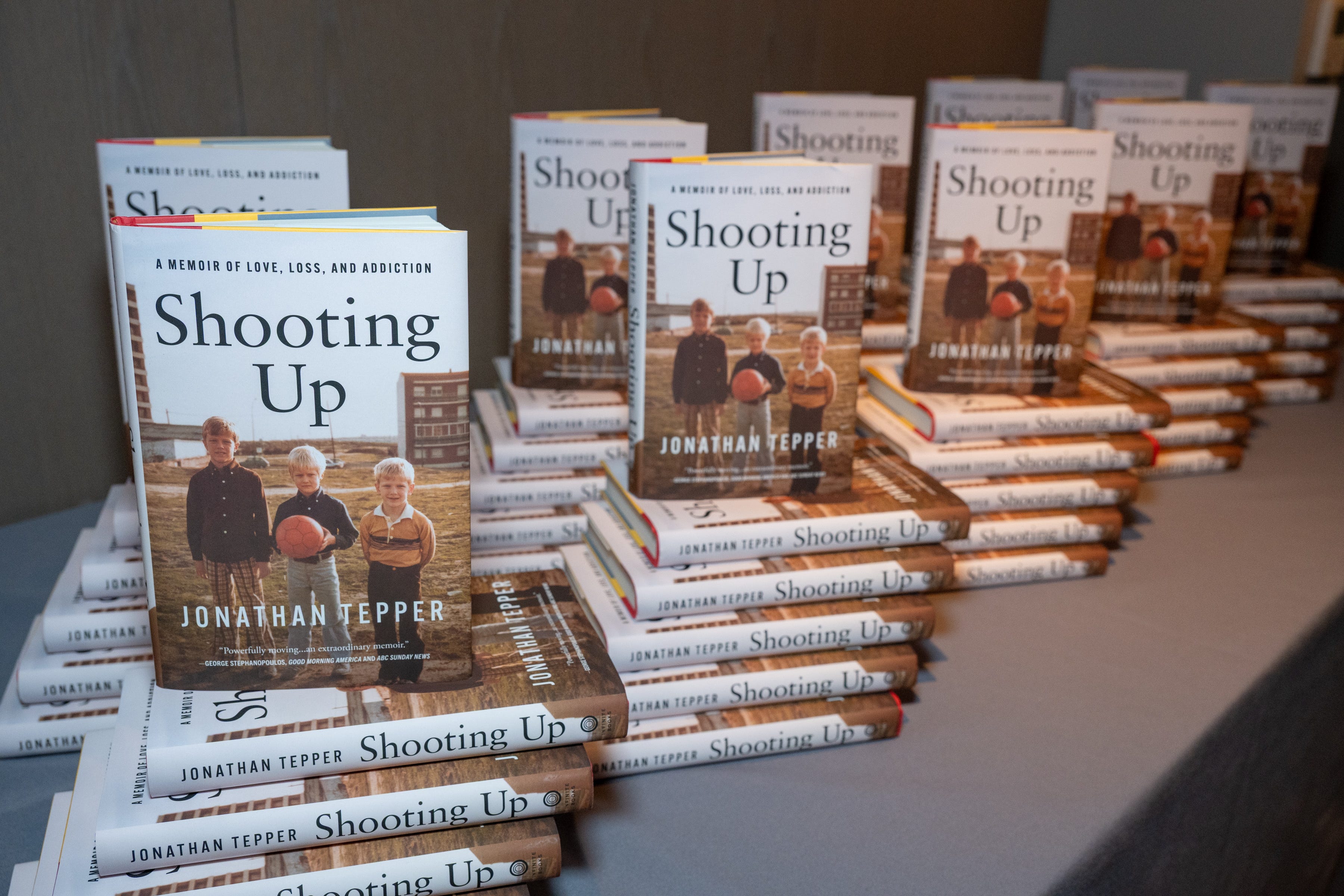
Jonathan’s memoir, Shooting Up: A Memoir of Love, Loss, and Addiction, is out now and published in the US by Infinite Books (order here | read the first chapter). It's a candid, powerful, and hopeful book — I'm honored we get to publish it.
I’ve shared some highlights of our conversation below, together with links & a full transcript. As always, if you like what you hear/read, please leave a comment or drop us a review on your provider of choice.
— Jim
Links
Highlights
Bringing Addicts Back to the House
Jonathan Tepper: And so the book starts with, and I still remember it very vividly, we had to fold all the pamphlets, which took forever, and we’d go out and it had our home address and our home phone number. And our job was like, bring addicts back to the house. And so they would do it like on a Friday evening in general, but they would do it on the weekends. And that was how we started meeting all these strange cast of characters who eventually, the drug center started and they realized the need was so overwhelming, and they started a drug center with one addict. And these men and women became like older brothers and sisters to my brothers and me.
Jim O’Shaughnessy: So again, when I read that section, I’m like, in a 2026 sensibility, that sounds a little dangerous, right? Because didn’t the pamphlet also have a skull and crossbones on it? And like this thing saying it’s going to be your last love of your life or something.
Jonathan Tepper: Well, I remember vividly it had a skeleton with a skull and this sort of hand, its claw sort of motioning at the reader. And then it had basically the heroin represents, sorry, the skeleton represents heroin and death. And it was like frightening for me to read it as a kid. And of course that was the point, which is like you’re giving it to the addicts, trying to scare them to get off heroin. But many of the addicts I think knew that you could die of overdoses. The life on the street was not one that was particularly pleasant. So many of them really did want help. But yeah, that was sort of my, not the earliest childhood memories, but it was among the earlier memories that are very vivid.
Jim O’Shaughnessy: Let’s see if we can put you back into that young boy’s body. I mean, were you scared? Were you excited? I mean, what were the emotions?
Jonathan Tepper: I think it was probably more excitement than anything. And my brothers and I just thought like we tended to have this view that my father was invincible. He’d been like a college wrestler in the US and he could do like 30 one-handed push-ups and walk up flights of stairs doing handstands. He was just sort of very strange, very strong figure. And so going out trying to meet addicts was just this adventure. We were going to find them and bring them back.
“He grabbed the barrel and dared him to shoot”
Jonathan Tepper: But there were some of the addicts when they did come to our house and it comes out in the book, like Mahara, one of them, his nickname was Crazy and he got the nickname because a dealer had stuck a gun in his face and he grabbed the barrel and stuck it in his mouth and dared him to shoot. So they all thought he was crazy and they might have been right, but he would squeeze my hand and wouldn’t let go and so I would yell and hit him back.
So some of the addicts were pretty rough and brutish and most of them had held people up at knifepoint or one of the characters in the book was like a bank robber. We knew people who had killed others over drugs. It was not a particularly safe place.
People Didn’t Understand HIV
Jonathan Tepper: We had been playing out late, got back and I thought my father was going to punish us for not coming home on time for dinner. And then they sat us down in the living room. We thought we were going to get a lecture and they actually wanted to tell us about the HIV virus that was spreading.
And so almost all the addicts had shared needles on the street. And often it was very small groups of people where you might share with one or two friends, and then the blood hadn’t dried. And if someone else had the virus, which they didn’t know at the time, of course they would have got it. But then, as you mentioned, my friend Jambori was in Carabanchel, which is the largest prison in Madrid, and they theorized that’s probably why the virus spread so quickly, which is that you had sort of whatever one person was going to have that 200 people might get.
And so my parents told us about it in 1985. So it wasn’t like it was unknown. The Surgeon General report had come out that year. But as you pointed out, even if there was knowledge there about how it transmitted and how it didn’t, people who were HIV positive or had AIDS were viewed as lepers. So in the US, it was primarily the gay community. Initially in Spain, it was very much the sort of heroin addicts, intravenous drug use. In Africa, it was a heterosexual disease. So each region had different groups, but they were all essentially sort of social pariahs and lepers.
And so one of my early memories of my father telling me of going to the hospital where a lot of the family members didn’t even want to touch their own children in the hospital because they didn’t know if they could get it or not. And I thought, if my parents explained it to me and told us that we could give women in the drug center a kiss on both cheeks as one does in Spain, or hug the men, I thought, well, surely they must have read the Surgeon General report too, or at least known about it […] And so it wasn’t even a matter of scientific knowledge being available. It’s that most people still didn’t understand.
🤖 Machine-Generated Transcript
Jim O’Shaughnessy
Jonathan Tepper, welcome to Infinite Loops. We’re going to talk a lot today about your incredible, moving, and cinematic book, Shooting Up. Jonathan, it’s almost like when I read it the first time, I’m like, first off, this is a movie, but the prose itself is just incredible. Let’s set the scene. It’s 1985, you’re seven, and mom and dad tell you and your brothers, hey, guys, we’re going to move.
Jonathan Tepper
Yeah. So my parents were Christian missionaries, and they had lived in Mexico before we arrived in Spain. So I’d really, at that age, only really known life as a missionary kid. And basically your parents sort of tell you where you’re going to live, and it’s not necessarily the US wherever your relatives might be. And so they moved to Madrid.
And my father wanted to work with university students and be a student chaplain. But they settled in the neighborhood of San Blas because the rent was cheap. And at the time that had the highest rate of heroin use in Europe, and there was a very large gypsy camp, and it was like a central drug dealing point for the whole of Madrid.
And so my parents settled there and immediately started helping the young men and women who were hooked on heroin and the dream of becoming a student chaplain sort of out the window, not least because a lot of the students had very little interest in what my father was bringing them. They’d had quite a lot of Catholicism under Franco and so on. And so the late 70s and early 80s was a time of la movida in Spain. But there’s this tremendous need in the neighborhood. So my father and mother decided to give us pamphlets.
And so the book starts with, and I still remember it very vividly, we had to fold all the pamphlets, which took forever, and we’d go out and it had our home address and our home phone number. And our job was like, bring addicts back to the house. And so they would do it like on a Friday evening in general, but they would do it on the weekends. And that was how we started meeting all these strange cast of characters who eventually, the drug center started and they realized the need was so overwhelming, and they started a drug center with one addict. And these men and women became like older brothers and sisters to my brothers and me.
Jim O’Shaughnessy
So again, when I read that section, I’m like, in a 2026 sensibility, that sounds a little dangerous, right? Because didn’t the pamphlet also have a skull and crossbones on it? And like this thing saying it’s going to be your last love of your life or something.
Jonathan Tepper
Well, I remember vividly it had a skeleton with a skull and this sort of hand, its claw sort of motioning at the reader. And then it had basically the heroin represents, sorry, the skeleton represents heroin and death. And it was like frightening for me to read it as a kid. And of course that was the point, which is like you’re giving it to the addicts, trying to scare them to get off heroin. But many of the addicts I think knew that you could die of overdoses. The life on the street was not one that was particularly pleasant. So many of them really did want help. But yeah, that was sort of my, not the earliest childhood memories, but it was among the earlier memories that are very vivid.
Jim O’Shaughnessy
Let’s see if we can put you back into that young boy’s body. I mean, were you scared? Were you excited? I mean, what were the emotions?
Jonathan Tepper
I think it was probably more excitement than anything. And my brothers and I just thought like we tended to have this view that my father was invincible. He’d been like a college wrestler in the US and he could do like 30 one-handed push-ups and walk up flights of stairs doing handstands. He was just sort of very strange, very strong figure. And so going out trying to meet addicts was just this adventure. We were going to find them and bring them back.
But there were some of the addicts when they did come to our house and it comes out in the book, like Mahara, one of them, his nickname was Crazy and he got the nickname because a dealer had stuck a gun in his face and he grabbed the barrel and stuck it in his mouth and dared him to shoot. So they all thought he was crazy and they might have been right, but he would squeeze my hand and wouldn’t let go and so I would yell and hit him back.
So some of the addicts were pretty rough and brutish and most of them had held people up at knifepoint or one of the characters in the book was like a bank robber. We knew people who had killed others over drugs. It was not a particularly safe place. And my wife and others reading it, like the mother of a dear friend of mine reading the book before it got published, they said, I was very angry at your father when the book started out. And so it is quite shocking to think of putting 7, 8, 9, 10 year olds in those positions.
Jim O’Shaughnessy
And you had a grandmother who actually voiced that.
Jonathan Tepper
Yeah, she came to visit for Christmas. And I still remember it very vividly. Raul, who was the first addict in the center, was visiting and he hadn’t showered and his breath stank of alcohol. He was a bit hungover. And he went to give her a kiss on both cheeks, which you do in Spain as a greeting. And so she recoiled and was like holding her bag. And then she told my father that he was going to ruin our lives. And I was very relieved that none of the addicts spoke English and so didn’t know what she was saying. But I don’t think she ever changed her opinion throughout her life.
Jim O’Shaughnessy
And what was your dad’s reaction when she said that?
Jonathan Tepper
So I think he’d already had many conversations with her. And my father had a very odd experience, which I recount a little in the book. But he studied economics at Cambridge, England, and got his MBA from Harvard in 1971. And then he had a religious experience and ended up becoming a minister. And so I think my grandmother thought that he had thrown his life away to leave an education that could have taken him down one path in life and go down a completely different one. And she believed that most of her life. I think they did reconcile towards the end.
Jim O’Shaughnessy
And not only an interfaith conversion. He was raised Jewish on Long Island, right?
Jonathan Tepper
Yes, yeah, he grew up in Massapequa, Jewish. And so it was after Harvard Business School that he had a, he did a lot of LSD and particularly with chemists at MIT. He used to make it. And that was back in the day when everyone did it. He said that he wasn’t doing LSD that day, but as it was, he had a vision of heaven and hell and that changed his life.
Jim O’Shaughnessy
Did it get him reading William Blake?
Jonathan Tepper
I think so. He was a very, even though he was doing economics and business, he was sort of hyper-literate, like my mother. And that’s another big theme in the book is like they were always reading literature to us at dinner. And so he did read quite a lot of William Blake and Dante and then a lot of sort of things of a philosophical and theological nature, like St. Augustine, City of God and Confessions and so on. And those like our long devotionals for breakfast and dinner, which we deeply resented at the time because we just wanted to go either do our own reading, books that we found more interesting, or just go to bed.
Jim O’Shaughnessy
But that was an aspect of the book that I found really interesting because I’m a big believer that education never stops. And the idea of your formal schooling, that’s just the beginning. And some of the smartest people that I’ve ever had the pleasure of talking with, et cetera, had experiences not identically similar to your own, but they grew up in families where everyone was reading all of the time. And I really took that as okay, I understand why Jonathan became a Rhodes Scholar.
Jonathan Tepper
Yeah, I do think that. And it comes out in the book. At one stage, my parents didn’t even have enough money to send us to even like the missionary school that didn’t cost all that much. And my mother homeschooled us for two years. But the thing that she said was that the job of a teacher isn’t to teach the students something. It’s rather to inspire the desire to learn. And if you have that, then you can teach yourself.
And just, I think when parents have a lot of books around, just by serendipity, the children are going to end up picking books up and reading. And so there’s a high correlation between like the number of books in the home and the educational attainment of the kids. And so I think that’s one of the big things I got from my family life at home.
And one of the things that appeals to me as an investor is this sort of constant education. There’s something out there that you can study and find, and it doesn’t matter what your interests are. You could be interested in butterflies or I was interested in college, 15th century Spanish Ladino, which is 15th century Spanish mixed with Hebrew. And if you want to go away and find the books in the library, they’re there and you can do something with it.
Jim O’Shaughnessy
Well, like Charlie Munger said, I’ve never met any person in life who was a success who was not constantly reading. And that’s, my former life was asset management. And you could tell, you could tell when you were at the conferences, you could tell when you were chatting with other pros who was a massive reader and who wasn’t. And it’s something I subscribe to as well.
Let’s get back, though, to those early days, because that I just kept thinking to myself, wow, I don’t know how I would have done as a boy in your position. What about your brothers? Was there a lot of difference in the way they interpreted things going on? Like, what were the conversations?
Jonathan Tepper
Like there were four of us, even though only three of us were on the cover of the book, because the youngest at that time, Timothy, would have been like at home with my mother looking after him. But our nickname in the neighborhood was Los Hermanos Dalton, which is the Dalton brothers. And there’s a French cartoon which was aired on Spanish TV at the time called Lucky Luke. And the bad guys were this band of brothers in descending height. And it’s based on the Dalton brothers out west who were bank robbers and so on.
So we took it as a compliment that we were the band of four brothers. And so I think a lot of our interactions with each other, there’s a lot of complicity in our adventures and things we did. I think they also viewed it as an adventure. And my father and mother said that we didn’t have money, we didn’t have drugs, like the addicts weren’t going to do anything to us.
And then furthermore, I think because we were just so strange, we were like blonde-haired, blue-eyed boys, fish out of water. The addicts sort of looked at us like mascots or like pets, tagging along as a drug center was starting more than anything. So I think they had, they had similar to me a sense of excitement and adventure more than anything.
Jim O’Shaughnessy
And the other thing, I lived through that period as a young man. So I was 25 in 1985. And I remember viscerally, remember when AIDS came on the scene because like the shunning, the people who would not admit, Tom Hanks made a great movie called Philadelphia about it. What was going on? Because Spain, much more, as you mentioned, Franco, Catholic, much more conservative country. What were the reactions when, because another part of the book that blew me away, one of your guys had been in prison and he said that there was more heroin available in prison than out. But they shared two syringes.
Jonathan Tepper
Yes. Like, yes. And I remember vividly, it’s in one of the chapters in the book. There’s some things where you have to jog your memory a bit or you have to sort of fill in the blanks and connect the dots when you’re writing a memoir, which is inevitable as long as it’s done trying to capture the spirit of the conversations or the way things were. But I remember it very vividly. We had been playing out late, got back and I thought my father was going to punish us for not coming home on time for dinner. And then they sat us down in the living room. We thought we were going to get a lecture and they actually wanted to tell us about the HIV virus that was spreading.
And so almost all the addicts had shared needles on the street. And often it was very small groups of people where you might share with one or two friends, and then the blood hadn’t dried. And if someone else had the virus, which they didn’t know at the time, of course they would have got it. But then, as you mentioned, my friend Jambori was in Carabanchel, which is the largest prison in Madrid, and they theorized that’s probably why the virus spread so quickly, which is that you had sort of whatever one person was going to have that 200 people might get.
And so my parents told us about it in 1985. So it wasn’t like it was unknown. The Surgeon General report had come out that year. But as you pointed out, even if there was knowledge there about how it transmitted and how it didn’t, people who were HIV positive or had AIDS were viewed as lepers. So in the US, it was primarily the gay community. Initially in Spain, it was very much the sort of heroin addicts, intravenous drug use. In Africa, it was a heterosexual disease. So each region had different groups, but they were all essentially sort of social pariahs and lepers.
And so one of my early memories of my father telling me of going to the hospital where a lot of the family members didn’t even want to touch their own children in the hospital because they didn’t know if they could get it or not. And I thought, if my parents explained it to me and told us that we could give women in the drug center a kiss on both cheeks as one does in Spain, or hug the men, I thought, well, surely they must have read the Surgeon General report too, or at least known about it.
And I met the, as part of the fact-checking process at the end of the book and making sure that everything was accurate, I referenced a doctor at Ramón y Cajal, which is the main hospital in Madrid. And I used to spend a lot of my time there. And it’s in the later parts of the book. And they said, well, the editor was saying that you mention him, what’s his name? And can you run it by him? And so I thought, sure. So I got in touch with Dr. Luis Boufón.
And then it was extraordinary. He said, reading your, he said he was moved to tears reading the book. But he said, Jonathan, he said, I feel like we were passengers on the same train in different carriages, looking out on the same landscape. And then he sent me videos where he had appeared on Spanish TV. And they were like from 1992 or 93, and some of the videos and people were asking him basic questions like, if you swim in the same pool as someone who is HIV positive, can you get AIDS? And so it wasn’t even a matter of scientific knowledge being available. It’s that most people still didn’t understand or have it and still treated people like lepers.
Jim O’Shaughnessy
And I just got, as I was reading that part, I kind of thought, man, already heroin addict. So they’re already at kind of the bottom of the social order. And then heroin addict with AIDS. Like, how did the people that you knew well, who were in that category, how did they deal with that?
Jonathan Tepper
So I think for many of them, they didn’t talk about it. There were some people I know who died without their families even knowing like why they had died. They died of pneumonia. I know a couple people even to this day who, their families don’t know that they got the cocktail and survived. One, I won’t mention their name for obvious reasons, but like didn’t want to be in the book, even though I had contemporaneous documentation and notes from their story.
So it is something that caused shame and to some people still causes shame. But a lot of the leaders in Betel, it’s not that they go around announcing it in the street, but they’re certainly not embarrassed by their past. It’s just part of their life story as they work helping other people.
Jim O’Shaughnessy
And the other thing that I was struck by was like, your mom and dad back then. I remember some of the more strident Christian evangelical types like literally saying that this was a plague sent from God.
Jonathan Tepper
Yeah, that was Jerry Falwell.
Jim O’Shaughnessy
And like your mom and dad to their credit were like, that’s absolutely incorrect. But did they get any like pushback from their fellow missionaries?
Jonathan Tepper
So my parents would go back to the US like once every four years. And so it’s not like they had extensive interaction with a lot of American Christians during that period in the US, but at least my parents’ supporters were always supportive and loving and weren’t put off by it. A lot of the missionaries in Spain from the mission were very supportive of Betel.
But I do think that, so my theory is the closer you are to something, the more people become real and there’s empathy that’s created. And I think that a lot of the people who fall on others in the US, basically, it’s easy to hate someone or caricature someone that you don’t know. And so I think a lot of it comes from distance rather than people who are close to it. So most of the people who were very close to my parents actually like knew people by name, and it’s very hard to hate someone that you know.
Jim O’Shaughnessy
Now let’s go to the makeshift drug rehab that was part your apartment. Talk a little bit about that. What was that like?
Jonathan Tepper
So in the very early days, they would have the Friday night meetings, and then the addicts would come in all throughout the week. So often we’d come home from school and see there’d be addicts sitting in the living room chatting with my parents, planning to take them to a drug rehab center. And my parents realized they needed to start a center in Madrid because there was almost no centers at the time, and most of them were outside of Madrid.
There was a young Australian missionary named Lindsay McKenzie, and a New Zealand missionary, Mike Hall. They ended up marrying each other, but Lindsay, basically, and Mike were working with my parents. And it was Raul, that sort of stinky, sweaty man who gave my grandmother a kiss on both cheeks who said he needed help and asked if he could move in with Lindsay at his apartment down the street. And so he moved in with Lindsay into his apartment.
And then Raul was a very charismatic figure. He used to like help hold people up at knifepoint. But everyone knew him and respected him. And he then invited eight of his friends into Lindsay’s apartment. And so you had Lindsay, and it’s a packed apartment. We’re not talking like a big one. It’s a small apartment living with eight recovering men. And a lot of the women in the building, naturally, the elderly mothers, like were objecting to like watching men come in to detox with menacing tattoos and unshowered.
So they left the building and found an abandoned farm near the airport, moved in, and then they invited their friends in. So there were like 30 men living on the farm. And so the drug center, just the need was so great, grew almost exponentially in the early days, just through this transmission of love and compassion and trying to help people detox. And so Raul was the first and brought his friends in, and that was like a chain reaction.
Jim O’Shaughnessy
And now it’s one of the biggest in the world, right?
Jonathan Tepper
It’s very large. I don’t know the exact numbers of competitors or other charities, but it’s in 20 countries and there’s 2,000 addicts living in the program and it’s been going for 40 years.
Jim O’Shaughnessy
And all of that started in your mom and dad’s and Lindsay’s apartment.
Jonathan Tepper
Yeah.
Jim O’Shaughnessy
The thing that I think you do really well in the book is you mentioned earlier, we have this tendency to other people. Right. And like that dehumanizes them. It makes them objects as opposed to humans. And you do a really great job of bringing the humanity to the surface of all these people.
Jonathan Tepper
Oh, thank you.
Jim O’Shaughnessy
Right. Like literally most people hear, yeah, robs people at knifepoint or gunpoint, robs banks. And they immediately label, put into a category and look no further. Was that natural in you or was it just proximity? What was it?
Jonathan Tepper
So like, these are all, I mean, it should be obvious to say it’s a memoir, and there are quite a lot of memoirs where there’s a lot of fabrication involved. But these were people I genuinely knew. And I often knew them as sort of fun characters who’d been in my living room or I’d seen out at the farm before I even found out their life story or the fact that they had robbed people at knifepoint. Quite often I’d hear their story later. And so to me, these were like older brother figures before they were ever, I mean, I knew they were all heroin addicts, but before I knew that some of them had been more violent or more criminal and locked up than others.
And I think that, to your point about writing, I think it’s very easy to caricature people. And even, you can edit this later if you want. But even like J.D. Vance, for example, like, I think the way he presents his family, his mother, his family, or even the whole region is like basically sort of caricaturing and pathologizing like a class of people in terms of addiction.
And in my view, the best thing you can do as a writer is to try to render people honestly, which is to say that everyone has some strengths, some faults. People are ultimately very complex, no matter who they are. And I think it’s not only bad writing to render them as flat and caricatures, but it’s also sort of very anti-humanistic, because ultimately these people are there. We all have a shared humanity. And what I was trying to do is to make them come alive to the reader in a way that I remembered them. And I hope I succeeded.
Jim O’Shaughnessy
Oh, no, spoiler alert. He succeeded. What did your brothers think about the memoir when you said, yeah, I’m going to publish it? What did your, your mom has died, but what about your dad?
Jonathan Tepper
Yeah. So I started writing this, believe it or not, about 20 years ago. And so I was working as analyst at SAC Capital, I was living in the Upper West Side, and one weekend I went to Barnes and Noble on 82nd Street and saw this book with a beautiful cover by Bruce Davidson. And it’s titled Flying Over 96th Street, Memoir of an East Harlem White Boy. And I picked it up and the prose is beautiful. And it was a story of a blond-haired, blue-eyed boy. His parents had moved him to East Harlem in the 1950s, and he grew up in the 50s and 60s during the Civil Rights era.
And I just thought it was like such a beautiful evocation of a time and a place and his friends, some of whom had passed. It was sort of very elegiac. And I just thought, someone needs to do this for my friends. My friends had passed. And so that was the impetus for writing Shooting Up.
And so my brothers and mother and father had read an early draft which was not as good as the final draft as things work, but they liked it. They didn’t say all that much. My mother loved it, thought it was full of hope, which captured the spirit of Betel through my eyes. My father liked it too. And then I basically just put it away when it got some rejections. And you and I can talk for hours about the publishing industry, but years later, great mentor of mine in London who’s a retired fund manager, he was talking about his parents and he said, and I mentioned Shooting Up.
And he said, you really should get this published before your father dies. My father’s now 79. He had a minor stroke last year, but he’s still working, helping people, running the drug rehab center. And so I didn’t want to bother my brothers, but I sent them the final version, asking them what they thought because obviously, and I wouldn’t like censor or change things, but at least I wanted them to know what was in there.
And even though there’s quite a lot of painful and honest things about the whole family and about each brother and myself included, my brother told me it’s like very sad but very beautiful and thank you for doing it. And so my brothers are very supportive. My father half-jokingly says that he thinks I was too hard on him because he comes across as a bit of a very charismatic visionary figure, but also a disciplinarian. And I call him the autocrat of the breakfast table, which I stole from Oliver Wendell Holmes. So no plagiarism. It’s just people who have very strong father figures will recognize that. And I told him I could have added more, and the conversation ends. But he thinks that I told the story sort of as it was and from the inside.
Jim O’Shaughnessy
Yeah, your dad definitely comes across in both ways, though. Right. Like, I didn’t leave the book thinking, oh, his dad was awful. Quite the contrary. Right. Like, he’s a very charismatic guy, and you could see why he would do what he did. Let’s talk about your mom for a bit, because she’s very different than your dad.
Jonathan Tepper
Certainly. So it’s funny. One of the like, the cultural sort of touchstones in Spain is Don Quixote, and DQ is ultimately, you have sort of the idealistic knight and then you have the sidekick who’s Sancho Panza, and he’s the realist and doesn’t charge at the windmills and is trying to restrain the lord. And I often thought of my parents as Don Quixote and Sancho Panza. And I made a reference to that in the book. And I mentioned like my father might have been the ringleader of the Tepper Circus, but my mother kept the show on the road.
And she really was that way. Like, she mastered all the details and made sure everything was packed and made sure that we showed up at the right place at the right time and knew everyone’s names. She was incredibly kind and loving, and she tended to talk a lot less than my dad, but she was very wise. And whatever she said was pithy and like to the point. And you remembered it. And so it’s funny, when people read the book, it’s not that they don’t quote my father, who talks quite a bit through the book, but like most people come back with a couple lines from my mother. And that was, I think, the nature of her.
Jim O’Shaughnessy
I was noticing. I read it on Kindle, the pre-version, and the ones that I was highlighting were mostly your mother.
Jonathan Tepper
And that was her way. And the funniest thing was like, after when I was doing the editing and adding more to round out some of the characters, I realized I still had almost all of her emails. And so I then was able to put some of those emails into the book. And like, that’s her speaking for herself. It’s like not me inventing or anything like that. And you can really hear her voice and what she was like.
And she was just this extraordinarily kind, loving woman. And when she did pass, there’s 1,500 people came to her funeral and thousands more watched on the Internet. And it was clear, like, spending decades helping other people day to day. And it’s not in a grand way, but just a consistent, loving way. How many people she really was able to touch.
Jim O’Shaughnessy
Yeah. And that was a strong takeaway for me, too. It’s just like, if you can just, those incredible but yet simple acts of kindness, just look what happened from that whole thing. And it’s a theme that I think about a lot because you never know. It’s like, oh, why should I bother doing this or this, talk to that person as opposed to label them and look away. Right. Because some of the stories in here are just like, that’s why I say cinematic. I can see this. I can see them on the screen. And that’s because your writing is so good.
But parenthetically, as one who has both a book publisher but also a film company, I’m really learning that it’s almost all the writers. And you do such a great job of that. Let’s go forward a little bit and talk about Timothy.
Jonathan Tepper
Yes. So there were four brothers in my family. David the oldest, but two years older than me, than myself. I’m the second oldest. Then Peter, who’s about almost two years younger than me, a little less than that, and actually less than that. He’s like one year, two months, and one day.
Jim O’Shaughnessy
In an Irish family, you would call them Irish twins.
Jonathan Tepper
Yes. So we’re like Irish twins. And Peter, like, very close to each other. We were always like a grade apart. My school was so small that they would often pair the grades. So he and I spent a lot of time together in class. And then Timothy, who was five years younger than me. And we were all very tight, very close. We’d wander around the neighborhood, play soccer together or football.
And in, it’s a turning point in the book, obviously a little bit of a spoiler for the listeners, but it came out in a big adaptation in the Telegraph. But Timothy, I was extremely close to him. So we had a house where David and Peter shared a room. I shared a room with Timothy, shared a bunk bed. I used to walk him to school every day. And then my father would have these long breakfasts and we’d often listen to the news before that, and he would explain things to me. And then whenever I’d go on the walk to school, I would then try to impart that to Timothy and try to teach him things.
I was chatting with one of Timothy’s friends recently, and he remembered I taught them Newton’s laws of motion and helped them with their science project. And so I was always trying to teach Timothy things. And we both absolutely love jazz, and we listen to Dizzy Gillespie and Charlie Parker. And it was, missionaries go back to the US, it varies by mission, but in ours, it was once every four years.
And it was summer of 1991, went back to the United States, and we were on a road trip, and my brother David was driving the car, and there was a car accident. And so a lot of the book obviously has to do with HIV and AIDS, and there’s the loss that begins there, but when we lost Timothy in the car accident, then we felt very acutely the pain of losing a son or a brother. And we had a much more profound empathy for the families who had lost sons and daughters to overdoses and who had lost sons and daughters to HIV.
And it completely changed my life. I was 15 at the time. I just turned 15. And I think like, you never recover. You never become the person you were before again. You don’t get over death. And when I wrote this book, what I really wanted to do was to try to write a book that would be something that might touch other people and let them know that they’re not alone if they’re suffering.
The people who are suffering who have lost someone or who experience grief, literature and books were a big part of our life. And C.S. Lewis’s A Grief Observed was a book that we read at the dinner table. I hope that Shooting Up might be one that people can read. And to those who have lost that, it can let them know they’re not alone. And then those who haven’t lost it might give them a sense of what grief is like to those who live through it.
Jim O’Shaughnessy
Yeah, that section hit me particularly hard because I lost my oldest sister when I was 11. And it, like, I was kind of shocked as I was reading about it in your book, how it all just flooded back in. And your remark about it changes you forever. Like, literally now, from the vantage of adulthood, I realized that, I was 10 because it was in 1971 and my birthday was in May. So I, but I stopped being a child that day.
And the effects that has, both good and bad. It’s not all bad, right? Like you get some personality characteristics that you probably wouldn’t have had otherwise, the ability to cope much better, the ability to calm down in a crisis, et cetera. But it is one of those things that people who haven’t experienced it, it’s kind of like your first child. I would tell all my kids, you really don’t know how much I love you unconditionally, and you won’t know it until you have a child.
And then the first of my children to have a child was my son Patrick. And he came out holding my grandson Pierce and looked at me and he goes, I had no idea how right you were. And so like those incredibly emotional moments in life, you really kind of have to experience them. How did your mom and dad deal?
Jonathan Tepper
So I think that it was a great line I read as I was finishing the editing and I hope I added it to the book, but if I didn’t, I should have. And someone who had lost their son said that our grief is as unique to us as fingerprints. And I think, and I thought it was a beautiful line and very true. And I think that everyone responds differently. There’s no one way of responding to grief.
And divorce rates go up significantly after the death of a child, particularly because marriage is hard enough anyway. We have different personalities. But you then factor in sort of people responding differently where people either withdraw into themselves or things might be misinterpreted or there’s all sorts of things that happen. And it was a very difficult period for my parents.
One of my father’s friends, when he read the final draft, the proofs, said we should really leave out some of the things about your parents after Timothy died, don’t mention them. And I just thought, one, like it’s dishonest. And two, I think that like no one’s going to read the book, or no one so far has read the book and said, you know what, your parents were such awful people, having a hard time after your brother died or fighting. Like people, the universal reaction from what people have told me is, I can’t believe your parents kept on going.
Jim O’Shaughnessy
That was my reaction. Right. Like I, I remember obviously when you’re 10, you’re seeing the world from a very different perspective, but I just remember the what I would call stone-faced and like trying to help. I remember my mom right after my sister died, lying on the couch and just like with the blanket over her. And I just would do anything I could to try to cheer her up. My sister said that’s why I got so funny, was because, come on, Mom.
But I think your line about it being dishonest to leave that out is bang on because it’s messy. It’s really one of the most complicated and horrible things to go through in your life. And to leave all of that out would be incredibly dishonest. And it wouldn’t get people who haven’t experienced it, thank God, to understand. Wow, I maybe I better prepare for this.
Jonathan Tepper
And I’m sorry for your loss. And I hope that, I hope the book, for those who haven’t experienced it at least brings them a little closer to understanding sort of what people who have experienced it go through. But I also think that to your point about honesty, I think readers have an inbuilt bullshit detector.
Jim O’Shaughnessy
Oh, absolutely.
Jonathan Tepper
And if you’re not presenting an honest story, whether it’s about the junkies, complex characters that have good and bad, or my own parents, then they think they’re reading a hagiography or they think they’re reading a book that’s meant to preach or teach, and it’s very definitely not. It’s a human story. And to that extent, the best thing that you can do to honor the memory of people is to present them as they were with the good and the bad.
Jim O’Shaughnessy
100% agree on the readers having bullshit detectors, and 100% agree, obviously, because we published it here in the United States, that this is the kind of thing that changes people, I think. And I was, when Jimmy brought me the project and I read the book and I’m like, wait a minute, he can’t find a publisher in the United States? What the heck is going on?
Let’s talk about that a little bit. Because I used to, on my first book, I went to a Barnes and Noble or a Borders. This is pre-Internet, right? And I got one of those really thick books about publishers, houses and agents and all that. And literally on a typewriter typed 100 letters saying, I want to write this book. Will you publish it? And I kept, and I got lost in a move, but I kept all the rejections. So I had 100 responses. Many didn’t even bother responding. 98 were no. And some of them were hysterical. How dare you even consider sending us this letter. Please don’t ever contact us again. What was your experience, because the UK publisher, you had that.
Jonathan Tepper
Yeah. So the, I mean, and it’s not like people were falling over themselves in the UK either to publish it. And the typical response was, it’s a beautiful story, it’s very moving, but I’m not sure there’s an audience for it. Right. And ultimately, a lot of publishing today is that you have to have a platform, often social media, or you have to be a writer who already writes for a big publication where people are weekly or monthly getting your pieces, and it’s very easy for you to plug that or at least piggyback on your existing readership. And I run an investment fund.
Jim O’Shaughnessy
Right.
Jonathan Tepper
And I’m not on social media because I’m trying to look after the investments, work with my analysts and so on. Not my analysts. We as a team. But that’s what I spend my time doing. So I don’t have a platform as such. I used to be on Twitter. I shut that down when I started my fund. And so I can see like why. And then I don’t write every month for the New Yorker. So it just got a lot of rejections.
But also, I think my agent put it very well. He said, publishers are not angel investors. They’re venture capitalists. They’re trying to go out and find something that’s already working. And so my agent was like, do an excerpt that goes viral. I was thinking, like, well, I mean, that would be nice, but I don’t know which chapter that might be.
And so the irony is that people, strange. So the people have read the advance review copies, they’ve given it away to friends, people I don’t even know who then sent me notes, long notes, telling me how they’ve been moved to tears. And then they’ve been sharing it with people. I was just in London two days ago for the London book launch, and I had sent it to an Anglican bishop who I thought might enjoy it because it’s a crossover book in the sense that you don’t have to believe anything to believe it. But my parents were missionaries, and I thought, this is something that this particular bishop, who’s been involved in some of these areas might enjoy reading.
He doesn’t read anything he said. And so he basically gave it to his assistant. The assistant thought, oh, this looks interesting. Picked it up, read it, loved it so much. Gave it to his wife, gave it to his daughter. The whole family read it. Then he insisted the bishop had to read it. The bishop absolutely loved it, recommended to everyone he works with and is now like promoting it on social media. His name is Graham Tomlin. Just a terrific guy.
But I don’t know them. And so I know that the book resonates. So this idea that the book doesn’t have an audience is crazy. And you can see if you look at like J.K. Rowling or John Grisham, tons of rejections. John Grisham had to buy half the first print run for his first book to help the publisher, because it was too risky. And then you have like Elie Wiesel had 15 rejections. And it took André Malraux, who was a Nobel Prize winner, to get his publisher to publish it. And then, of course, the rest is history, where Wiesel got the Nobel Prize.
But like, there’s, it’s going back to our industry with Keynes. This is like a beauty contest where you’re not picking the most beautiful woman, you’re picking who other people might think is the most beautiful woman.
Jim O’Shaughnessy
Totally. And that is interesting because what I used to do is what you’re doing now. And I think that one of the things that drew me to the market and Wall Street was I just looked at it as the most intoxicating puzzle. Like, I want to figure this out. And I used to say, like, investing is the Olympics of business. Right? Because you don’t need domain knowledge on just one thing. You need to be across every industry. And how did your experiences inform the way you make your investments? I’ve got to believe that they had a fairly big impact.
Jonathan Tepper
So I think one of the major impacts, as we were talking about earlier, is the self-education aspect. And one of the things that attracted me to investing is I enjoy new challenges and learning. And I think that with the investing world, the world is always changing. So even if you’re looking at the same companies, you’re learning more every day or every month, and then you’re often looking at new industries. And I genuinely enjoy the process of learning.
And the previous company that I worked with my colleagues, which I was a founder of, Variant Perception, provided research to asset managers and family offices. And it was like a couple years before I started the fund. I was spending an enormous amount of time trying to understand the question of why were corporate profit margins so high? And the typical way I would have done when I was being homeschooled is like, let’s go find all the books. So I went away and tried to do as much reading as I could on this question.
And that led me down the rabbit hole of looking at industrial structure and going away and trying to read 100 books on that and tons of scholarly articles and annual reports that led me to write The Myth of Capitalism. Wrote another book, our internal sort of monopoly guide, looking at how industrial structure affects investing, which you’ll never see the light of day. We have it at Prevatt, but it’s like these things I often think by writing or at least clarify the thinking. And that really comes from, I think, learning.
And I forgot to mention it comes out in the book, but my older brother, when he went off to college two years ahead of me, he sent me all these college textbooks. So I learned and took all the advanced placement tests through that. But it’s like you can teach yourself anything if you have the drive and the books. And that’s sort of what I think I’ve brought to the investing angle.
Jim O’Shaughnessy
Yeah, I definitely think that of the most interesting and best investors that I’ve been lucky to meet, that is the one throughput. I don’t think I’ve ever met anyone who’s really good at investing that is not just a voracious reader. And by the way, not just reading business stuff. Reading widely, because I used to joke I got more ideas from the Tao Te Ching than I did from Ben Graham’s tome. I’m kind of partially joking there.
Jonathan Tepper
No, but the irony. So there’s one book that I would highly recommend to the viewers of this podcast. It’s called Ben Graham, the Einstein of Money.
Jim O’Shaughnessy
That’s a great book.
Jonathan Tepper
It’s an amazing book. And when you read it, you realize, like, no criticisms of Buffett, but Buffett’s a very limited man in terms of what he reads. Like Munger and even Graham were his sort of sidekicks who brought other things to bear. But Graham was a polymath. He read extraordinarily widely for fun. He would translate from Greek into Latin and Latin into Greek, and he was fluent in many languages and decided when he had made all his money to move to the south of France, spoke fluent French.
And you realize that like, some people, I think incorrectly have sort of beatified, St. Warren and I know, and I’m deeply grateful for everything I’ve learned from him. But a lot of people I’ve found, even with like, I live in the Bahamas, but Sir John Templeton, where they like the caricature of the person rather than the person himself. And so they fixate on, well, Buffett just stays at home and reads annual reports. That’s all I should be doing. When in fact, like, a lot of the people in Buffett’s life and his mentors and best friend were reading widely across all areas.
Jim O’Shaughnessy
Totally agree. And Graham, as a man, was always kind of my hero. Like, his life was so fascinating. And you’re absolutely right. He was an incredible polymath. And I loved the whole moving to the south of France, doing plays, translating Greek and Latin. That was my inspiration. And listen, Warren Buffett. Yes. St. Warren, I get it all. I kind of admire Warren for what he really is, as opposed to the cartoon version of him.
Jonathan Tepper
Yeah. And I think most people, at least when I’ve spoken to people, they might own The Snowball. I don’t think they’ve read it. And if you read The Snowball, you realize he’s a lot more complicated and interesting than whatever caricature version people have from reading quotes, way more.
Jim O’Shaughnessy
And like, people, I would know the Buffett groupies. Right. And they would literally get angry with me because I would say what to me was obvious, like, Warren Buffett gets to be Warren Buffett because he gets a premium because of all of what he’s done that no other investor could ever get. Do you think any other investor could have saved Salomon Brothers? No, but what does he get for that? He gets deals that no one else can get. Right. It’s like when he backed Goldman during the financial crisis. He was very extractive. Yeah. And I always would contrast the Uncle Warren playing the ukulele and eating See’s Candies as like, that’s a really good disguise. You’re a killer.
Jonathan Tepper
Well, I think like, it was Michael Lewis wrote “The trials of St. Warren,” which you can find online, I believe it was with Esquire. He since sort of walked it back, maybe because he wanted to interview Warren again. I don’t know. But Warren Buffett is a very contradictory character in the sense that a lot of the things that he tells people not to do, he does himself. And actually, if you look at his portfolio, his average holding period is about 12 months. When he talks about the holding period forever.
Now there’s a Pareto distribution to that, which is he has some enormous holdings he’s held forever. And then he has quite a lot of turnover historically, away from that. And so he’s just a much more interesting character than most people are even aware of.
Jim O’Shaughnessy
Yeah. And as you point out, The Snowball, all you gotta do is read that book.
Jonathan Tepper
Yeah.
Jim O’Shaughnessy
And then you will see the real Warren Buffett. Is it true? I don’t know. This just came to mind that he wouldn’t talk to the author ever again after the book came out.
Jonathan Tepper
After the book was done. And that’s like another thing. I was very aware when I was writing my own book, not to get back to it, but more like the perils of writing honestly.
Jim O’Shaughnessy
Yeah.
Jonathan Tepper
Is that often people written about honestly don’t enjoy it.
Jim O’Shaughnessy
Somebody asked me, why don’t you write an autobiography? And I said, because I don’t want to be canceled. I said, if I ever do write an autobiography, it will be published posthumously. And I think that’s very true. And that’s, again, we should get back to it. Because one of the things when I read this the first time, and I’m like, hell, yeah, we’re going to publish it, was like, you are incredibly honest in this book. And in an era when everyone is pretending. Right. Like virtue signaling and all that kind of stuff, this is just so refreshing to me.
And I learned just so much more reading your book. Like, the characters just come alive in a way. And it’s the juxtaposition. Right. It’s like most people see somebody, and a lot of these guys are pretty rough characters. Right. But underneath, that’s where all the good stuff emerges. Do you keep up with people that you met during that part of your life?
Jonathan Tepper
Yeah, they’re basically like family, believe it or not. So a lot of the early, most of the early generation did die of AIDS. Yeah. And there’s, and I insisted on having photographs in the book.
Jim O’Shaughnessy
Yeah.
Jonathan Tepper
Even though a lot of memoirs don’t have any photographs, I just thought one, the story is so crazy, off the wall, to use the words of one of the blurbers. But these are real people. I thought you have to put the photos in because like, it really happened.
Jim O’Shaughnessy
Yeah.
Jonathan Tepper
So a lot of the early addicts during some of the photos died, but the sort of second generation, and once the cocktail, the highly active antiretroviral therapy in 1995 came out, then if someone was HIV positive, it became like being a diabetic, it became treatable. Chronic, but treatable. And so almost all the leaders of Betel today came after that initial period. And they’re alive. Many are HIV positive. Not all of them. Many are still working away helping people.
And they’re like a family to me and my brothers. My father, after my father had a stroke, helping look after him. And so what’s funny is like, they’re very honest about their own lives, the vast majority of them, with one or two exceptions. And they feel that if they weren’t honest, they couldn’t help other people. Right. So it’s like they can say, well, I came from this background and things are going okay for me now. And provides hope to the new men and women who come into the drug rehab center.
Jim O’Shaughnessy
What does your father think, looking back? Has he changed any of his views dramatically?
Jonathan Tepper
I mean, I think he’s mellowed a lot.
Jim O’Shaughnessy
Age tends to do that to you.
Jonathan Tepper
Yeah, he was like very strict and disciplinarian and it was very little, no TV for the first eight years and then very little after that. And then a lot of like long devotionals and so on. I think like, probably once he felt his job as parenting was sort of done, or at least he’d succeeded partly. I think then he sort of relaxed quite a bit more and. Yeah, I mean, I wouldn’t even know all the ways he’s mellowed, but he very definitely has. And I describe him at the end of the book as an old lion. And I stole that quote from Kermit Roosevelt when he texted his family that Theodore Roosevelt had died. And he wrote, “the old lion is dead.”
Jim O’Shaughnessy
Yeah. Yeah. How has it impacted your parenting style?
Jonathan Tepper
I mean, my son is only 2, so I think I’ll discover more in the years ahead as to how I might parent. Like, right now, he’s sort of pre-literate, but he knows all the letters of the alphabet. I’m trying to, like, I only speak to him in Spanish. I want to make sure that he’s fully bilingual. I feel very fortunate that I grew up bilingual in Spanish, English, and then that sort of led me to do French and Italian, and I feel it.
There’s a quote I have in the book which comes from the Jewish writer Chaim Bialik, where he said, “reading the Bible in translation is like kissing the bride through a veil.” And I think that while you can read translations, there’s something about the essence of the culture and just a feel that you only get when you’re in the language. And so I want to make sure that Nathan, even though he’ll never have the childhood that I had, you can’t repeat that, he at least has some of the elements that are there.
And I also hope that even though we live in the Bahamas, as he grows up, he can be very involved in charitable work and even go back to Spain. And I’d love for, I used to spend my summer times working in the drug rehab center. I hope he can do the same.
Jim O’Shaughnessy
And being multilingual, that is one of my greater regrets, that I never learned how to speak another language. Silly me. Took six years of Latin and it got me really good at the derivation of English words, but that was pretty much it. And I could say sic transit gloria mundi, but that was kind of it. Jumping back to investing and analysis, does it change the way you think about markets by being multilingual?
Jonathan Tepper
I mean, I certainly think that the US is very fortunate that it is so large that you don’t really have to go out of the US to invest. And then many US companies are multinational, so even there, if you want to reach the rest of the world, you don’t have to invest abroad. So in that way, like, if all you did was stick to the US, like, you’d be pretty well served.
But I do think that speaking other languages, living abroad, makes you more aware that there are companies outside the United States that they might have wonderful business models that are worth looking at, that are worth digging into. And then obviously, it was Spanish, Latin America. When the fund started, it was 2020 and COVID was happening. And so we were looking at all the, and typically, I’m a very contrarian person, so I’m generally not chasing whatever is the hottest thing. I’m trying to figure out, what do people hate and why are they wrong? And you’re trying to buy a bargain.
And so COVID happened and you had particularly like airports, airlines, online travel agents, restaurants, anything that like where you couldn’t travel and people weren’t going out, they were losers. So one of the largest positions of our fund when we started was Grupo Aeroportuario del Centro Norte, which is the ticker’s OMAB. And we held that and did phenomenally well. But it’s like, I think a lot of American investors might not have bothered because it’s, I mean, they do have annual reports in English, but it’s not in the US and if you want to start doing a lot of due diligence on it, some of it’s in Spanish. So.
Jim O’Shaughnessy
And staying on that theme, how do you think your experiences that you so eloquently write about here, how do you think they changed or informed the way you invest?
Jonathan Tepper
Lessons from the book?
Jim O’Shaughnessy
No, no, just lessons. Not from the book, but from that experience growing up, meeting and interacting and having those people essentially become family members.
Jonathan Tepper
Yes. No. Well, so it’s interesting. The drug rehab center is totally free, and the way that it operates is by running secondhand furniture stores, gardening teams, painting teams. It runs businesses, and the addicts run those businesses. So I grew up basically working in business, helping in a very small way as a teenager, but working in businesses. So I was just very fascinated by business models, by, cash is king. Right. Like there.
And particularly when you start looking at gap accounting or accounting manipulation. Like, when I think of investing now, I’m thinking like, well, where’s the cash? Right. And the addicts had never studied accounting. Right. Many of them, to this day, don’t know accounting, but they bring the receipts in and the cash in at the end of the day to the central office, and they intuitively knew that the business should have more cash at the end of the day than it did when the day started. And I think a lot of businesses don’t actually understand that. And so that was like a very key lesson. I’m like, if people who dropped out of school when they’re 12 or 13 know that, and it works, like, that’s probably something to it.
Jim O’Shaughnessy
It’s like Dave Chappelle’s, you can never outwork a crackhead.
Jonathan Tepper
They’re like very industrious. You just have to channel that industriousness in the right way.
Jim O’Shaughnessy
Yeah. Did any of the people who beat heroin go on to like be really successful entrepreneurs?
Jonathan Tepper
Yeah, quite a few. They would generally be set up like sort of small businesses, but like, quite a few, for example, did plumbing and heating, painting, a variety of different businesses. And I can think of like one in particular. Unfortunately, he passed away a couple of years ago, but like, he ended up, believe it or not, employing a lot of other heroin addicts, former heroin addicts, and then the children of his friends who had been heroin addicts in his business. And it’s a beautiful thing.
Jim O’Shaughnessy
Yeah. And when revisiting and polishing the draft, because you started writing this a long time ago. What changed? What opinions, when you read them from something you wrote like 20 years ago and then reread now, and you’re like, ooh, I don’t think that anymore at all.
Jonathan Tepper
I think it wasn’t so much that like I didn’t, that I changed things. I think that one, like, when I started writing the, and I’d done quite a lot of writing before, but it was all essentially nonfiction and economics and history. And so I’d written like two honors theses in undergrad, I’d written my Oxford dissertation and all of that. You’re telling the reader what they need to know about history or economics. You’re trying to do it as clearly and cleanly as possible.
Memoirs, even though they are real, have to be novelistic in their approach, which is to say that great writing is show, don’t tell. And you’re trying to sort of paint a scene and you bring the reader in and you don’t tell the reader what it is they need to know. Like, the scene itself will tell them. And that’s good writing. And so there wasn’t enough of that in the first draft.
And then secondly, I think, like I mentioned Flying Over 9th Street, my dear friend Tom Weber, when I handed him my first draft, he said, Jonathan, he said, I’m not sure you’re old enough to write a memoir. And I thought, I was very upset at him. And I realized like, some of the things that were missing in the early draft were some of these sort of being very honest about my parents or myself and so on. And it wasn’t that I was like trying to be dishonest, it’s just that when you’re writing it, you’re trying to protect everyone and you’re trying to be too thoughtful and does that really belong there?
But then with some added time and perspective, you realize that is the essence of life. And I hope to be a better human is that it isn’t binary. Right. Like, there are people in your life that might upset you one day and that you might love dearly the next. And it doesn’t mean you ever have to write them off and you can love them. And it’s the same way about family. And some people were like, that have interviewed me about it. They’re like, well, did you turn on your parents’ evangelicalism and Christianity? And like, well, why would I have to like reject them? It’s like they can live, have lived the life they led and I can live the life I lead.
But I think for a lot of that, binary thinking was there. And so I think just having more honesty and more layers of complexity made the final book, I hope, better.
Jim O’Shaughnessy
Oh, I think it definitely did. And we’re so sympatico on the way we look at so many things, because that came through absolutely in the book, like, I agree with you that this yes, no, 0, 100 binary, that isn’t really even thinking.
Jonathan Tepper
Yeah.
Jim O’Shaughnessy
Because anyone with eyes and ears and who interacts with other human beings or looks in a mirror knows that it’s a continuum. And just because you might not, now, I disagreed with my father all the time. That doesn’t make it that he was a horrible man. It was just like he also gave me some of my best qualities and some of the things that I got really good at was because of him. Right. And this kind of black and white, that’s a horrible way to, if you want to learn anything about other human beings or life in general.
Jonathan Tepper
And I find currently, like, even though the book’s not about it and friends and family have told me to stay away from it, but thinking of our current political and cultural moment, it’s one of the things that I find most disappointing and distressing is if you read one website, it’s like you’re living in a parallel universe and you read another, it’s sort of that way. And they’re not even in the same sets of facts. And so people don’t even speak to each other. And then there’s this sort of demonization of the other side. And so it leads people to be unable to speak to each other, to not even have the same vocabulary, to not see the shared humanity. And I think that’s deeply depressing.
Jim O’Shaughnessy
Well, again, we’re very sympatico on that too, because it’s just, it is sort of society at the beginner level. Like, othering other people because they happen to have a disagreement with you about a political position is insane to me. And like, this whole movement, it kind of reminds me of like, when you look at the totalitarian societies, one of the things was separation from family. And you believe everything. I mean, all you got to do is, I use a meme that shows a drawing of George Orwell and it says, did I call it or what?
Because this putting into camps and categories is just so low. It’s not even thinking. And I just hope that we can get to a different place because I completely agree with you. I’ve always believed that if you could figure out all of my social or political beliefs by hearing one of them, then I’m brain dead. I have been completely brainwashed. I’m not thinking about anything ever at all. And I’ve just descended into brain death, because that’s crazy. And yet it’s the litmus test. If you’re not for this, then you’re against it. If you remain silent, you’re part of the problem. What if I just don’t have an opinion? Right.
Jonathan Tepper
So one of the things like that people have asked about as well, and I think an example, my parents showing love to everyone. My parents never asked anyone what their political views were before they showed them love or they didn’t have to have, particularly if you think of America with the culture wars. Unfortunately, there are no wedge issues. Well, we can only love you if you agree with us on this. It’s sort of contrary to the essence, I think, of the Sermon on the Mount and showing love. So I hope, even though the book has nothing to do with politics, if people come away with a greater sense of empathy and shared humanity, it’ll make me happy.
Jim O’Shaughnessy
Well, I think it will achieve that because, as you say, you’re not writing this at all in a political sense, but it does carry over. Right. And like the litmus test, making everything conditional is not a good way to interact with people. I will show you compassion and love if you vote for my guy, then you’re not really showing them. You’re making it a transaction, and that’s the reward. But it’s not a reward, really, because it’s fake. It’s not real compassion. It’s not real love. And so I definitely think that that really comes through in the writing as well.
What’s been the reaction from a reader, you mentioned the bishop, but that you’ve just kind of like when you got it, either heard from the person or got a letter from them or read something that they wrote about it, where you’re like, yeah, that, I nailed it.
Jonathan Tepper
So I think the, like, if no one ever bought the book, and I certainly hope people do and enjoy it, but the main character or one of the main characters, Raul, I’m still very close to his wife, Jenny, and his daughters were three and five when Raul died. And I had gone off to college at that stage, and I gave them the final draft of the book. And I didn’t realize because they were so young, they didn’t have a lot of memories of their dad, Stephanie and Kelly.
And they both sent me these sort of beautiful notes telling me that they felt that the book had brought their father closer to them as he comes across in the book and all his humanity and a lot of anecdotes and stories. He’s a wonderful character, and he was like so much more interesting than I could even put on page. But the fact that they felt that they could discover more of their dad and felt closer to him, and I just thought my job as a writer is done, not one for like making him more real, but two, the fact that they could be closer to someone who they didn’t have that many memories of. And I was, that, for me, that was, that was it. That was the highest, the best thing I ever got.
Jim O’Shaughnessy
Are you contemplating any more of this type of writing, or are we going to stick with markets and nonfiction?
Jonathan Tepper
I think markets. It’s funny. Infinite described it as my first memoir, and I’m like, I don’t have another one in me.
Jim O’Shaughnessy
Well, you never know. You’re still a young guy.
Jonathan Tepper
I think I probably need another 10 to 20 years of the investing world and then maybe write. It’s funny. My friend Edward Chancellor, I had dinner with him last Friday in London, but he just worked with Jeremy Grantham on the Perma Bear book, which is Grantham’s memoir, effectively, even though Edward did a lot of the writing with him. And I was thinking maybe if I’m old enough, there might be a book like that. But no, I’m going to focus on the investing, focus on my investors, our companies, and it’ll be quite a few more years before I do a memoir. If I do one, we’ll have to see.
Jim O’Shaughnessy
Do you like writing? Or is it like Dorothy Parker said, I hate writing. I love having written.
Jonathan Tepper
I’m probably more in the Dorothy Parker camp.
Jim O’Shaughnessy
Yeah, me too.
Jonathan Tepper
But at the same time, I do find that I don’t think by writing, but I clarify and extend the thinking and then you can get sort of further validation in terms of like research. I do enjoy that process, but I currently find, for example, that the, my writing itch is scratched by writing my quarterly letters to investors. I don’t need to turn it into a book and that’s what I do.
Jim O’Shaughnessy
I sort of do think by writing. I started keeping journals when I was 18, and I still have them all. And one of the things that I think it really does help is, when it’s just knocking around in your head, it’s still amorphous. Right. And when you’re forced to actually write it out, you realize very quickly, well, that’s really stupid. I can’t believe I was thinking about going down that path.
Jonathan Tepper
You make a very interesting point, one of my dearest friend, Turi Munthe. We’d started a business together, Demotix, which we sold to Corbis Bill Gates at the time. So I was like, he’s very close. And we spent so many hours together. But he sent me a long blog post about this issue, which is that even though I love this podcast, he said that the danger of the modern world is that many people listen to podcasts and don’t read. And obviously we’re talking about the importance of reading, but you can say whatever you want in a podcast and you never have to sort of formally lay down the logic or the steps or show the footnotes.
And so you can end up with a lot of crackpots and insane theories in podcasts that never get tested. And writing itself is a test of you have to remember what was three pages before. You have to make sure there’s a logical connection. You have to get the research right. So I think that writing itself does have that very powerful influence. And it would be a very sad thing if we essentially revert to almost a pre-literate Homeric age where we all live on podcasts and have no written record.
Jim O’Shaughnessy
I actually agree with that. I generally speaking, when I’m looking at other podcasts, not this one, I read the transcript rather than listen. And maybe that’s just because I just love to read. But I think you’re absolutely right. I think podcasts are really great for like what we’re doing right now. People are going to get to know you. They’re going to get to know the book and like, oh, I should pick that up. Right. So they’re great at getting to know people or getting to know ideas, but they should lead elsewhere. Yeah, right. They should lead to, I mean, if you’re really into it, you should write about it.
Jonathan Tepper
Right.
Jim O’Shaughnessy
Because you’re absolutely right. It has to have the footnotes and it has to be tested and it has to be all of those things. I think that they’re really great for exposing people.
Jonathan Tepper
Yeah.
Jim O’Shaughnessy
To new ideas or new people or whatever. But then you got to take the next step. And obviously I wouldn’t have started a publishing company if I felt that people were going to stop reading. As a matter of fact, I actually think when I talk to much younger people like Zoomers, I’m seeing a tendency to what they are loving are long-form content, actual physical books, as opposed to on a Kindle or an iPad. So I definitely, fingers crossed, have hopes for that.
One of the things that we do on Infinite Loops that I, and I was trying to guess what you’re going to say after reading your book, what we do is we make you emperor of the world. You can’t put anyone in a re-education camp, you can’t kill anyone. But what you can do is we’re going to give you a magic microphone and you can say two things into it. And unlike every other idea that the people of the world have ever had, the entire population of the world is going to wake up whenever their next day is. And your two things you say into the magical microphone, they’re going to think are their own idea and they’re going to say, you know what? Unlike all the other times I’ve had these great ideas, either in the shower or when I got up, I’m going to act on both of these two things right now. What are you going to incept?
Jonathan Tepper
I mean, I think there’s no need to reinvent the wheel. I think the big problem in society, not that we don’t have good values, it’s that we don’t live by them. And I think that do unto others as you’d have them do unto you. If everyone woke up the next day and did that, I think the world would be a much better place.
Jim O’Shaughnessy
So the golden rule, that’s your first one. That’s a good one.
Jonathan Tepper
I think that would solve a lot of problems. I agree. And then probably I would say don’t hurt others. I think so much of fascism, totalitarianism or chauvinism, you do away with that. Now, obviously the world doesn’t work that way, which is why you do need militaries and you do need the police and you do need people to protect you and you do need, as Orwell said, sort of men who commit violence to others at night. But if I did have that magic wand, probably those I’d do.
Jim O’Shaughnessy
Those are two wonderful ones. The book is out now. I highly, obviously I’m biased because we’re publishing it, but I’ve read it more than once and it is an amazing read. Available everywhere in the United States, in the UK and the way things are these days, they can get it if they’re not in one of those two locations.
Jonathan Tepper
Instantly via like Kindle, iBooks or whatever their preferred platform is.
Jim O’Shaughnessy
Well, Jonathan, fantastic book. I think it’s, I loved it when I read it the first time. I loved it even more when I reread the final edited version.
Jonathan Tepper
Thank you.
Jim O’Shaughnessy
Thanks for coming on.
Jonathan Tepper
Thank you so much. Been an absolute pleasure. I’m a huge fan of yours. So it’s great.
Jim O’Shaughnessy
And I of yours.


